Goldrich Family Institute

Goldrich Family Institute

Goldrich Family Institute
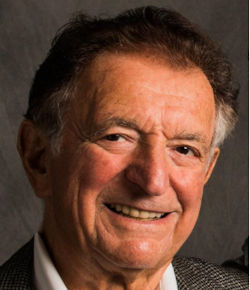
Jona Goldrich

The Goldrich Family Institute for Yiddish Language, Literature and Culture was established in 2005 by the Goldrich family in honor of Jona Goldrich (1927-2016) – a Holocaust survivor who escaped Poland in 1942 and eventually became one of California’s most successful real estate developers and a prominent philanthropist. His contributions and initiatives helped to preserve the memory of the Jewish and Yiddish civilization both in the US and in Israel.
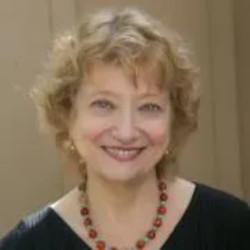
Hana Wirth-Nesher

Hana Wirth-Nesher

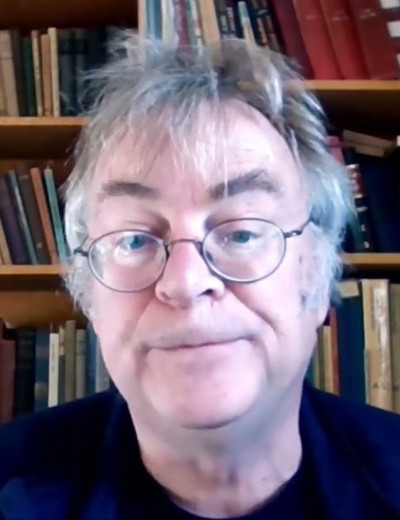
The founding director of the Institute is Professor Hana Wirth-Nesher of the Department of English and American Studies. She led the Institute until the fall of 2020. The current director is Dr. Hannah Pollin-Galay, a senior lecturer in the Literature Department known as a researcher and teacher of Yiddish literature and Holocaust Studies.
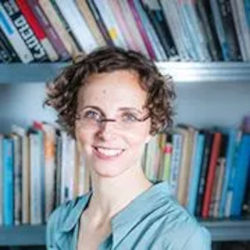
Hannah Pollin-Galay

Hannah Pollin-Galay

The Goldrich Family Institute administers the Inter-university MA Program in Yiddish Studies for the Tel Aviv Campus, the Anna and Max Webb Chair for Visiting Scholars in Yiddish, as well as the Goldrich Family Foundation Advanced Yiddish Studies Forum, which allows the students to contact with leading scholars in the field.

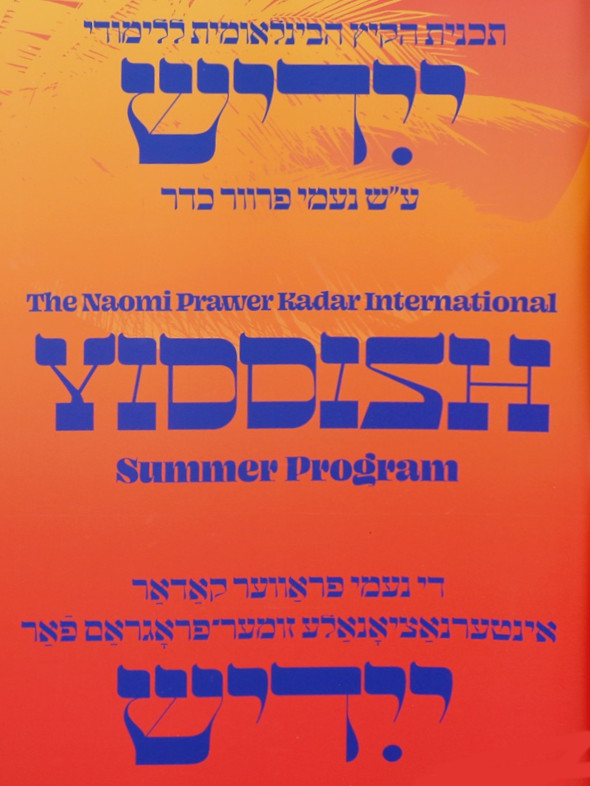
The Institute is also the center for the world-renowned Naomi Prawer Kadar International Yiddish Summer Program.
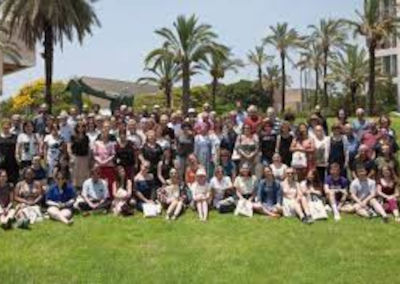
Yiddish at Tel Aviv University

Yiddish at Tel Aviv University

Yiddish at Tel Aviv University

Goldrich Family Institute

Yiddish Culture: Practical Engagement

International Summer Program

Yiddish and Yiddish culture are studied at Tel Aviv University on a permanent basis during the entire academic year at the Jona Goldrich Institute for Yiddish Language, Literature and Culture, as well as at the Naomi Prawer Kadar International Yiddish Summer Program.
We are very excited to announce Tel Aviv University’s new program, Interdisciplinary Studies in Yiddish Culture and Heritage, partnered with the Yiddish Heritage Preservation Foundation (Israel). This project will be based on students’ work, guided by the university’s faculty, on various aspects of Yiddish culture, including studies of unique materials published on this website.

Starting from the next academic year (2023-2024), this research will be supported by the Rosa Lubin Scholarship program, created by Dr. Mark Zilberquit, the founder of the Yiddish Heritage Preservation Foundation and of our website. Scholarships will be awarded for archival, historical and other studies of Yiddish culture in its various aspects, including theater, music, film and visual arts. Follow the links above for more information, published on this site with the permission of Tel Aviv University.

Yiddish Dictionary Celebrated in Antwerp

Yiddish Dictionary Celebrated in Antwerp

Yiddish Dictionary Celebration in Antwerp

Justus van de Kamp

On May 25th, 2023, 7 PM, an event for the benefit of the online Yiddish-Dutch Dictionary is to be held in Atwerp. The dictionary is available online free of charge. Katelijne Theuwissen, the event’s organizer, informed our website that the event is supported by the Institute for Jewish Studies of the University of Antwerp. Justus van de Kamp, the compiler of the giant Yiddish-Dutch comprehensive dictionary, is going to talk about his work, which he has enthusiastically and voluntarily been doing for over 35 years. The duet Kateritongel will perform “New Klezmer Tunes” by Joachim Johow.


New Issue of Iberzets

New Issue of Iberzets

New Issue of Iberzets

In March 2023, the Iberzets Magazine, entirely devoted to literary translations from Yiddish into Hebrew, has published its 3rd issue. The periodical is edited and produced by the Tel Aviv University’s students specializing in Jewish literature. The new issue includes translated works of Sholem Aleichem, Aaron Zeitlin, Jacob Glatstein, H. Leivick, Anna Margolin, Ber Horowitz, Benjamin Harshav and Yossel Birstein.

Yiddish Lectures at Kyiv-Mohyla Academy

Yiddish Lectures at Kyiv-Mohyla Academy

Yiddish Lectures at Kyiv-Mohyla Academy

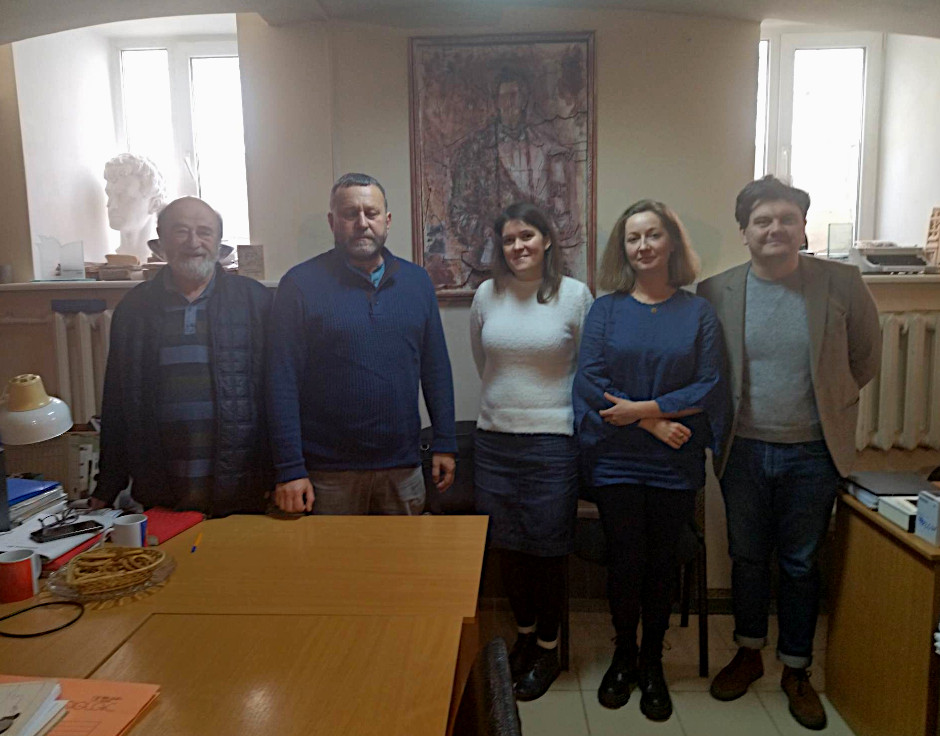
On March 9, 2023, during his visit to Ukraine, the Israeli poet and literary critic Dr. Velvl Chernin delivered lectures on the history of Yiddish literature and on renowned Jewish writers and poets associated with Ukraine. The lectures took part an the Kiev Center for the Studies of History and Culture of East European Jewry, which operates within the structure of the National University of Kyiv-Mohyla Academy. A particular attention was paid to the problems of translating literature from Yiddish into Ukrainian.

Training specialists in this field is one of the center’s areas of activity. Thanks to these efforts, a number of literary translations from Yiddish into Ukrainian have appeared in recent years. That includes books published by the Kiev publishing house Duh i Litera. Yiddish to Ukrainian translations have also been published in the literary magazine Yehupetz.

New Book: Yiddish Lives On

New Book: Yiddish Lives On

New Book: Yiddish Lives On

The McGill–Queen’s University Press, a Canadian joint venture between McGill University in Montreal, Quebec, and Queen’s University in Kingston, Ontario, has published Dr. Rebecca Margolis’ book “Yiddish Lives On”. The author, formerly an associate professor at the University of Ottawa, is a professor and Pratt Foundation Chair of Jewish Civilisation at the Australian Centre for Jewish Civilisation at Monash University, Melbourne.

The new book discusses possible strategies of transmitting Yiddish as a living spoken language to the young generation in the modern world. Margolis examines the historical ideologies of Canadian Yiddishists, the difficulties of language transmission within Yiddish-speaking families from the 1950s to the present day, and the role of theater, literature, music and cinema in the development of Yiddish culture. The last chapter of the book is dedicated to modern film production, video channels and Internet projects. The researcher concludes that online popularization is necessary for successful further transmission of the language.