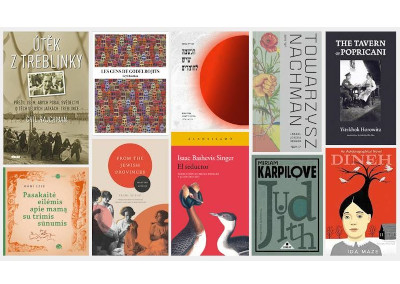
In Geveb, the bilingual English-Yiddish online journal specializing in Yiddish cultural studies, has been reviewing translations from Yiddish into other languages over the last few years. Recently, it published the new list of 2022 translations composed by Dalia Wolfson. This list contains bibliographic information about 53 books: 18 of these have been published in English, 8 in Polish, 5 in each Hebrew and Lithuanian, 4 in each French and Russian, 2 books in each German, Chinese and Spanish, one book has been translated into each Greek, Belarusian and Czech.
In addition to individual books, dozens of translations from Yiddish into various languages were also published during the year of 2022 in periodicals and anthologies. Such translations appeared last year, in addition to those listed above languages, also in Ukrainian and Dutch. The list includes as well translations published not on paper, but in electronic format.
Most of the authors whose works were translated from Yiddish belong to previous generations: Mendele Moykher-Sforim, Yitskhok-Leybush Peretz, Sholem Aleichem, Chaim Grade, Anna Margolin, Isaac Bashevis Singer, Jacob Glatshteyn, Avrom Sutzkever, Melekh Ravitch, Osher Shvartsman, Joseph Opatoshu, Yisroel Amiot, Celia Dropkin, Shira Gorshman, Avrom Karpinovitch, Binem Heller, Moyshe-Leyb Halpern, Itzik Manger, Kaczerginski, Kadia Molodowsky, Alter Kacyzne, Debora Vogel, Leyb Kvitko, Esther Kreitman, Yisroel Rabon, David Bergelson, Peretz Hirshbein, Peretz Markish, Mani Leib, Avrom Reyzen, Israel Joshua Singer, Moyshe Kulbak, Yitzkhok Katzenelson, and others.
At the same time, it is pleasant to note that the new In Geveb translation list also includes works by contemporary Yiddish writers: Rivka Basman Ben-Hayim, Boris Sandler, Velvl Chernin, Moishe Lemster, Ber Kotlerman, Hirshe-Dovid Katz, Katle-Kanye, Sholom Berger, Bruria Wiegand, Evgeny Kissin, Shiri Shapira, Emil Kalin, and Eli Sharfstein.
It should be added that a number of literary translators from Yiddish mentioned in the In Geveb list also write their own original works in Yiddish. These include Yermiyahu Ahron Taub who translates into English; Marek Tuszewicki into Polish, Yisroel Nekrasov and Yoel Matveyev into Russian, and David-Omar Cohen who translates from Yiddish into Dutch.
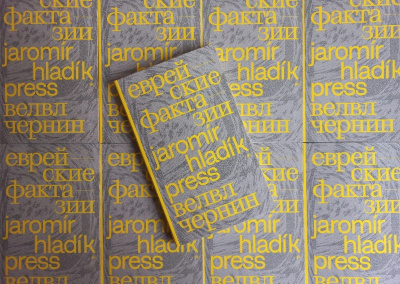
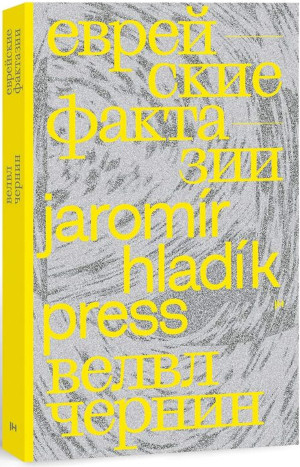 The Jaromír Hladík Press in St. Petersburg published Velvl Chernin’s Yiddish book Yidishe Faktazyes, a collection of science fiction and fantasy stories, translated into Russian by the author himself. The original book was published in 2021 by the Swedish publishing house Olnisansky Tekst, which specializes in Yiddish literature. Some of the stories included in the collection have also been translated into Hebrew and published by Israeli literary periodicals.