Gallery. Bernard Kratko
Gallery.
Bernard Kratko
Illustrated half-titles to Yitskhok Leybush Peretz’s Dramen (Plays) by Bernard (Shimen-Ber) Kratko. Warsaw, Poland, Progress, 1909.
Courtesy of Dr. Hillel Kazovsky.
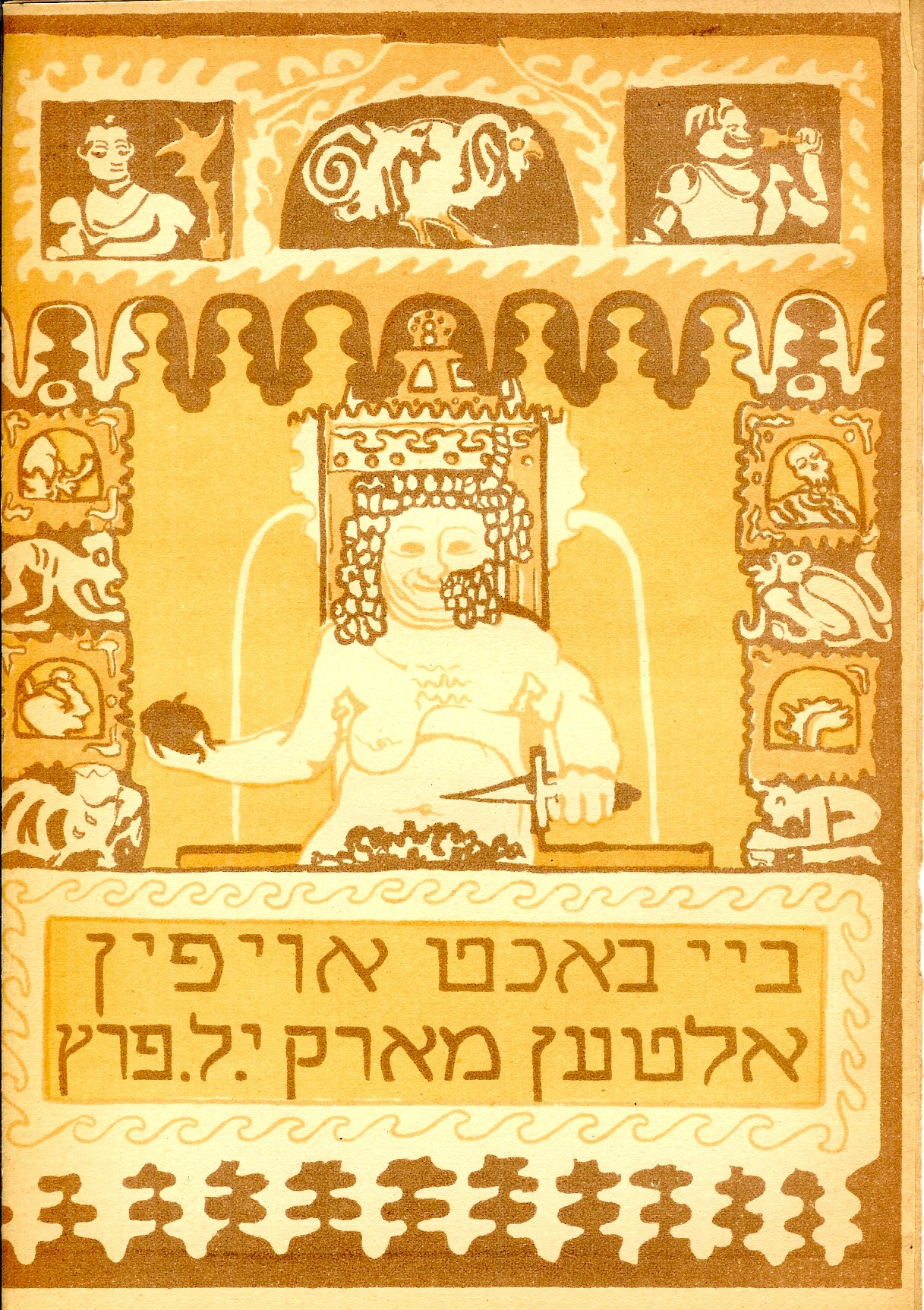
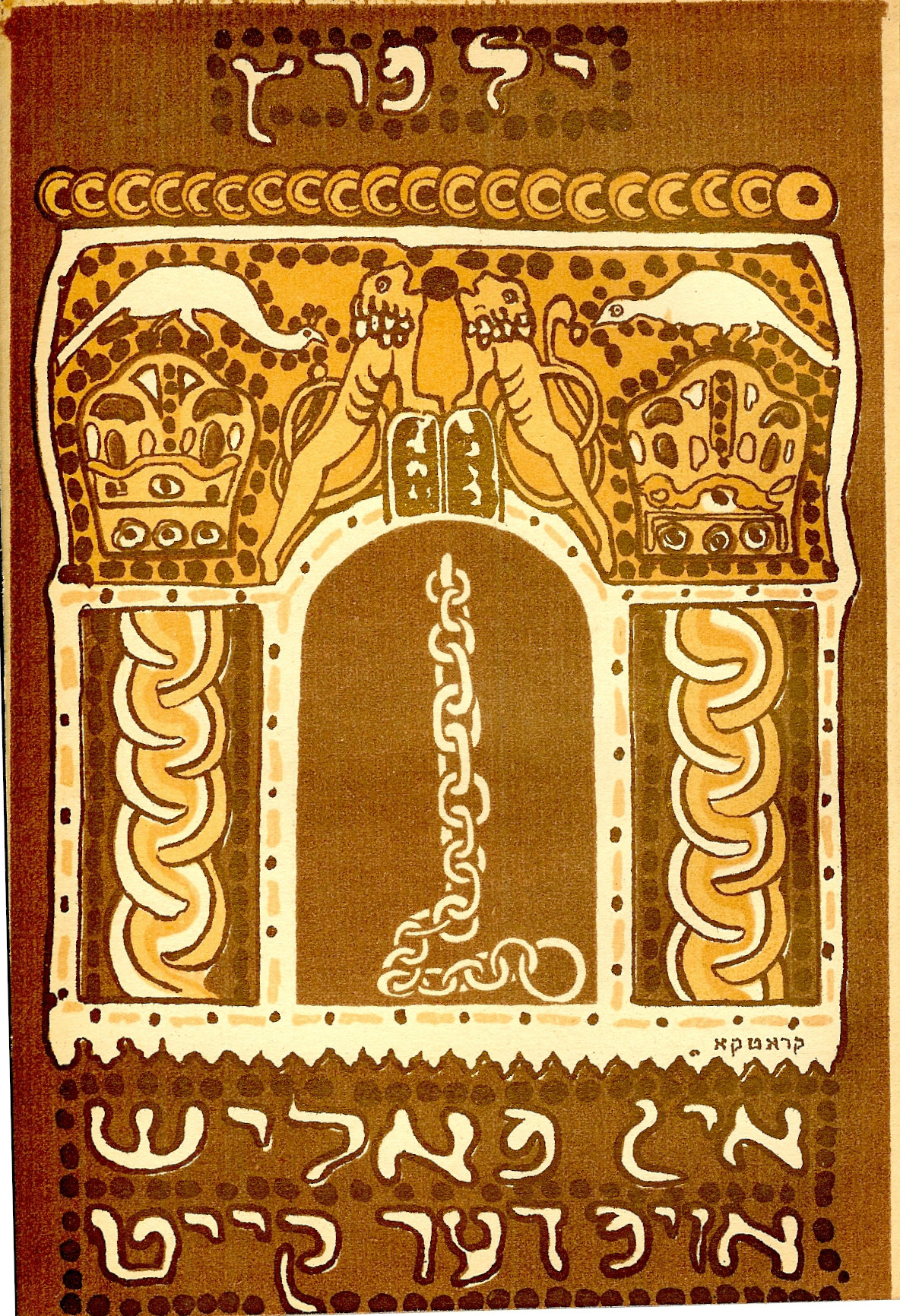
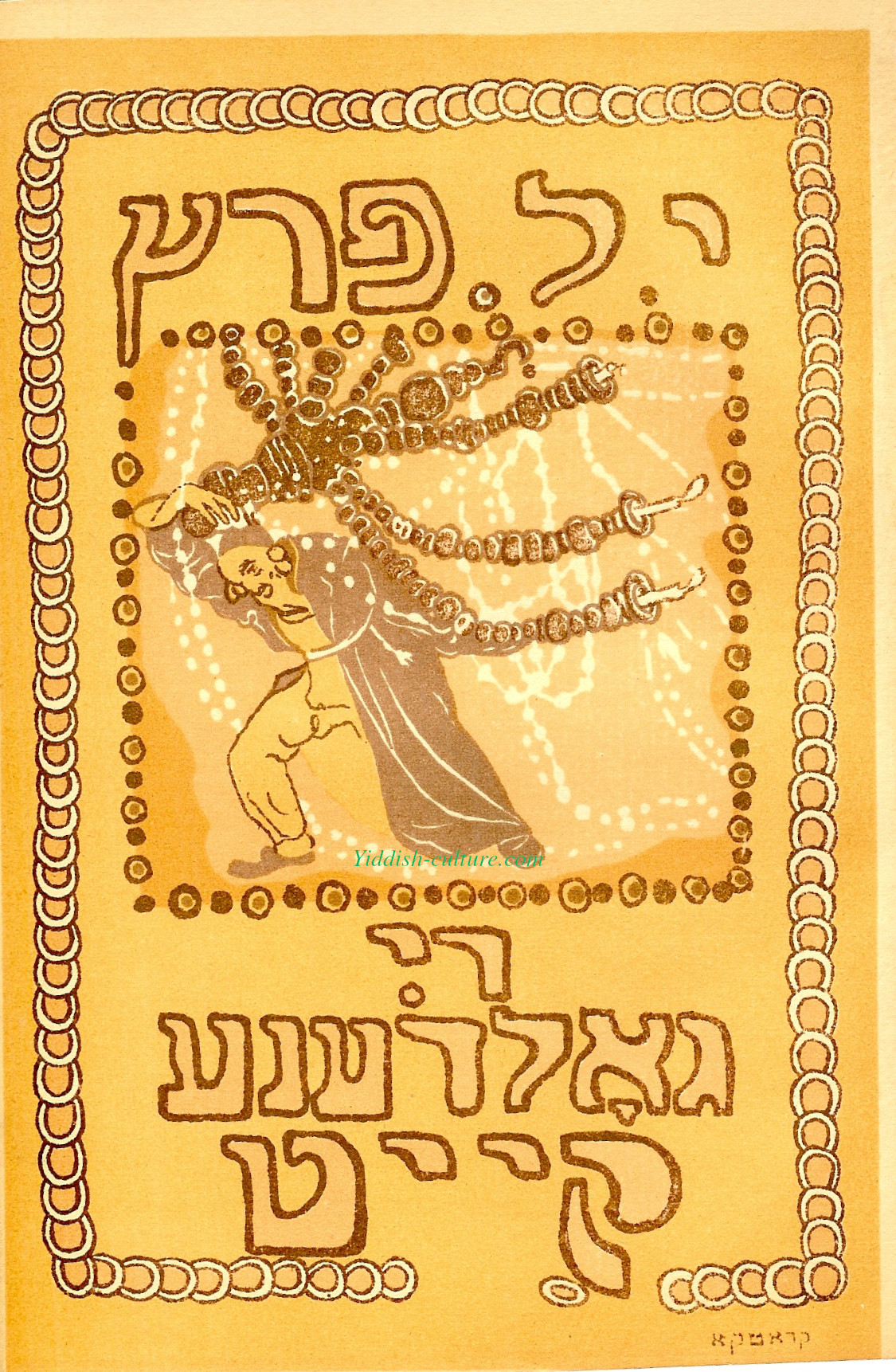
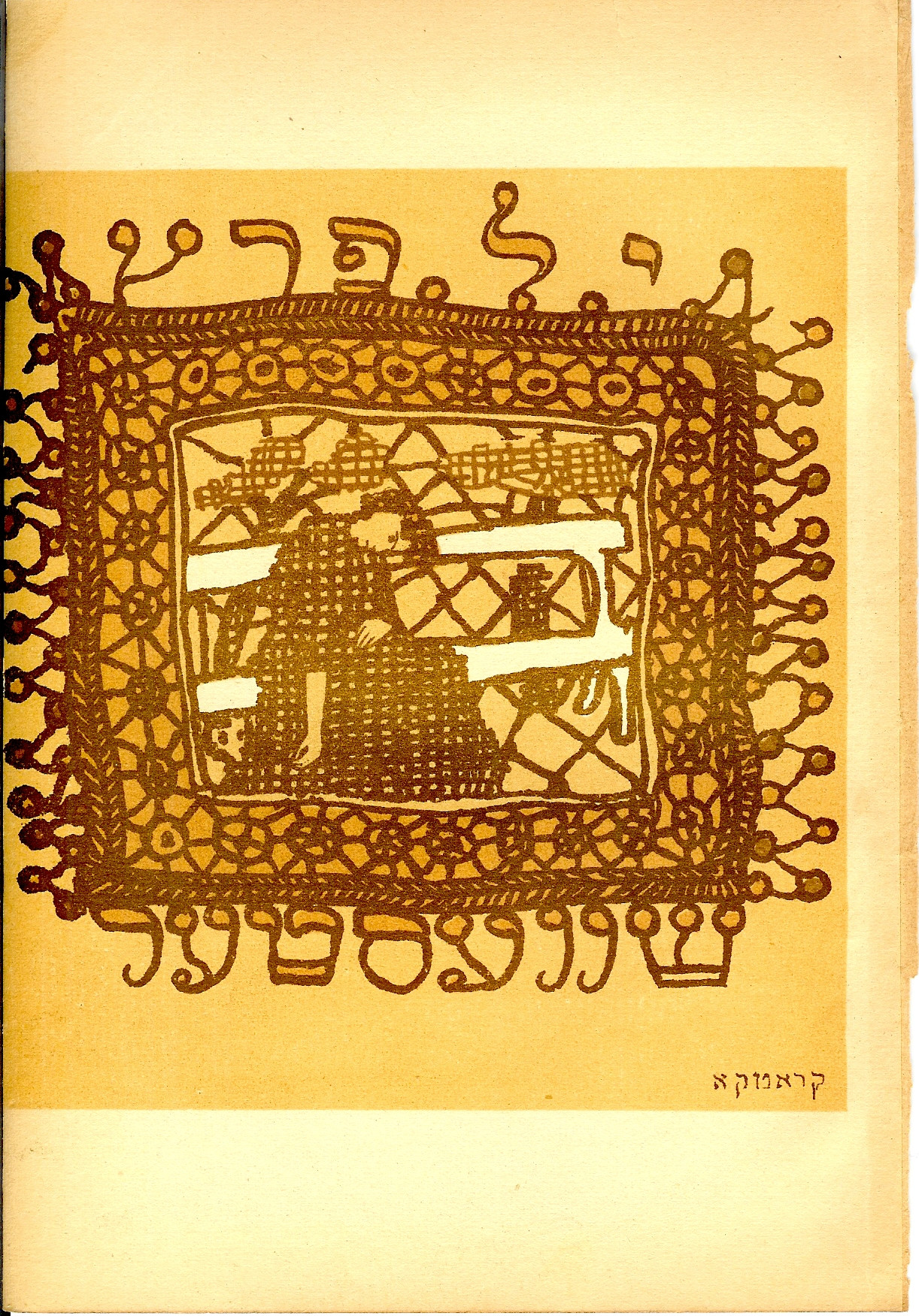
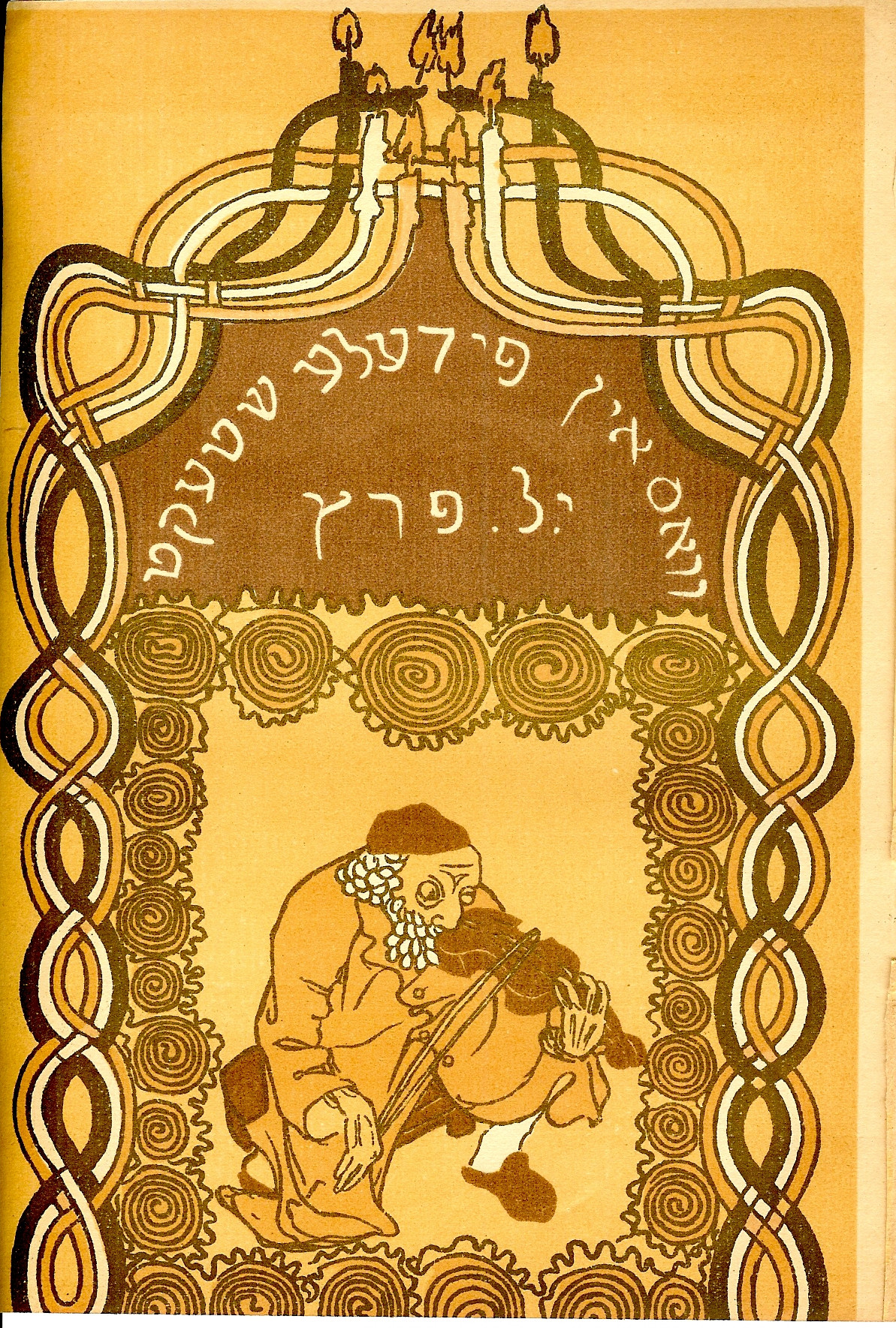
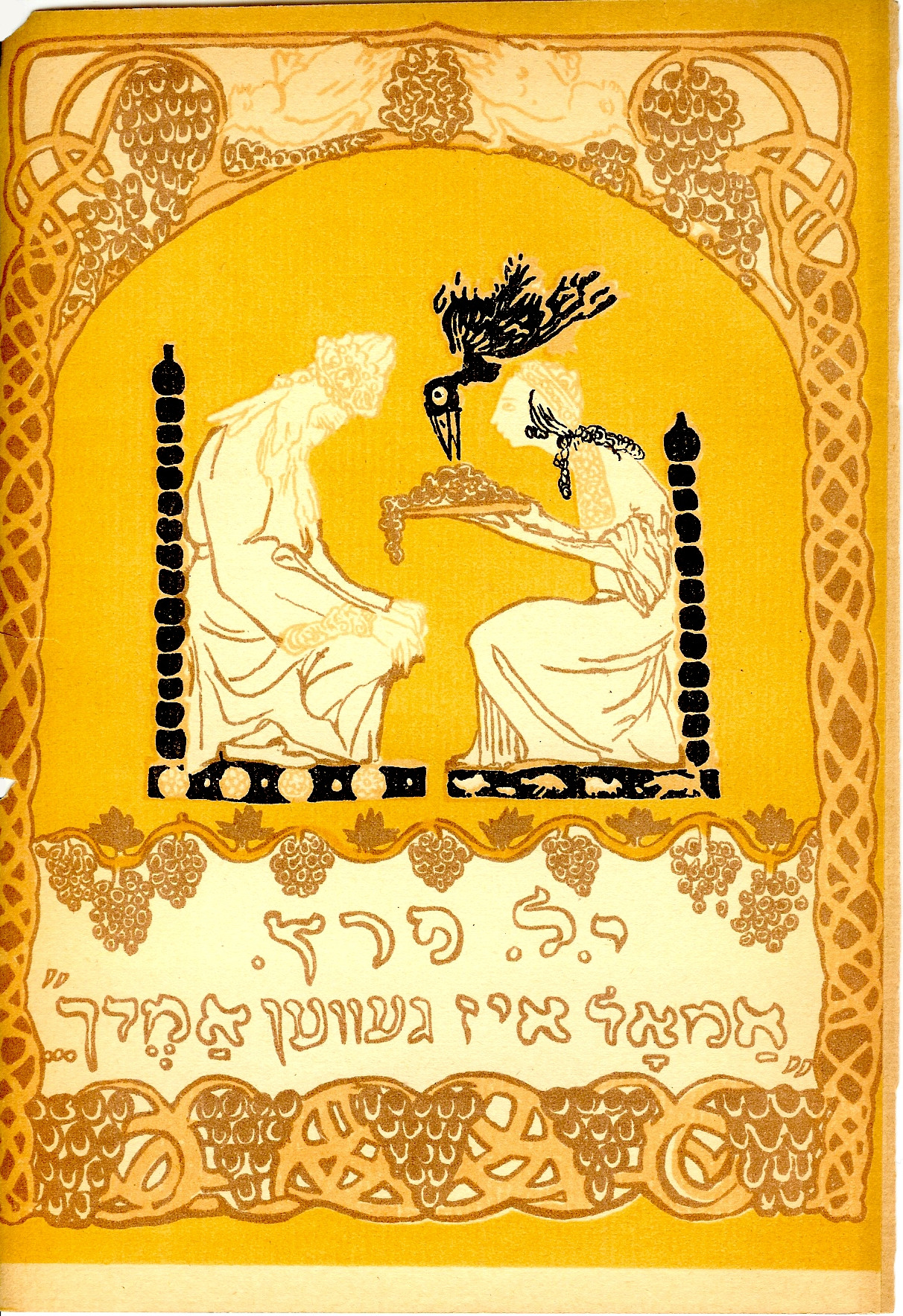
Illustrated half-titles to Yitskhok Leybush Peretz’s Dramen (Plays) by Bernard (Shimen-Ber) Kratko. Warsaw, Poland, Progress, 1909.
Courtesy of Dr. Hillel Kazovsky.
At the turn of the 20th century, painting, sculpture and other visual arts had become an integral part of the national Jewish culture. This happened largely due to the influence of the new Jewish literature, primarily written in Yiddish, which served as a sensitive indicator of all cultural and ideological tendencies. Literature stimulated further developments in all areas of national culture, including arts.
The new Jewish literature began to define high aesthetic standards. It also created a national artistic environment, which united representatives of all creative professions. Before WWI, Jewish authors and artists were already united around common aesthetic and national ideas. Painters and sculptors who belonged to this literature-oriented milieu began to view themselves as the creators of a new national culture.
Leo Koenig (1889-1970), one of the members of the first Jewish modernist group Makhmadim, which arose in Paris in 1911, wrote in his memoirs about this group: “… we wanted to show the world our new Jewish motifs and forms (…) Zionist congresses, the Bund, the great Jewish classics were still alive… A generation of Jewish artists appeared, who no longer had to flee from the “ghetto”, from the Jewish life, in order to become painters and sculptors (…), organically linked to the rejuvenated Jewish word, who knew Peretz, Sholem Aleichem, Mendele Moykher-Sforim (…) It was the time when young Jewish painters, mostly from the Pale of Settlement, boldly dreamed of a Jewish form, of stained-glass windows for new Jewish synagogues (…)”
In Koenig’s biography literature played a crucial role too. Shortly after the collapse of Makhmadim, he switched his career and, instead of a painter, soon became a famous essayist, one of the pioneers of Yiddish art criticism.
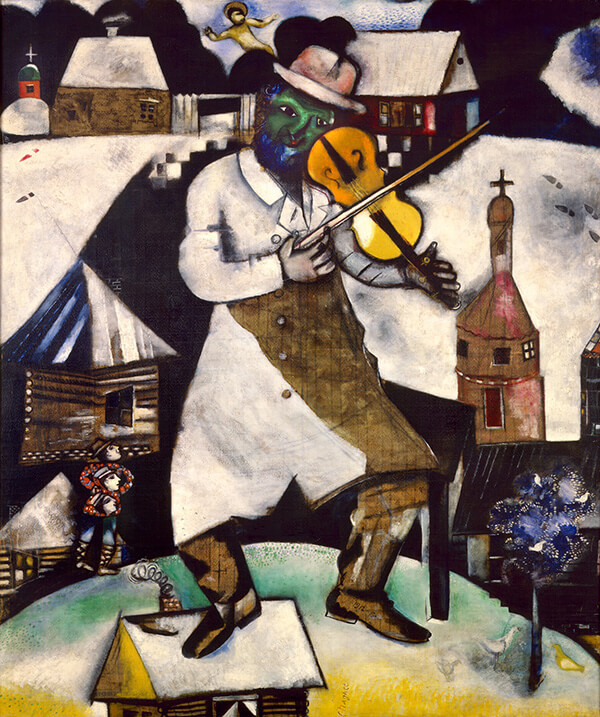
It is not a coincidence that Yitskhok Leybush Peretz played an extremely important role in the process of incorporating visual arts into the framework of the new national Jewish culture. Peretz was one of the first to see the need to actualize the creative potential of Yiddish folklore and the unique heritage of Eastern European Jewry. He theoretically substantiated his idea and embodied it in his own works.
Young Jewish artists found Peretz the most attractive of all Yiddish classic writers. He was a mentor and a spiritual leader not only for a whole generation of Jewish writers, but also for many artists. Peretz’s inner circle, established in Warsaw a few years before WWI, included such painters as Maurycy Minkowski (1881-1930), Szymon-Ber Kratka (1884-1960, aka Bernard Kratko) and Moishe Appelbaum (1887-1931).
Inspired by Peretz, these and several other artists from his circle became interested in Jewish folk art and traveled across various places in Poland, searching for ancient Jewish ritual objects and traditional clothes, copied the carved reliefs of Jewish tombstones and murals of ancient synagogues. Some if these artists — in particular, Appelbaum — later became synagogue painters themselves. Even S. Ansky, who at one time was far from Jewishness, admitted that Peretz influenced him to “return” to his people. He started writing in Yiddish, became a collector and researcher of Jewish folklore and “Jewish art antiquity”, as well as the founder of the Jewish Museum in Petrograd (1916). This collection, assembled by Ansky, proved to young artists the great value of the traditional Jewish visual culture, which became the basis for their search for aesthetic ideals and creative originality.
Almost all Jewish modernist art groups that emerged in various centers of Ashkenazi Jewish culture on the eve or after WWI were associated with or led by Yiddish writers’ associations. The Yiddish writer and playwright Dovid Ignatov (1885-1954), one of the founders of Di Yunge, a major group of young Yiddish authors based in New York, believed that cooperation with artists is indispensable for the proper development of “young” Jewish literature. Ignatov hoped that the publications of their group would “become an outlet not only for young Jewish writers, but also for artists”.
Di Yunge enjoyed the cooperation of many Jewish American artists, including Zuni Maud (1896-1956), Yitzchok Lichtenstein (1883-1971; also one of the Makhmadim members), Max Weber (1881-1961), Abraham Walkowitz (1878-1965), Abbo Ostrowsky (1899-1963), Benjamin Kopman (1887-1965) and Jennings (Yehuda) Tofel (1891-1959). Their works were reproduced on the pages of the group’s publications, where their own literary experiments were also published (in Yiddish).
Kiev was another cultural center of the Ashkenazi diaspora, where young Jewish artists were also associated with a circle of Yiddish modernist writers, led by Dovid Bergelson, Der Nister, Yekhezkl (Khatskl) Dobrushin and Nakhmen Mayzil. Soon after its establishment, this circle grew into the Kiev Group, which became a prominent phenomenon in the history of modern Yiddish literature. The aesthetic and national cultural ideals of this group had a strong influence on young Jewish artists who studied in Kiev before WWI: Isaac Rabinovich (1894-1961), Mark Epshtein (1899-1949), Issachar Ber Ryback (1897-1935), Borukh (Boris) Aronson (1898-1980), Nisson Shifrin (1891-1962), Alexander Tyshler (1898-1980), and others.
In 1918, this group took an active part in the Kultur-Lige, an organization whose goal was the development of Jewish culture in Yiddish. In one of its first foundational documents, the League outlined three main areas of its activity: “The Kultur-Lige stands on three pillars: Jewish public education, Jewish literature and Jewish art”. Art was defined as one of the most important national and cultural priorities, on par with such a fundamental attribute of Jewish culture as education, which played the central role in the organization’s practical work.
The Kiev Group and its associate artists formed the Literary and Art sections of the Kultur-Lige. Yekhezkl Dobrushin, a Yiddish writer known as an art and literary critic, was elected as the chairman of the Art Section. Dobrushin created original theories of modern Jewish art and Jewish illustrated books. Besides the original Kiev artists, the Art Section included Joseph Chaikov, Polina Khentova, Sarah Shor and Eliezer (El) Lissitzky who arrived in Kiev at the end of 1918.
In 1920, after the establishment of Soviet power in Ukraine, many Jewish artists left Kiev and moved to Moscow, where the Art Section of the Kultur-Lige was also formed and, in addition to most of its Kiev participants, also included Marc Chagall (1887-1985), David Shterenberg (1881-1948) and Nathan Altman (1889-1970). Thus, the organization had united together all the major Jewish artists of the former Russian Empire who viewed creating contemporary avant-garde Jewish art as their main task.
Lodz emerged as a another prominent center of the Jewish artistic avant-garde almost simultaneously with Kiev and Moscow. At the end of 1918, the Yiddish poet Moishe Broderzon (1890-1956), himself a talented painter, theater director and a charismatic leader, initiated the gathering of local Jewish writers and artists who were close to the Polish versions of futurism and expressionism. Among the artists included in the group, called Yung Yidish, were Jankel Adler (1895-1949), Marek Szwarc (1892-1958), Yitskhok (Wincenty) Brauner (Broyner; 1887-1944) and Henryk (Henoch) Barczyński (1896-1941).
The composer Henoch Kohn (1890-1972) and the Warsaw artists Henryk Berlewi (1894-1967) and Zeev Wolf (Wladislaw) Weintraub (1891-1942) also collaborated with Yung Yidish. The group was a radical experiment in creative avant-garde synthesis, equally combining elements of poetry and graphic arts. The group’s almanacs, which included a subsection titled “Lider in vort un tseykhnungen” (“Poems in word and drawings”), were a vivid evidence of this synthesis, illustrating the desire to blur the boundaries between the visual and the verbal realms.
Since the new Jewish art and the Yiddish language were intrinsically linked together, these interwar modernist art groups arose in every major center of Yiddish culture. In Riga, the writer group Sambatyon was headed by the artist and art theorist Michael Io (Ioffe; 1893-1960). In London, Leo Koenig created the Renaissance group, which attracted such local Jewish writers and artists as David Bomberg (1890-1957) and Jacob Kremer (1892-1962).
The Chicago futurist group Yung Tshikago, which included the outstanding poet Mates Deitch (1894-1966) and the artist Todres Geller (1889-1949), was founded in the mid-1920s. In 1929, the literary group Yung Vilne appeared in Vilna. One of its leaders was the great poet Avrom Sutzkever (1913-2010). His sister Rokhl Sutzkever (1909-1941) and Benzion Mikhtom (1909-1941) were two painters who became full members of the same group.
In the early 1930s, similar Jewish artistic circles arose in Buenos Aires and even in Johannesburg. Thus, much like the Yiddish literature and culture in general, Jewish art had reached an international scale and a worldwide distribution.
After WWII, links to Yiddish and Yiddish literature continued to stimulate the creativity of Jewish artists in different countries. Examples include Hersh Inger, Anatoli (Tankhum) Kaplan, Meer Axelrod, Yuri Kuper and Mikhail Grobman in the USSR; Maurice Sendak and Siegmunt Forst in the US; Yosl Bergner in Canada and Israel.
As we see, many of the greatest 20th century world famous artists were in various ways connected to Yiddish and its culture. The language itself had become a foundational element in the works of some of them. In particular, quite a few of Marc Chagall’s paintings are visualizations of Yiddish expressions. Yiddish was also a very important vehicle of artistic thoughts and theory: many avant-garde manifestos, brilliant critical articles and essays on art were written in this language. Some fundamental and innovative ideas of artistic development were formulated for the first time in Yiddish, before spreading in the worldwide theory of art.
Hillel Kazovsky
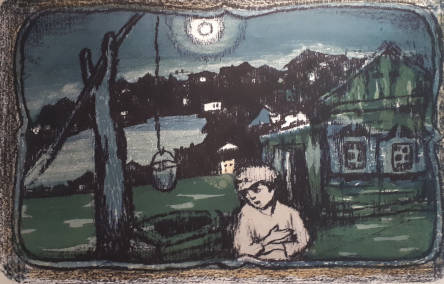
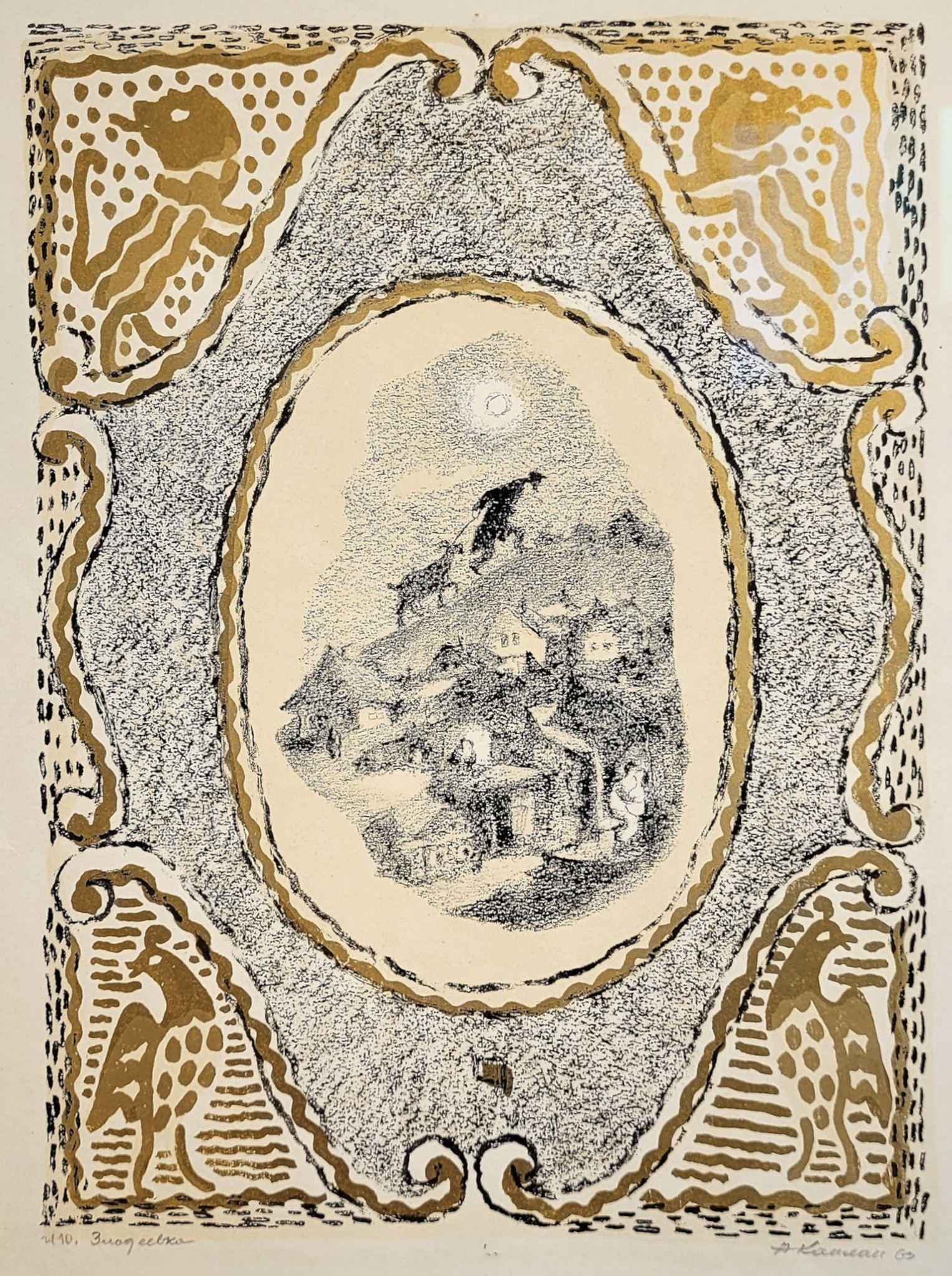
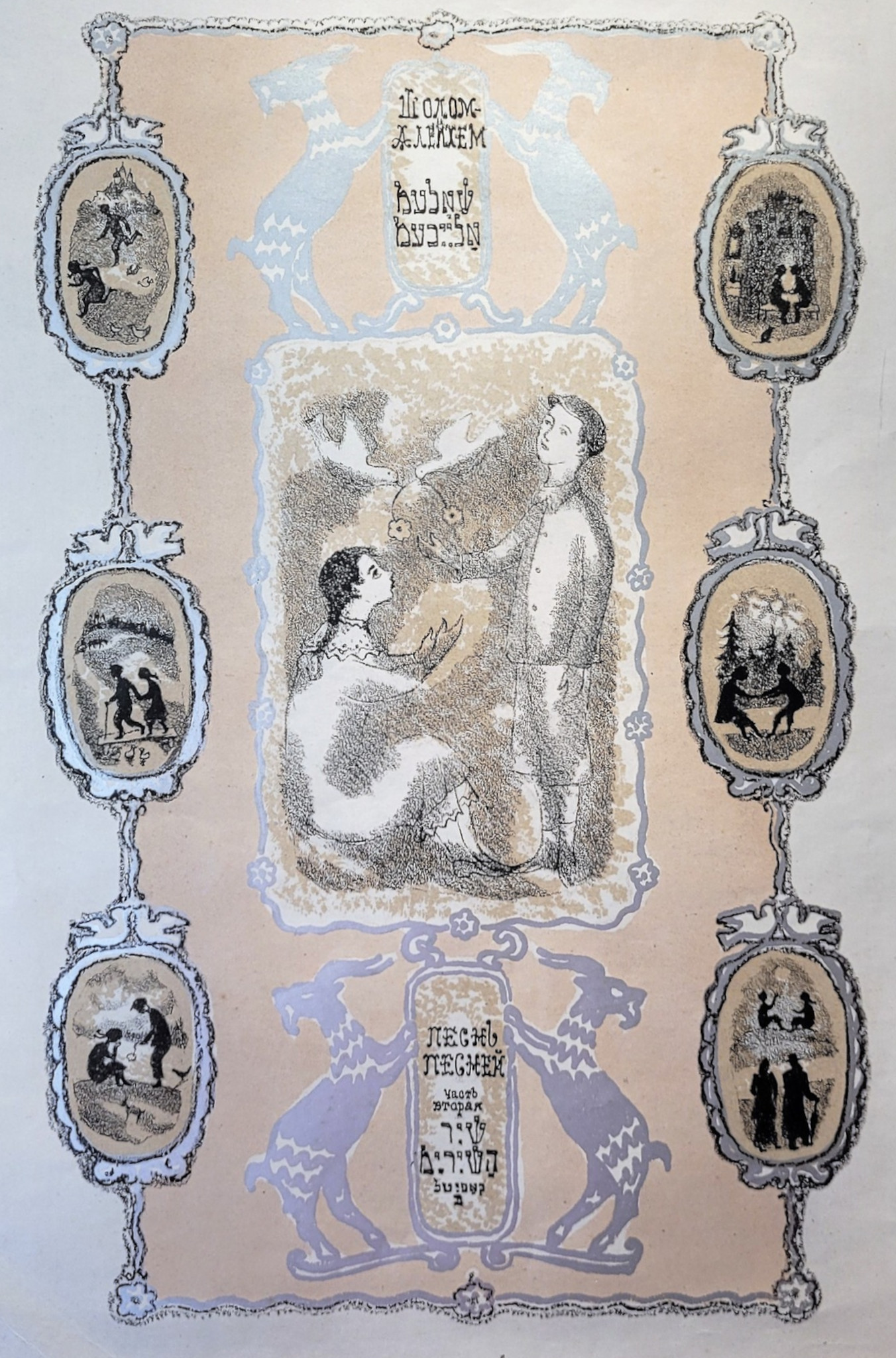
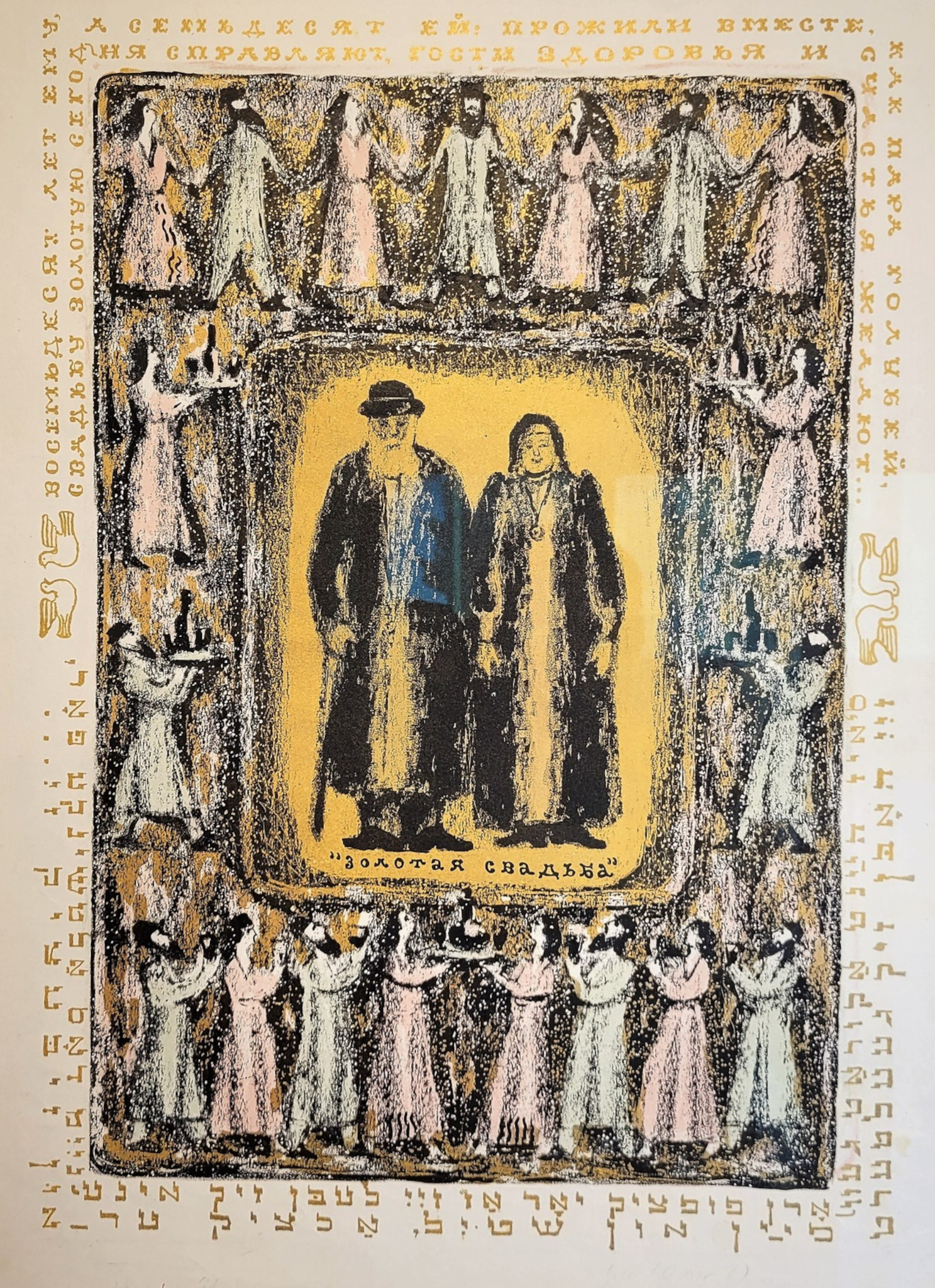
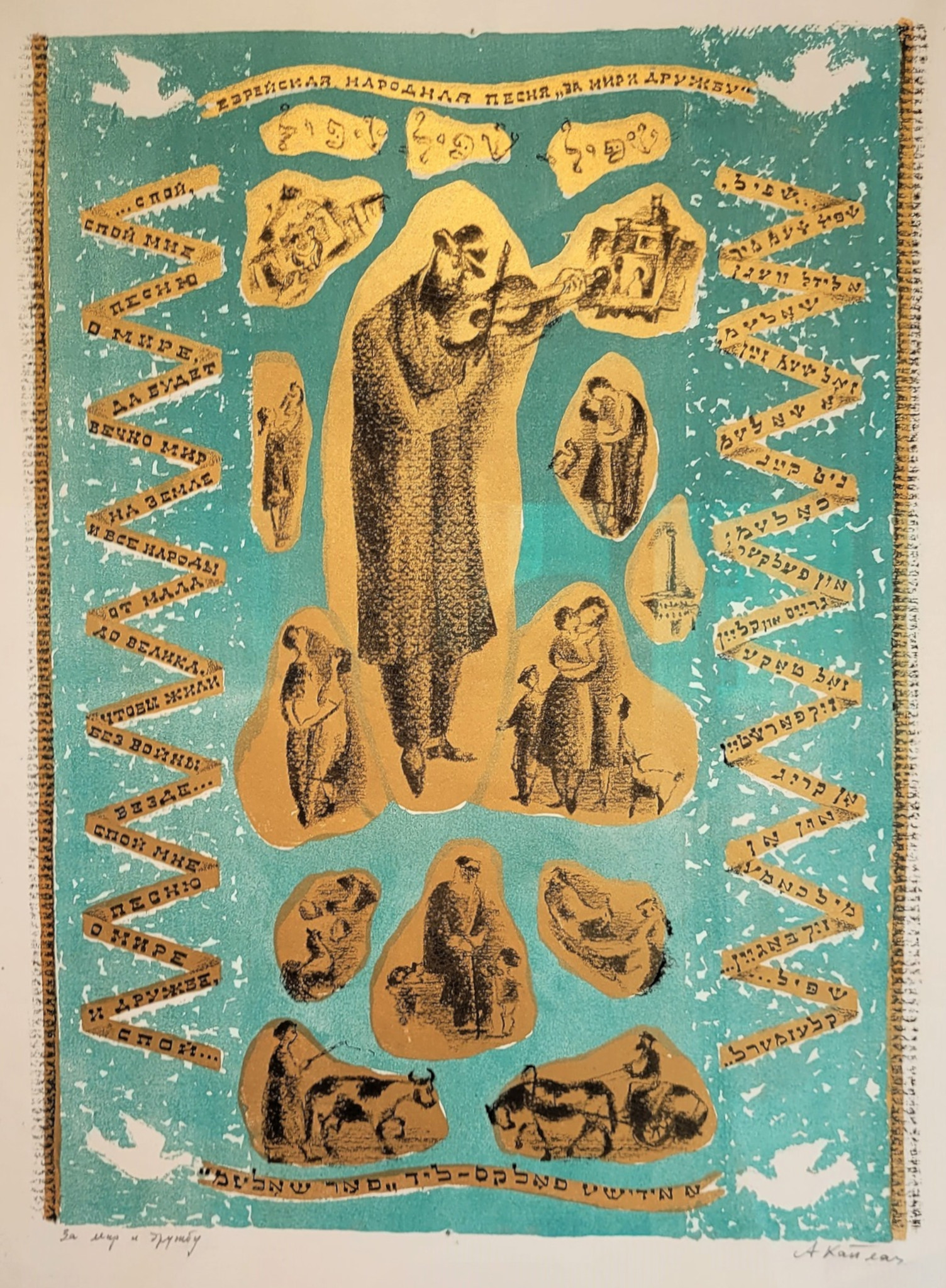
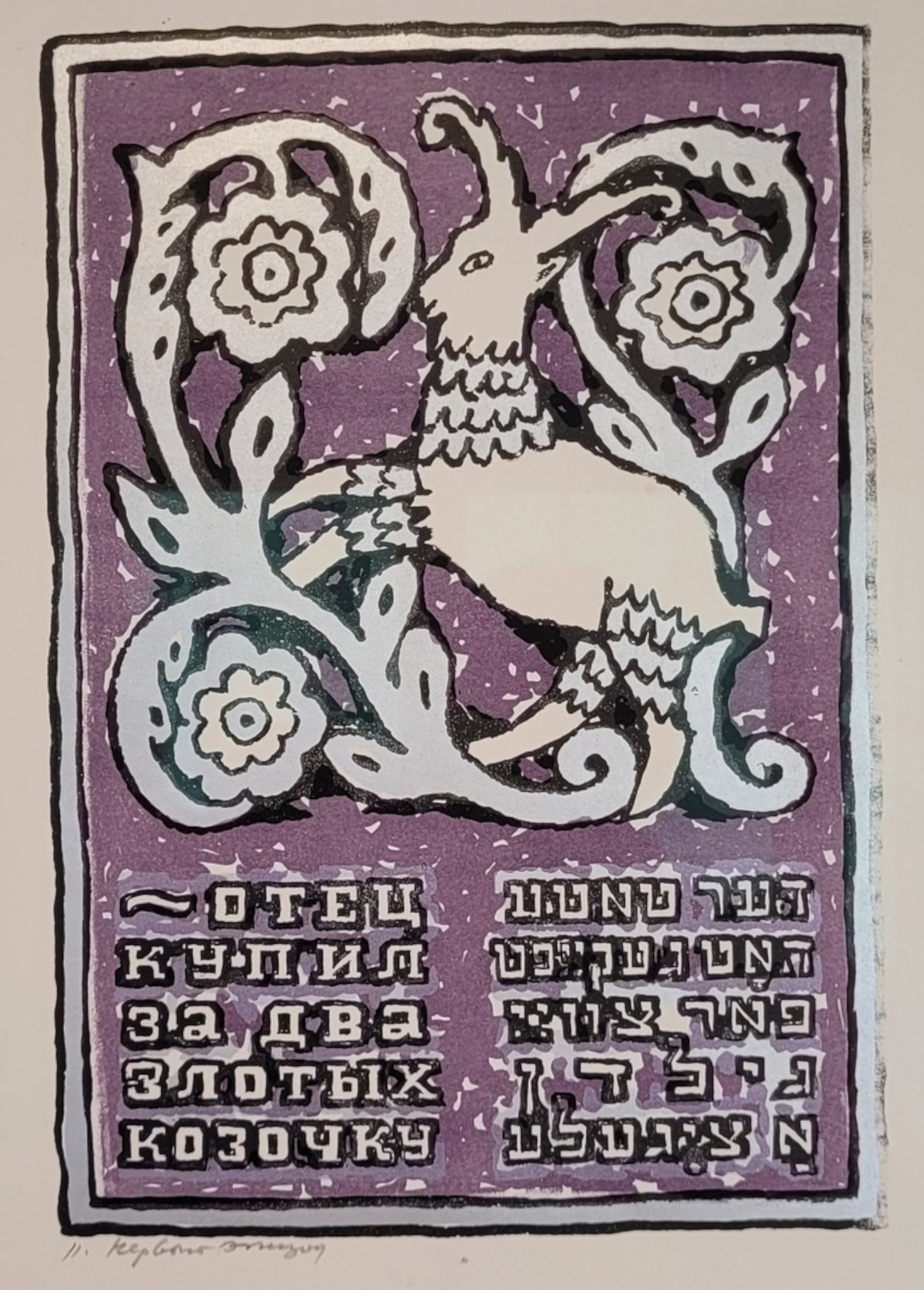
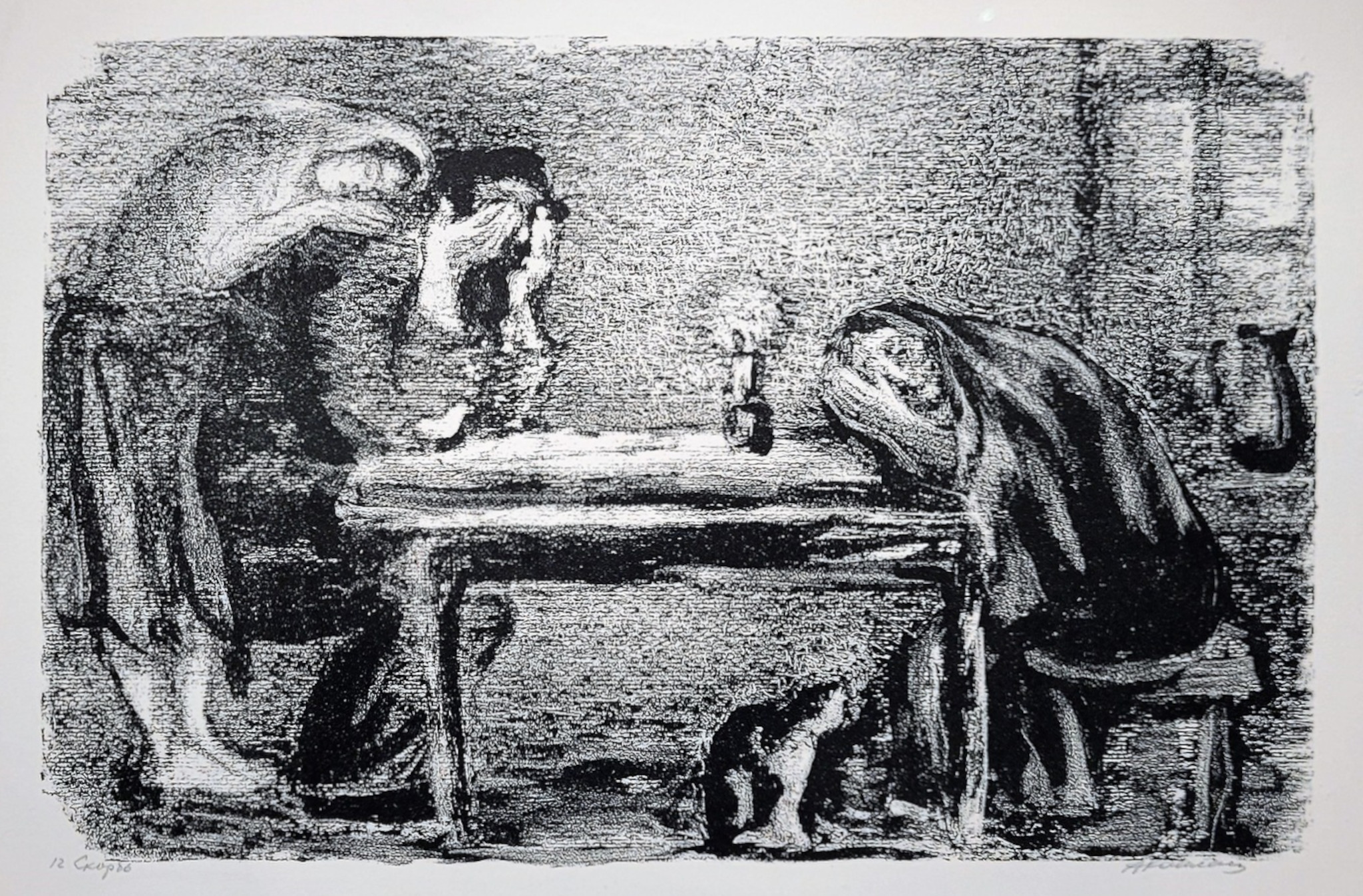
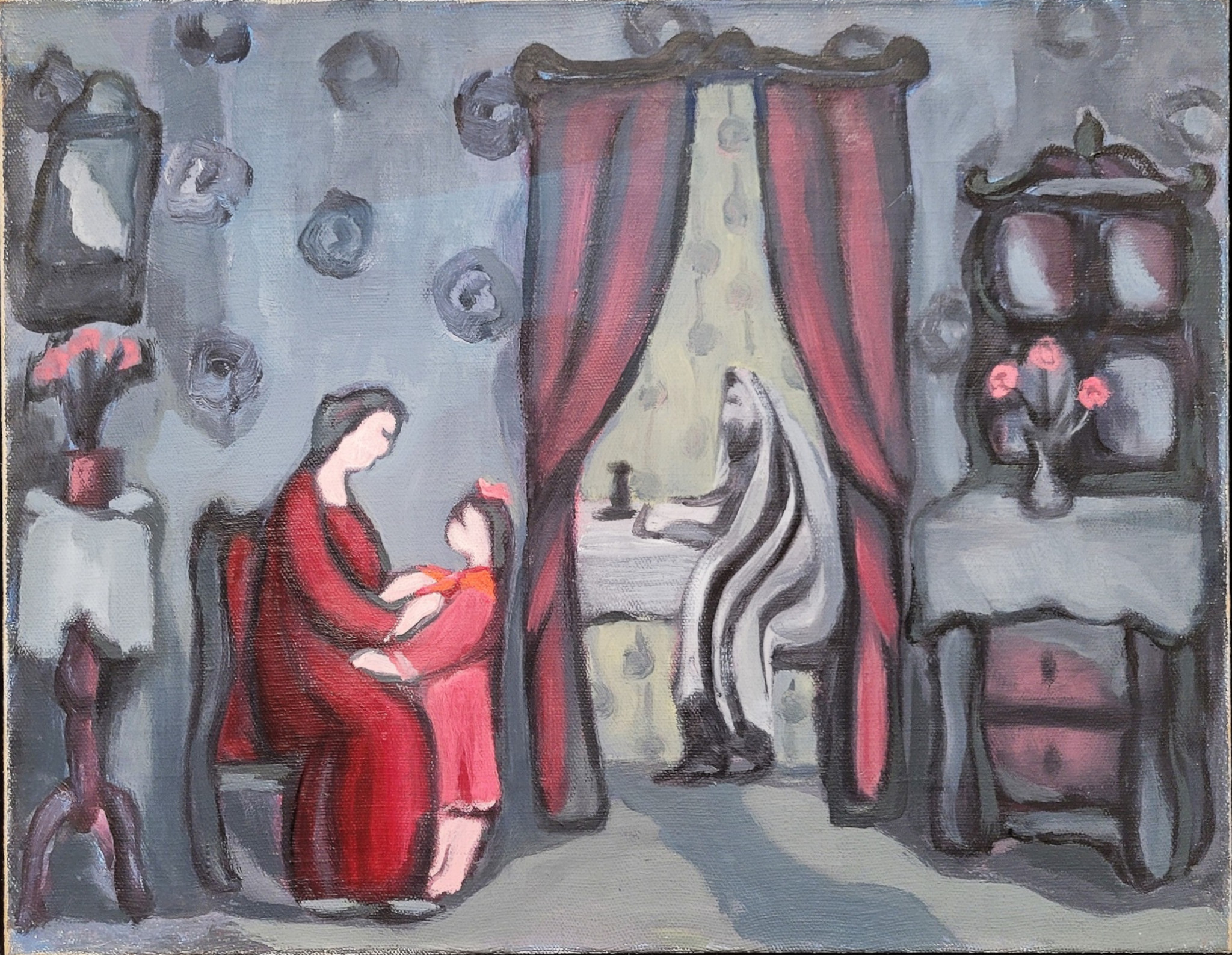
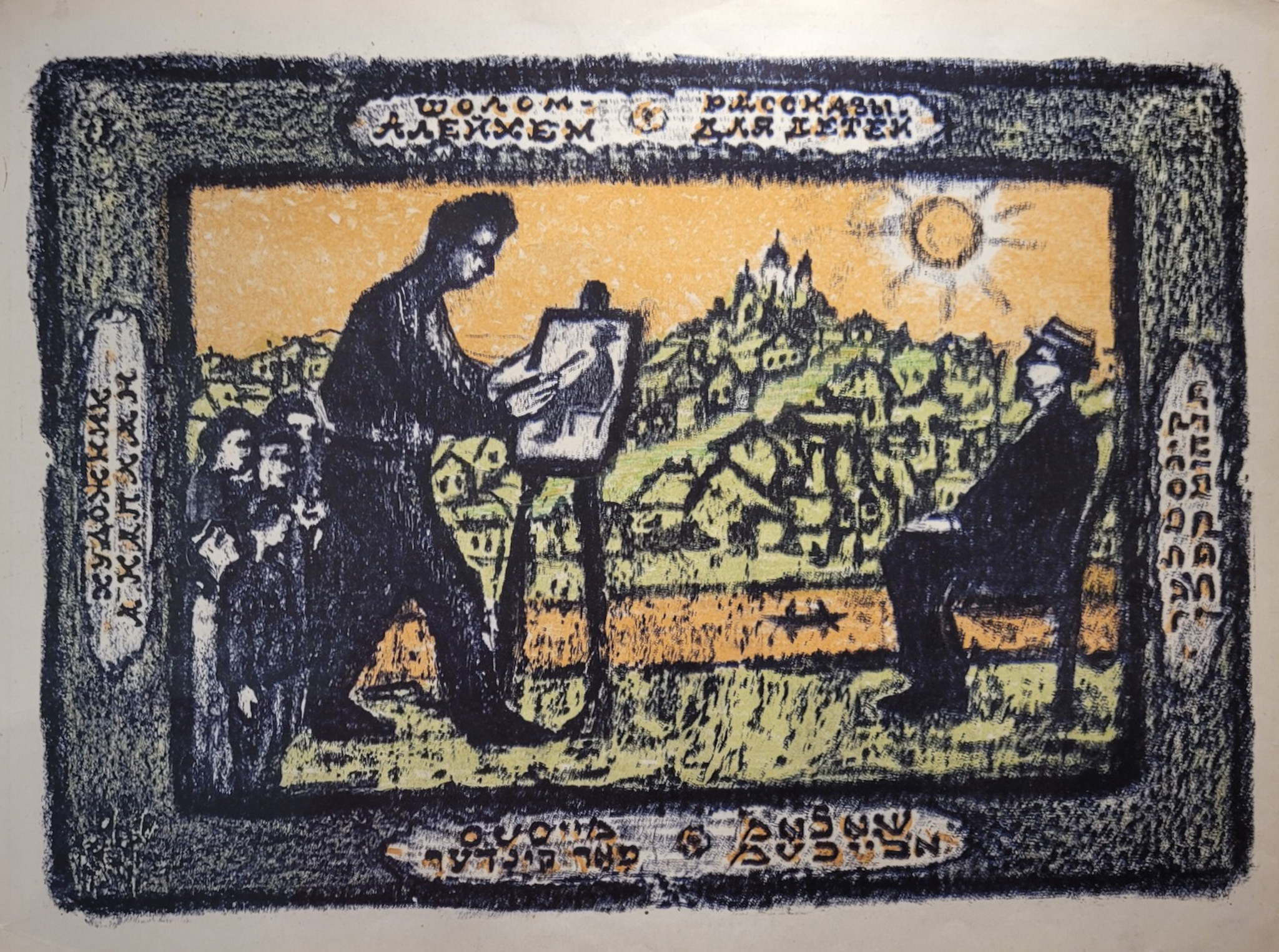
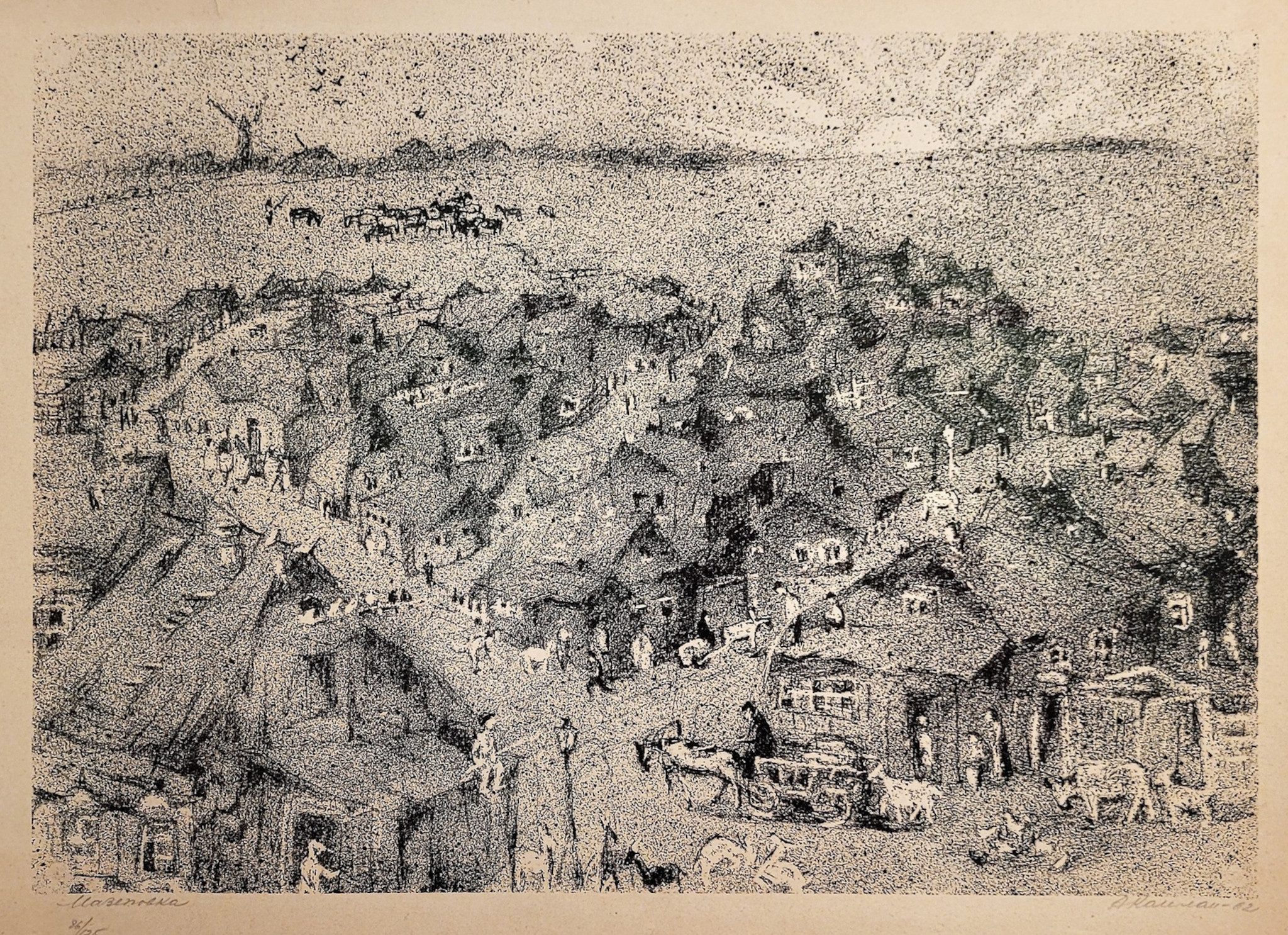
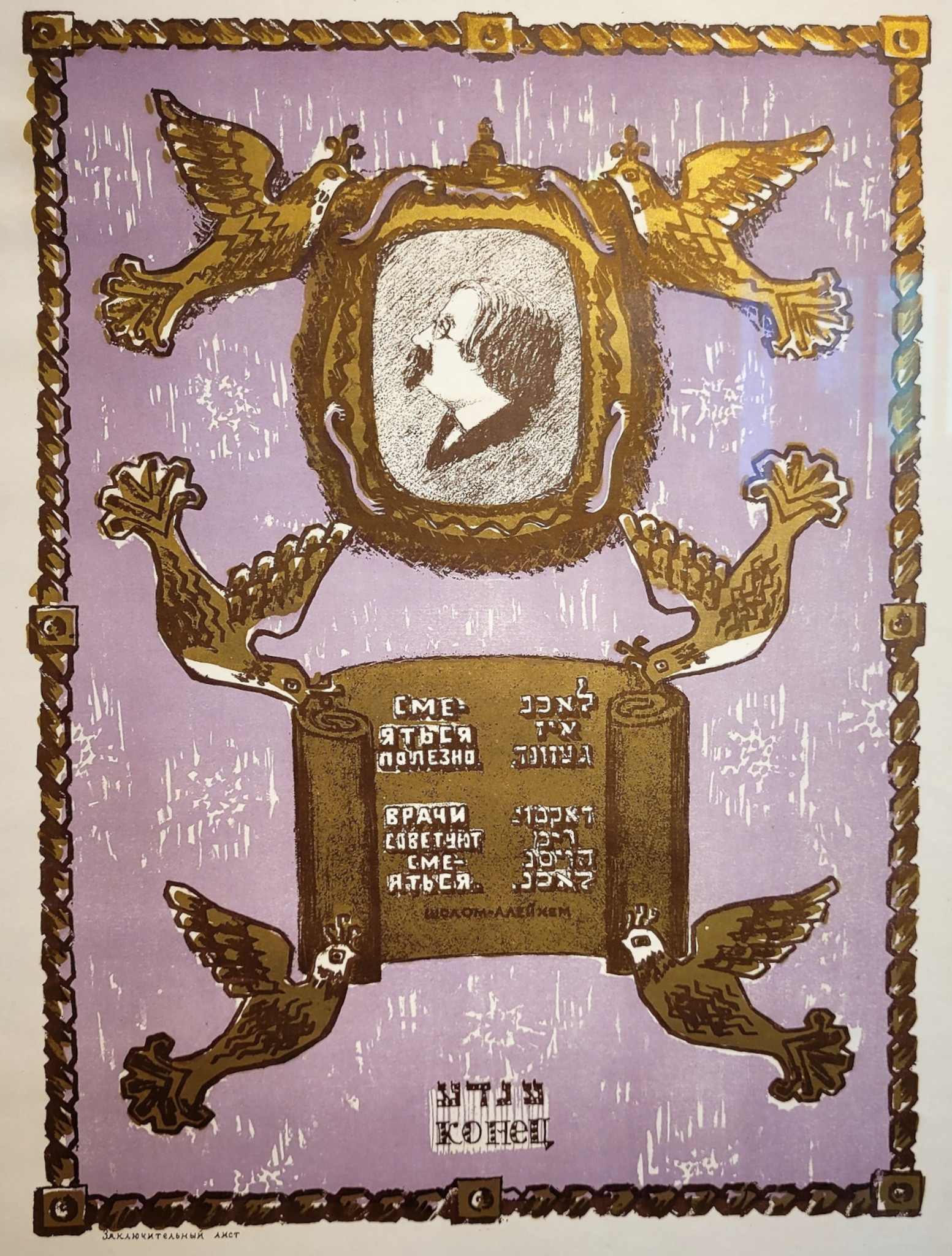
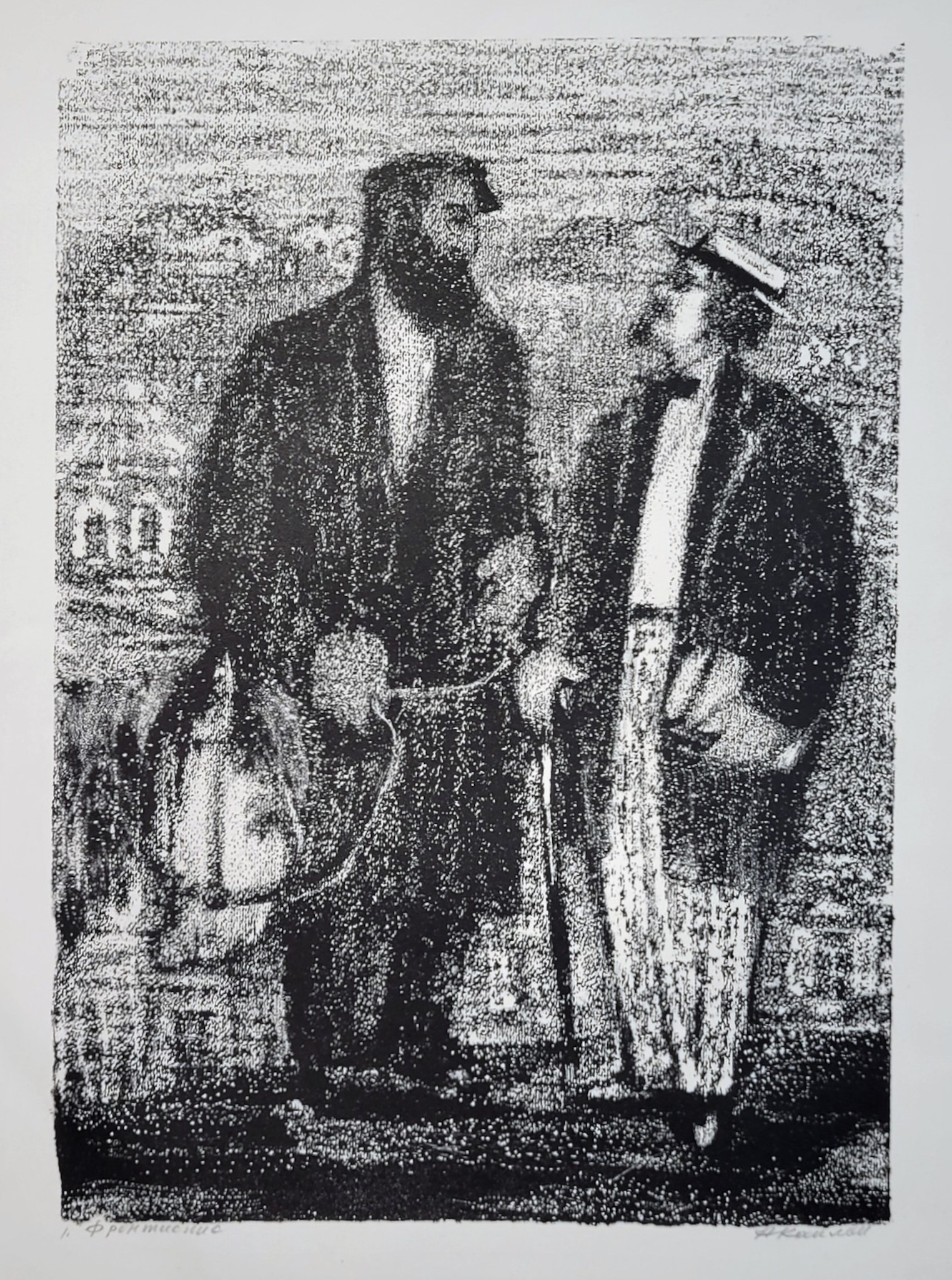
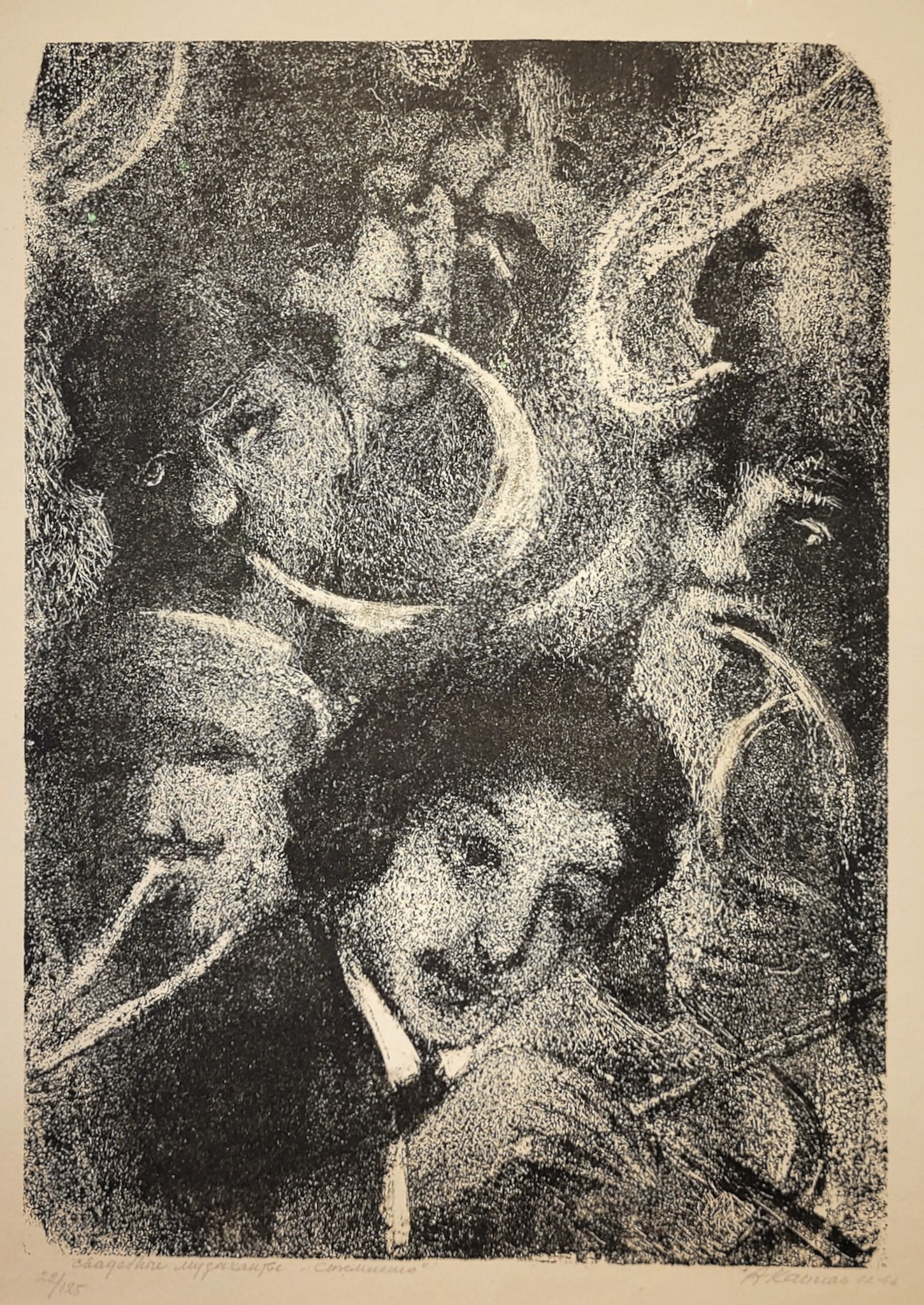
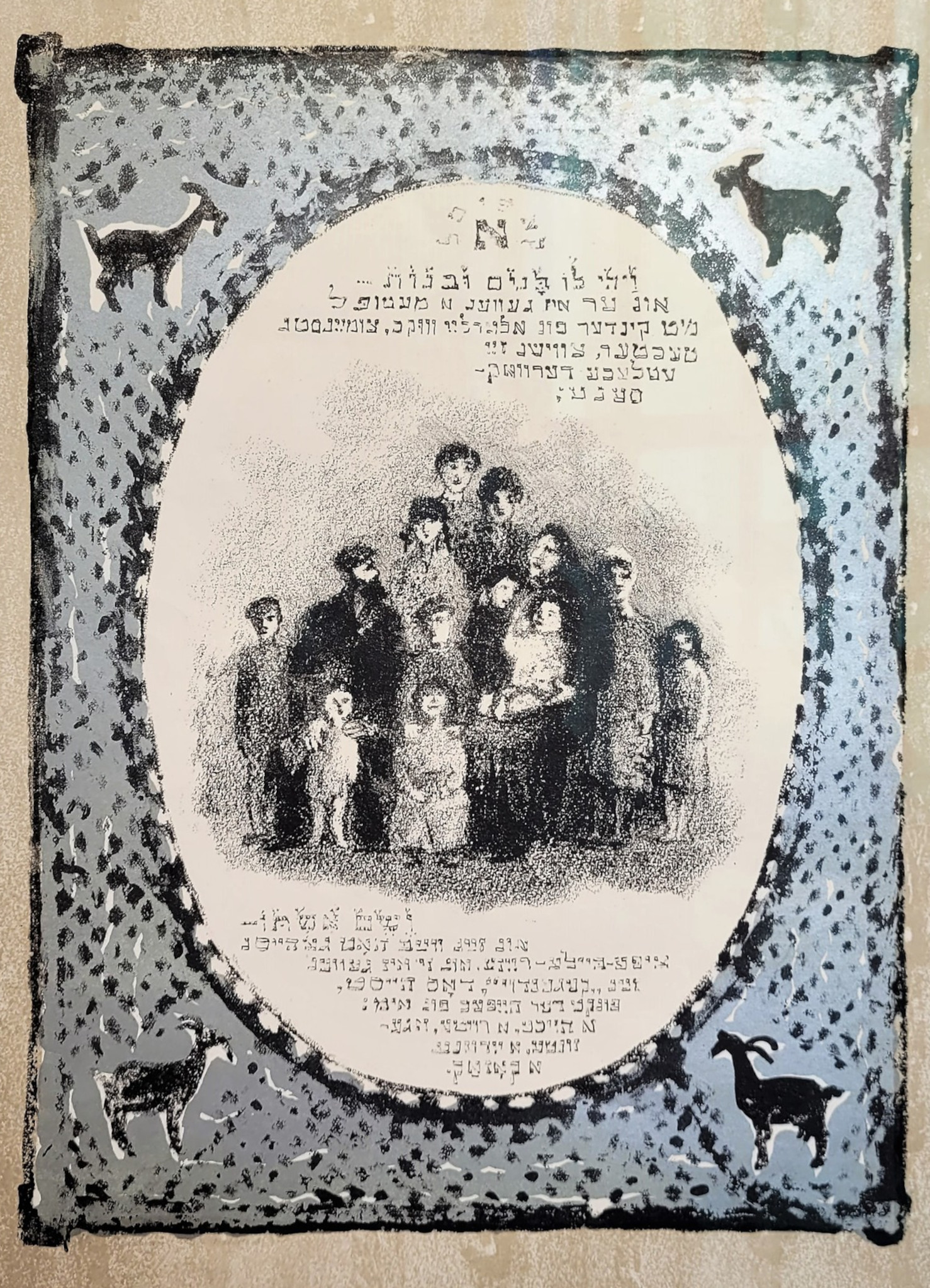
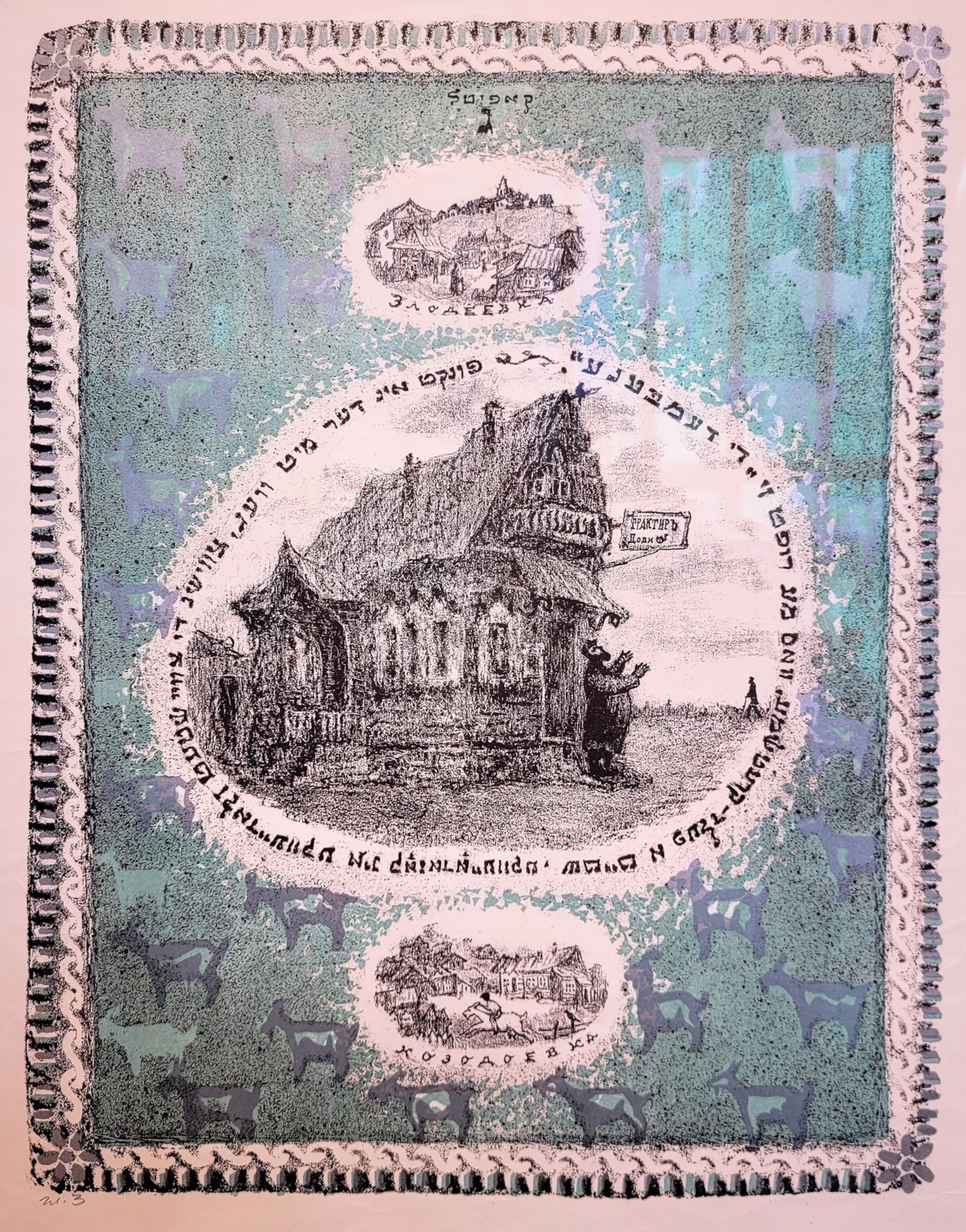
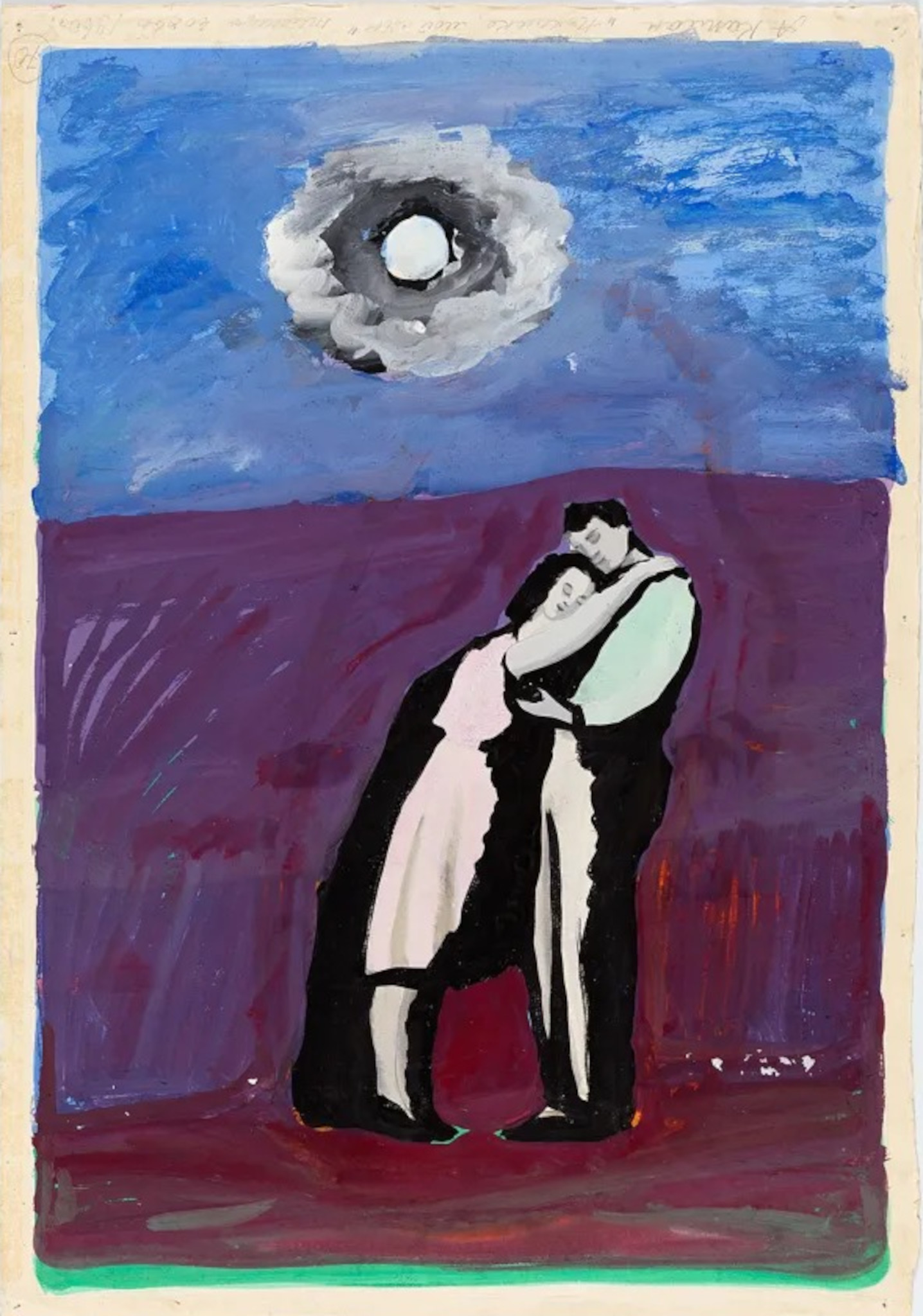
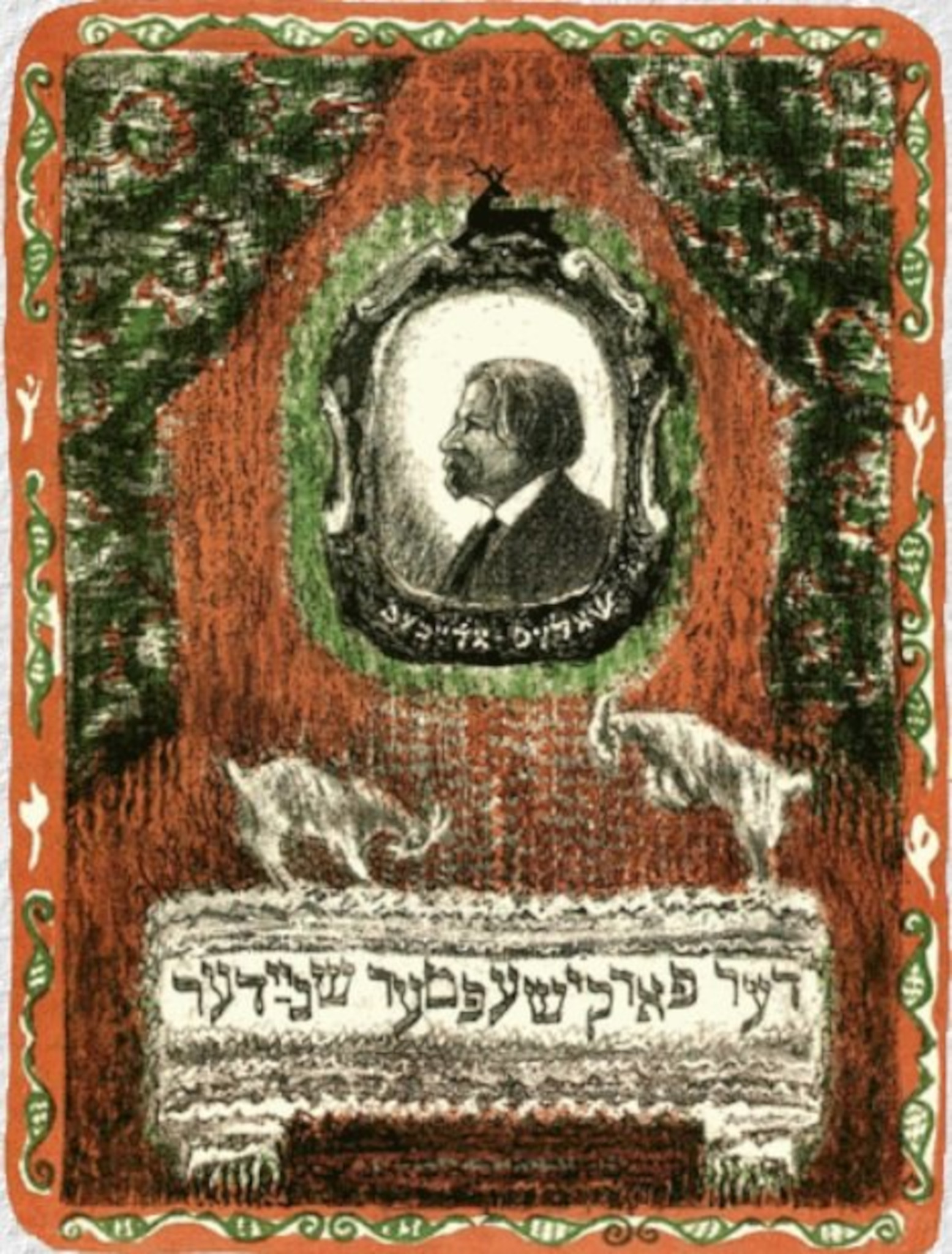
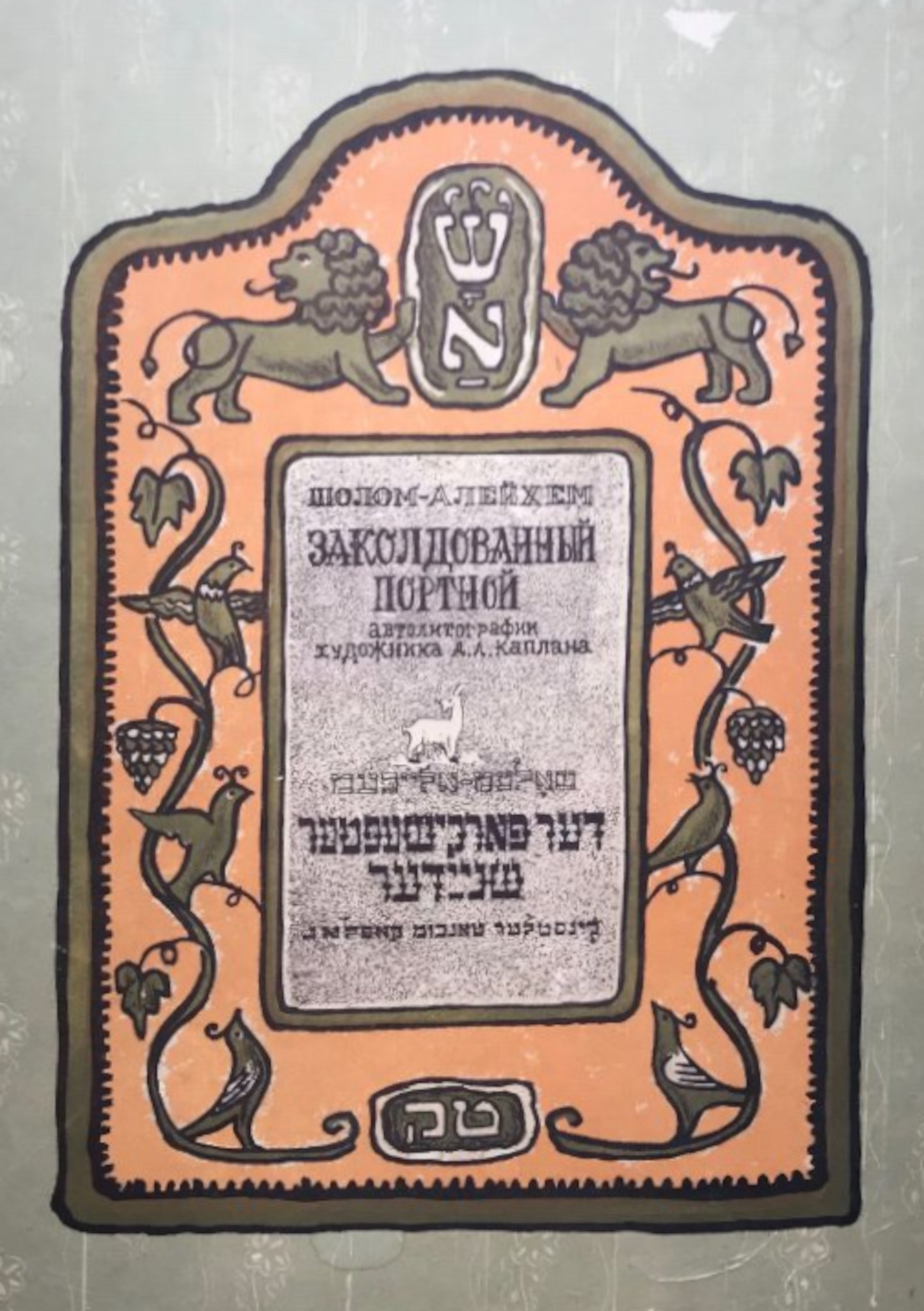
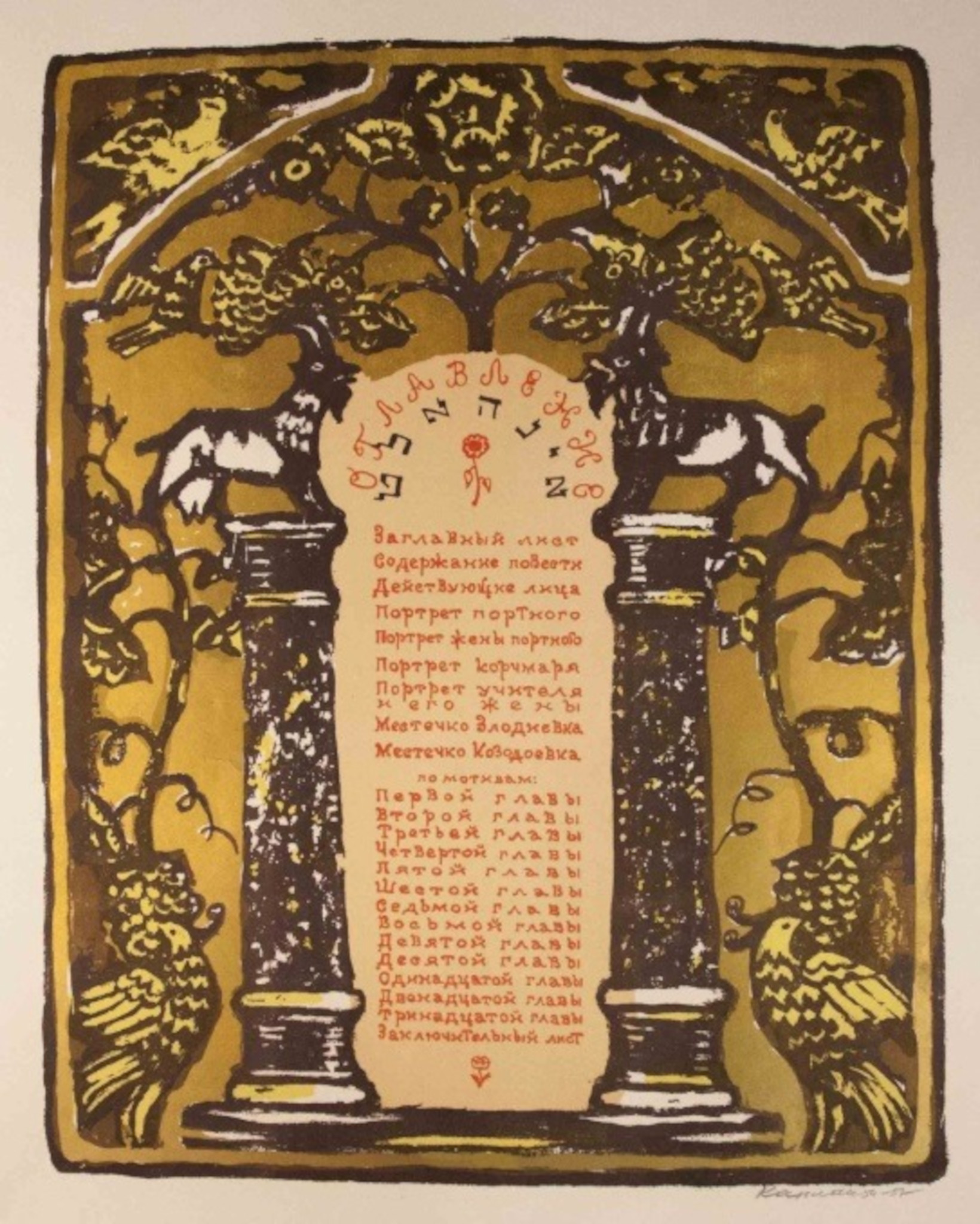
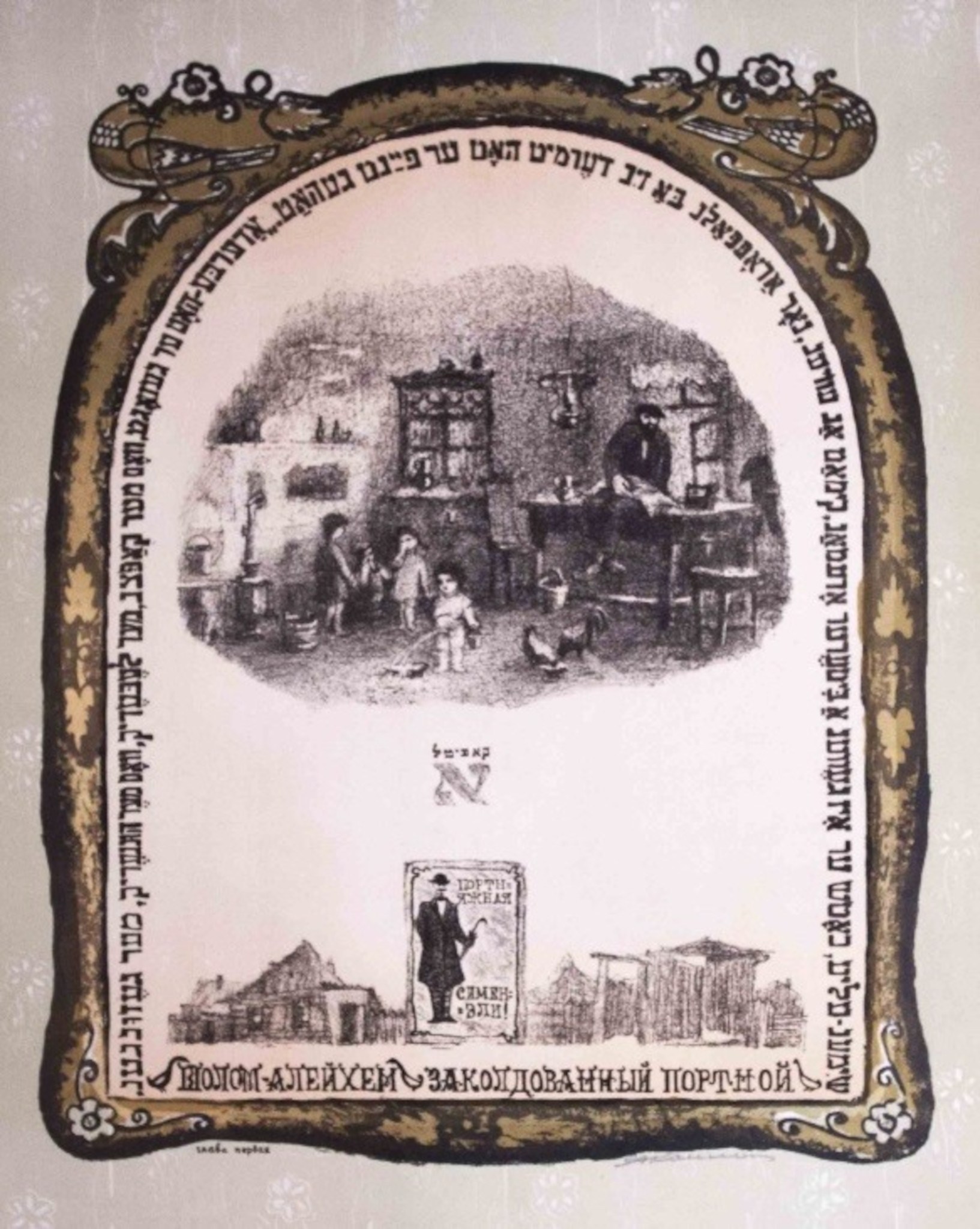
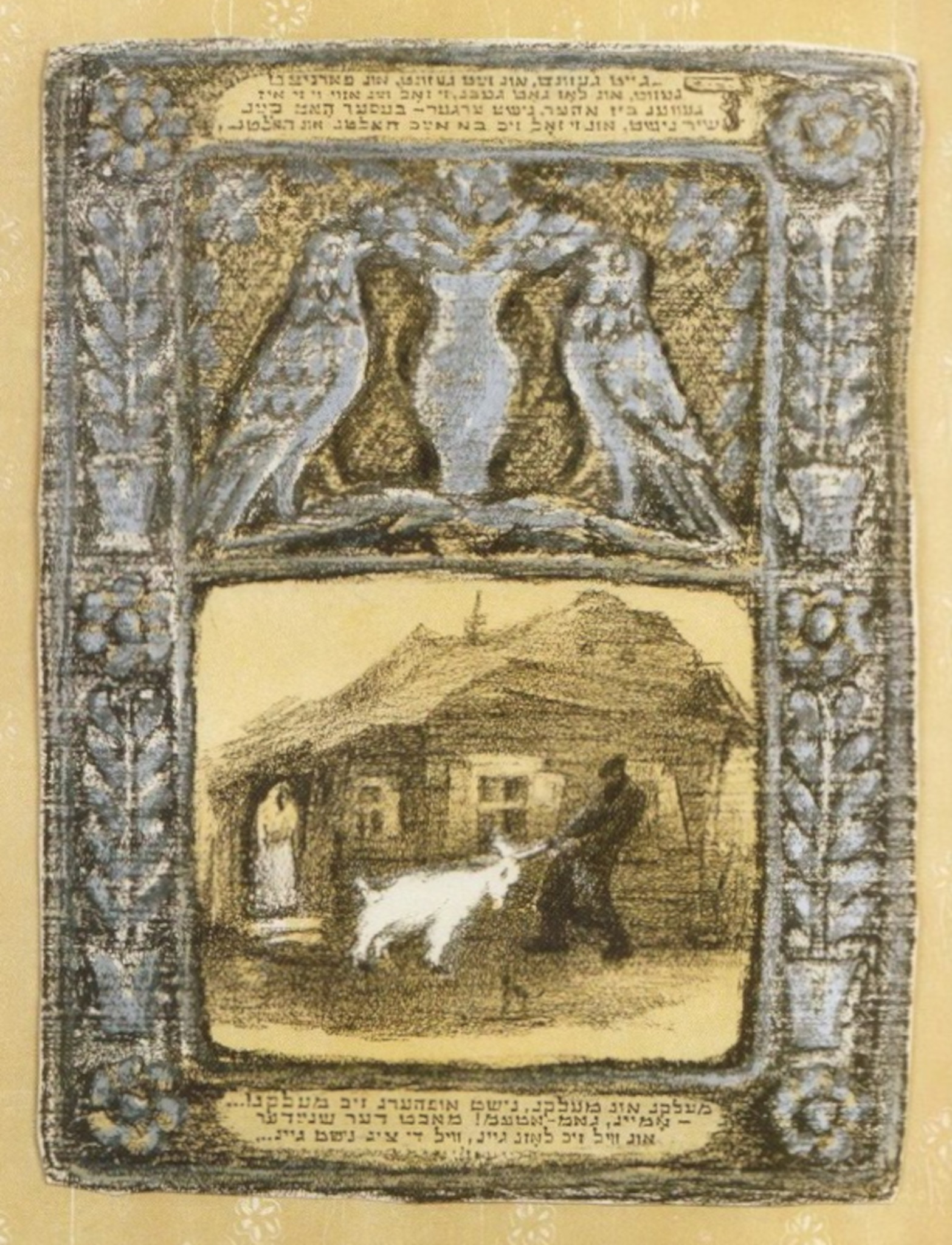
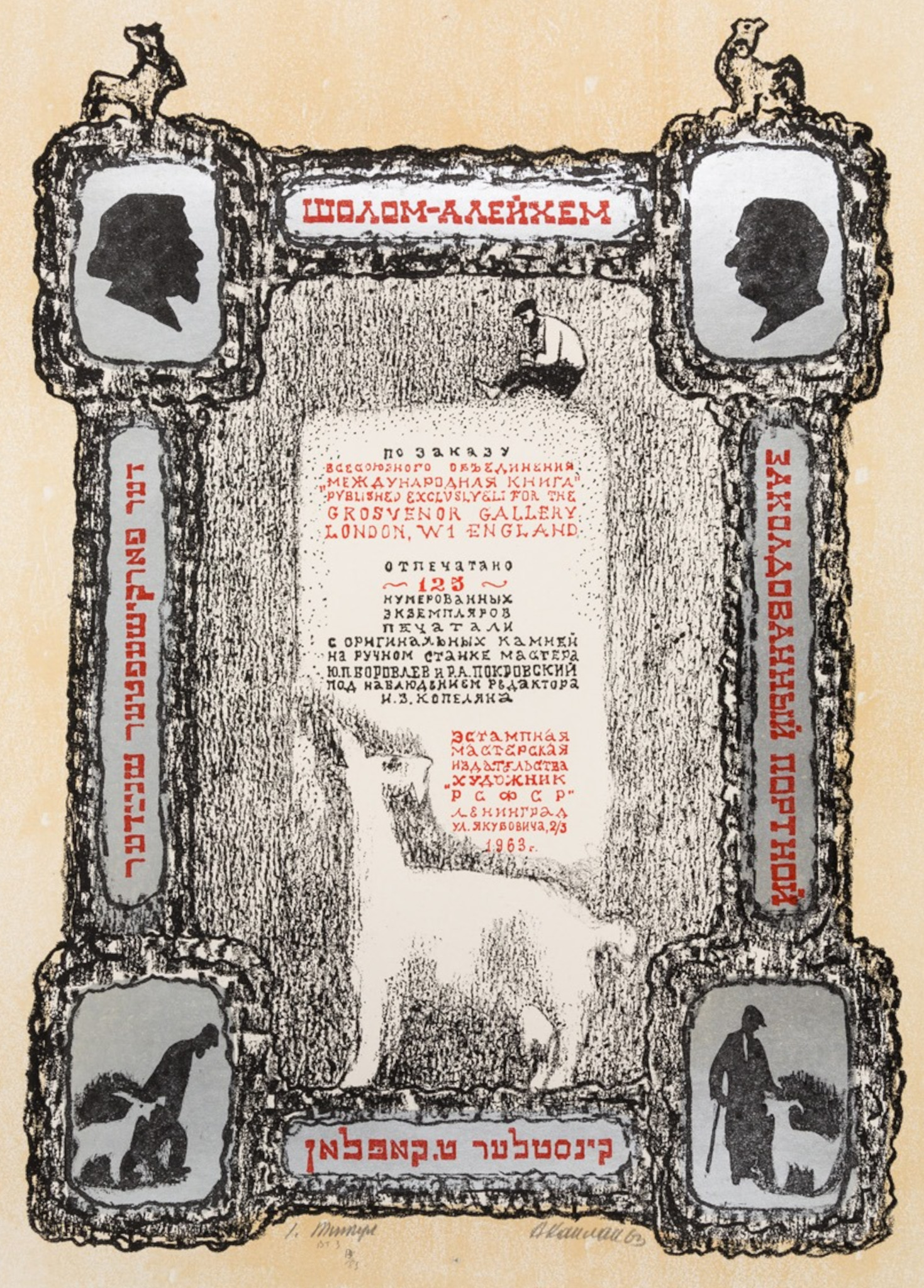
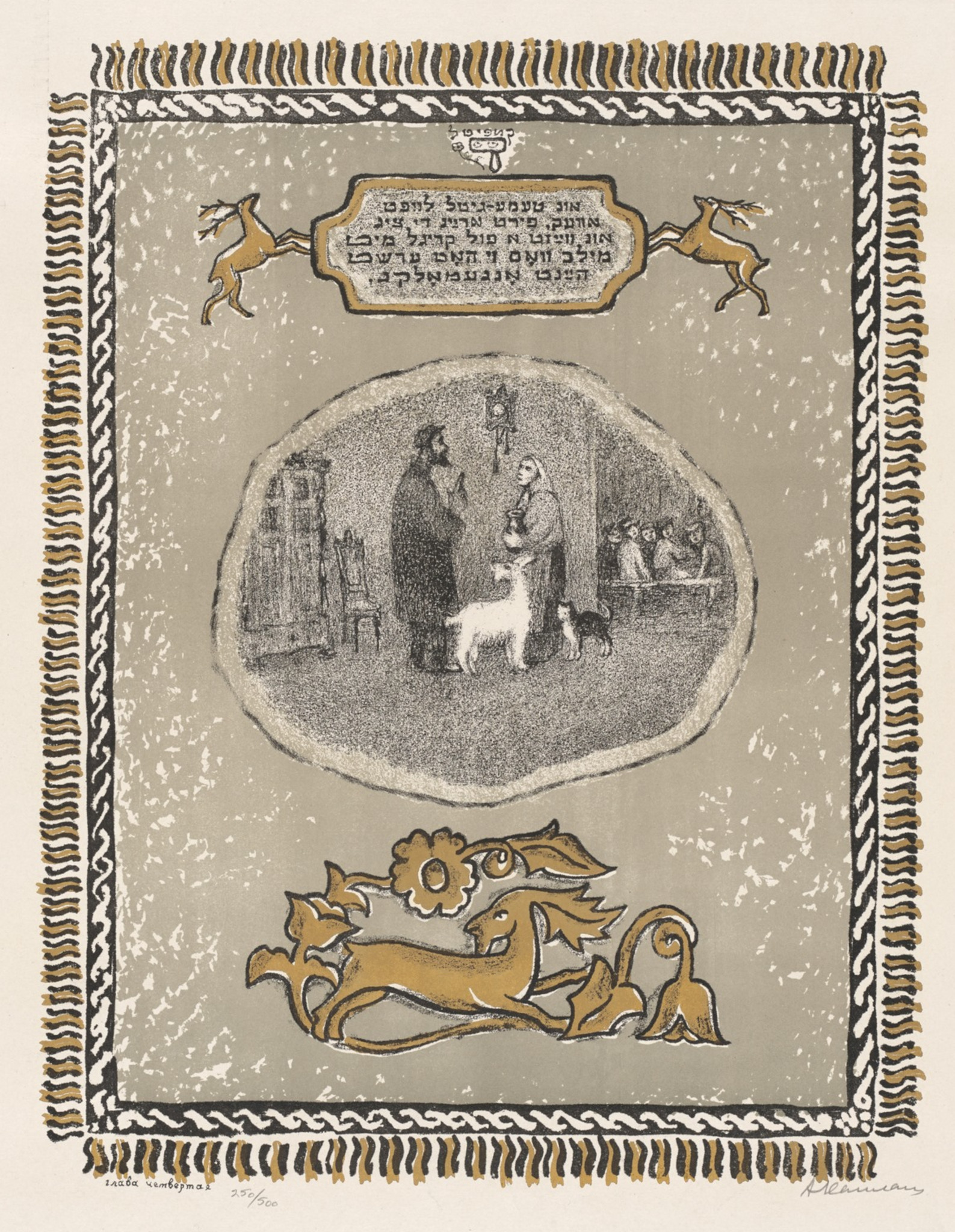
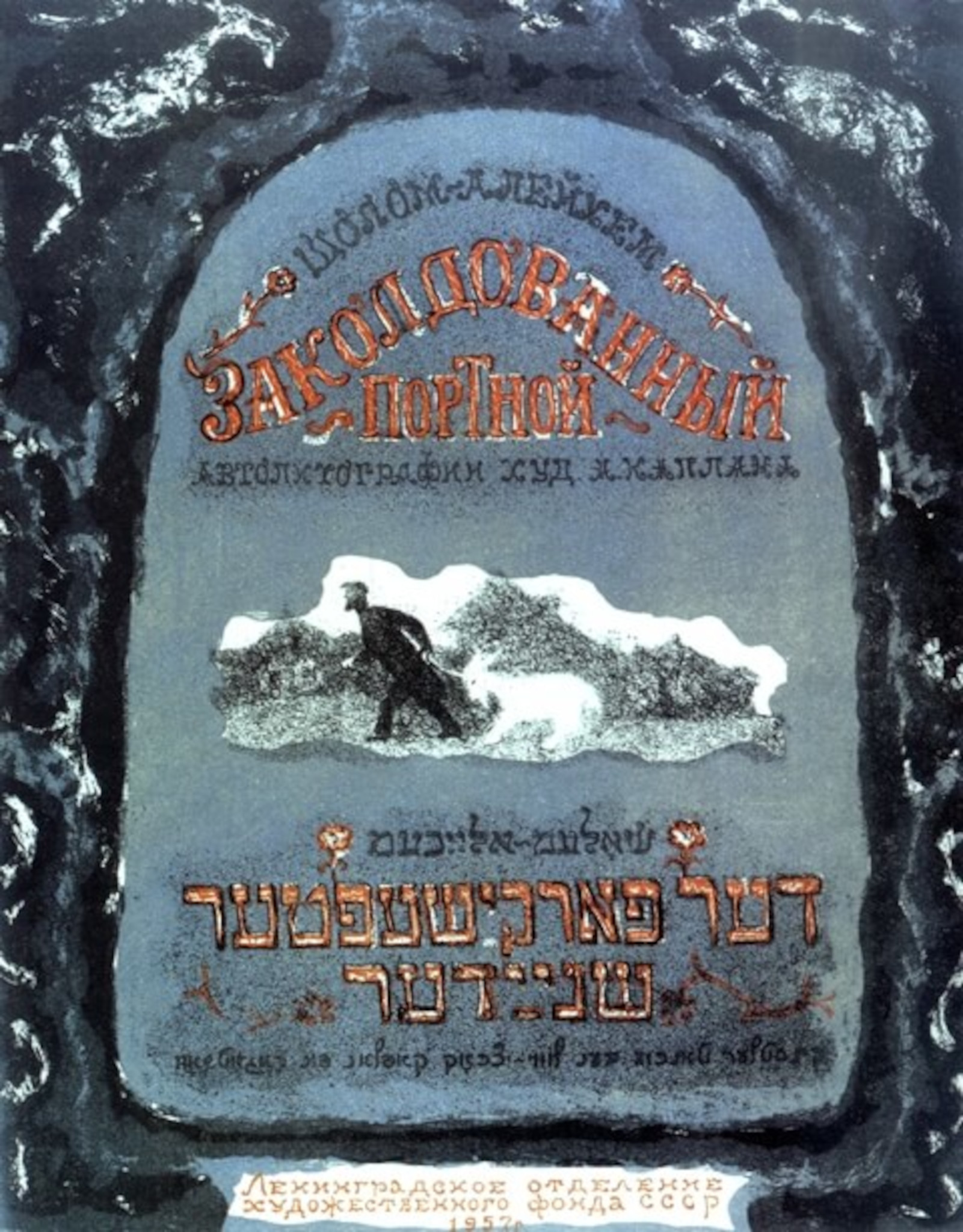
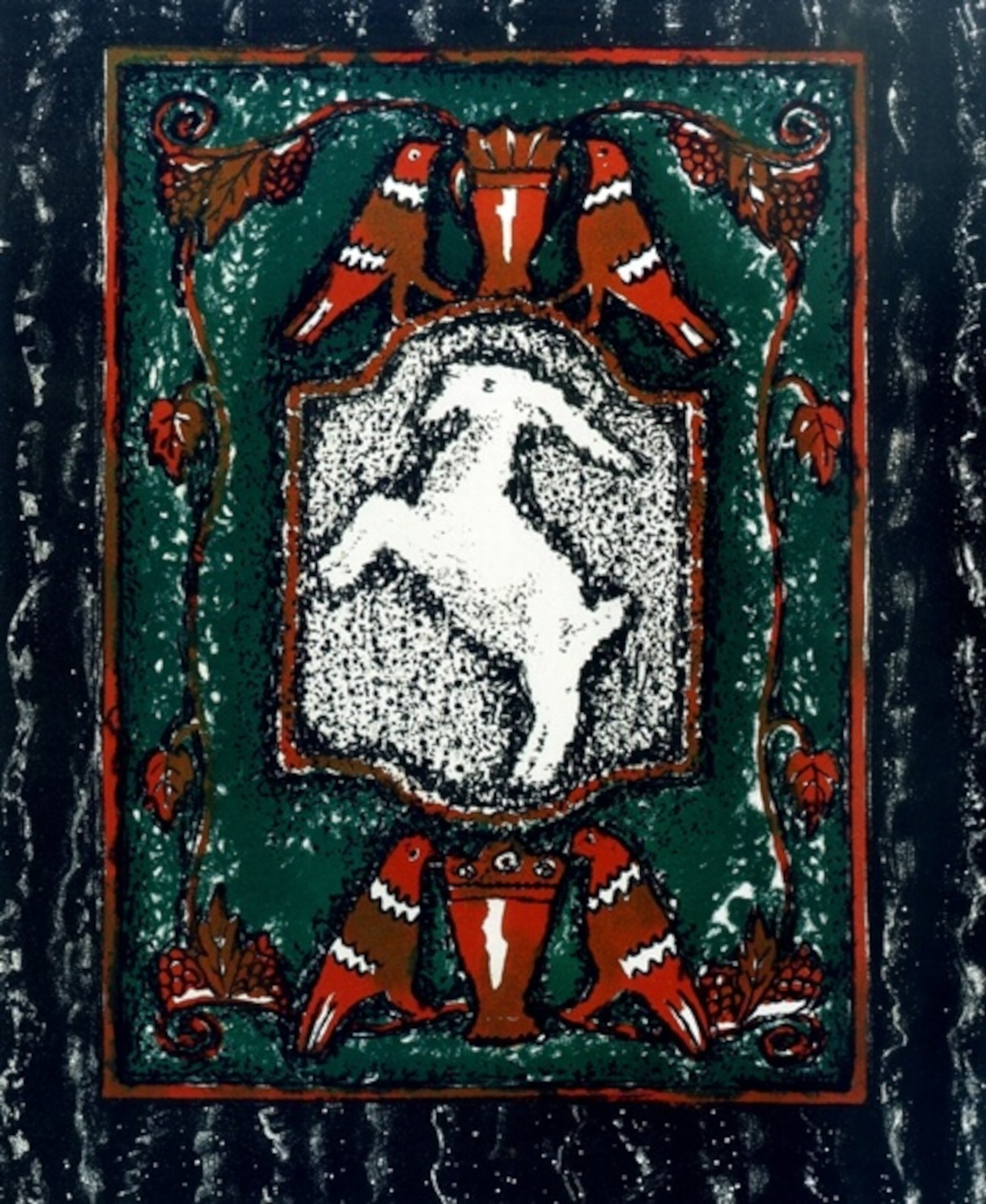
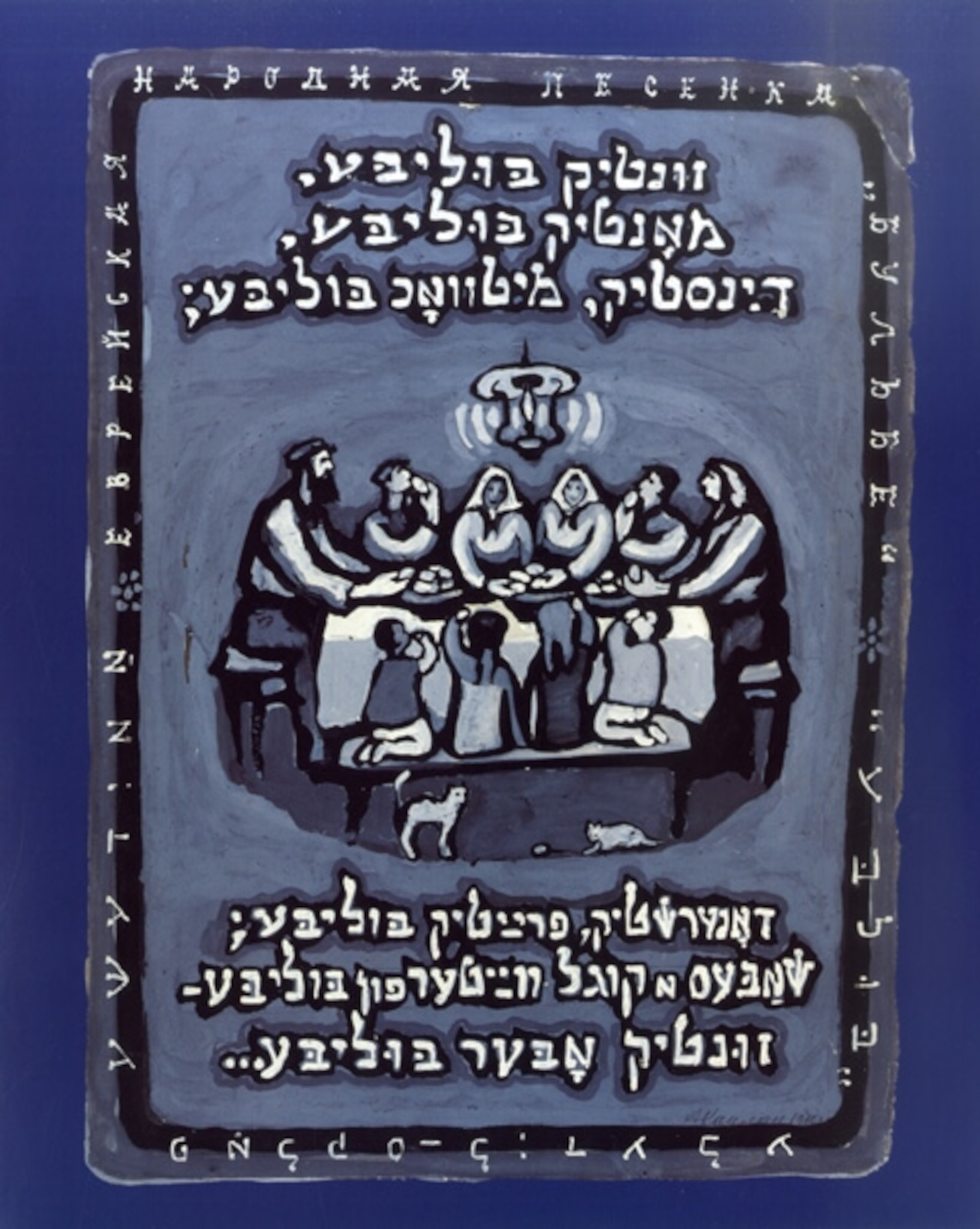
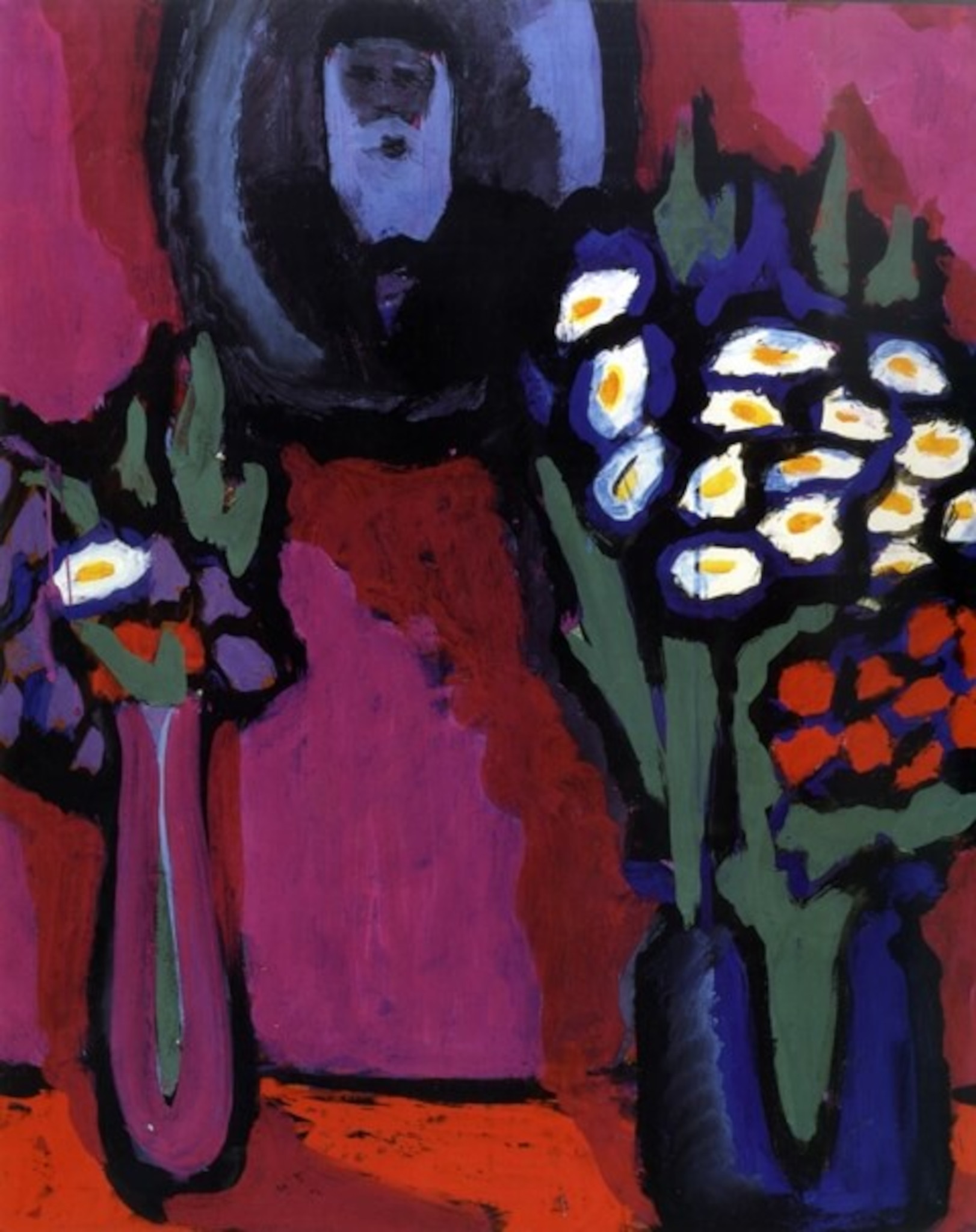
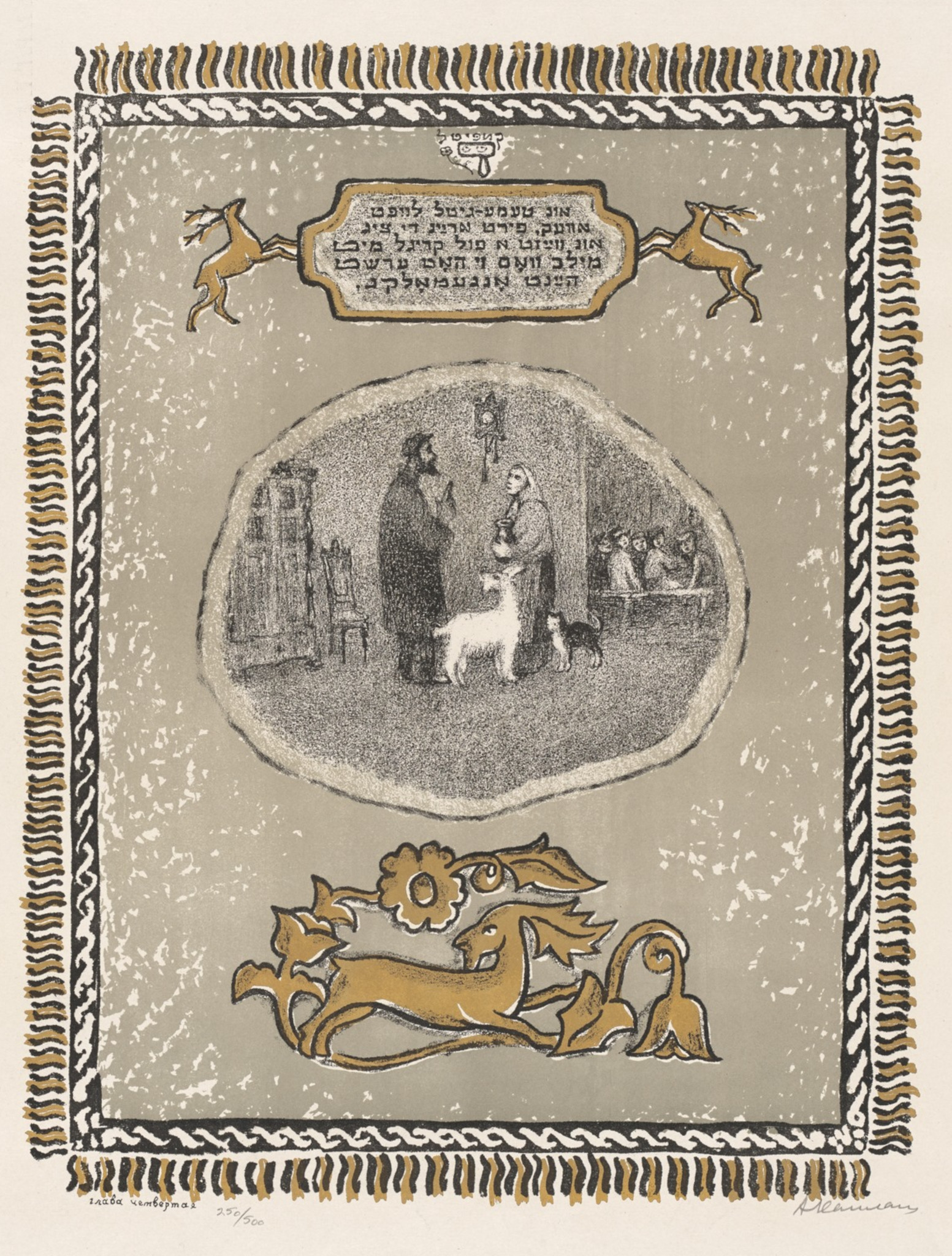
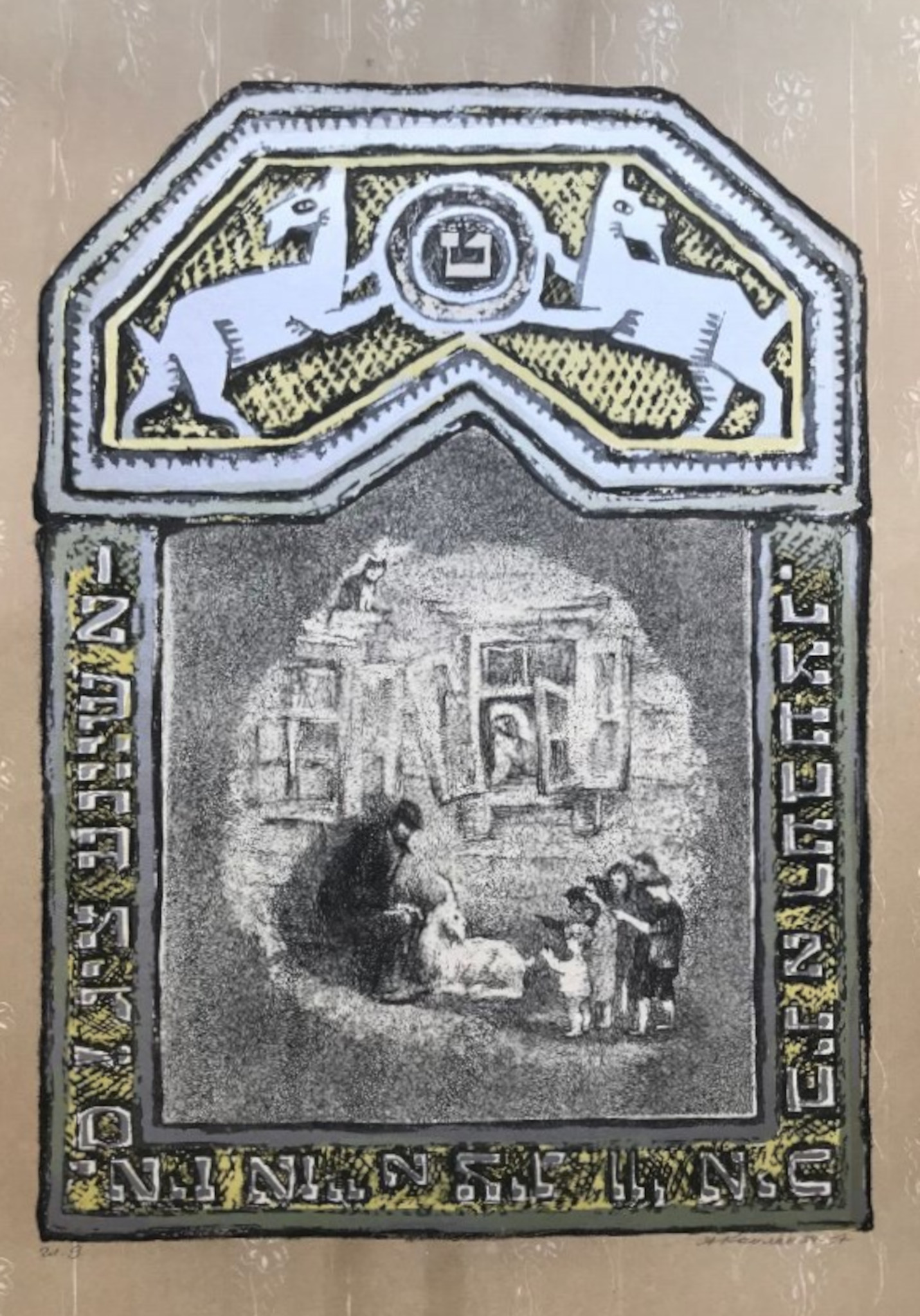
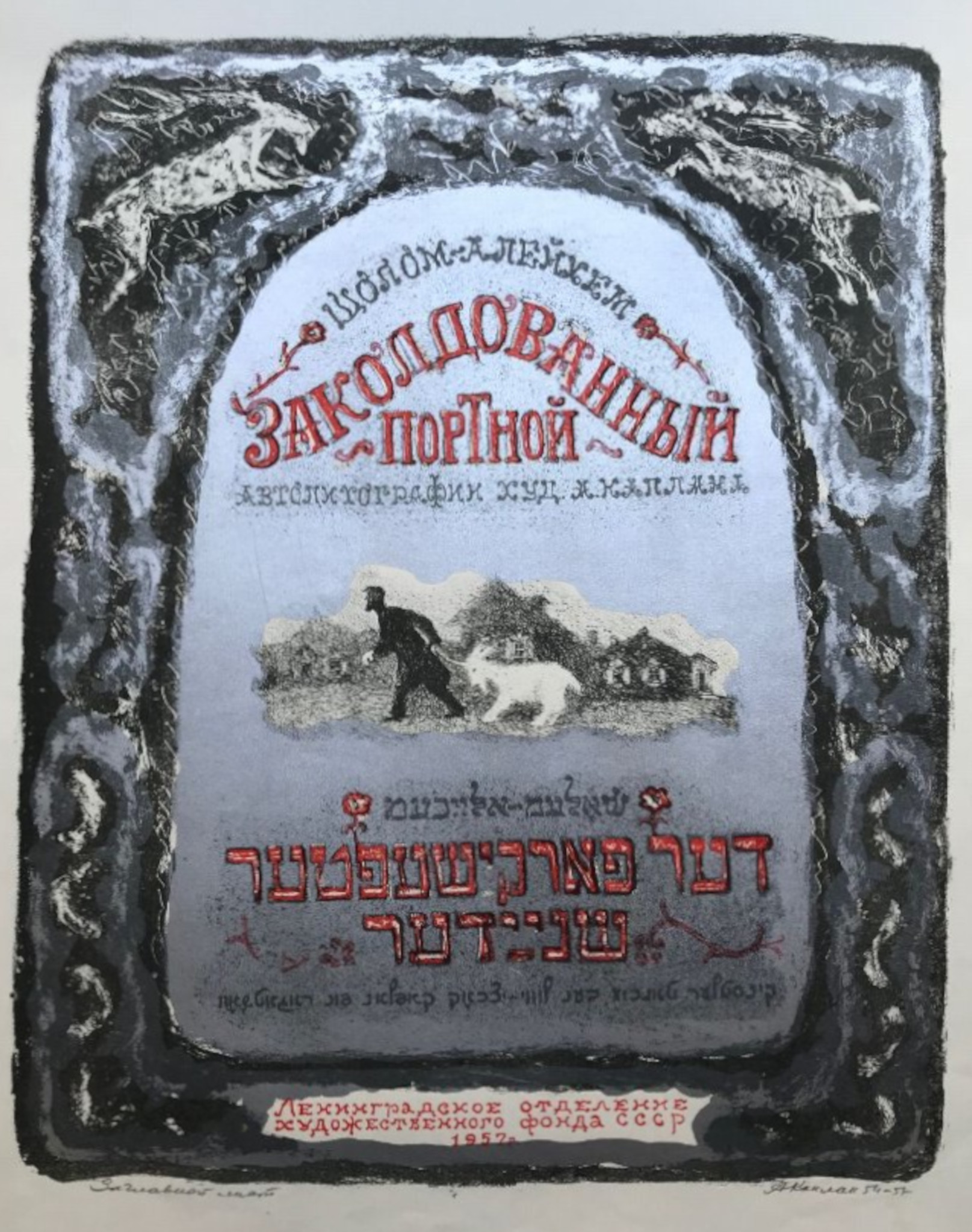
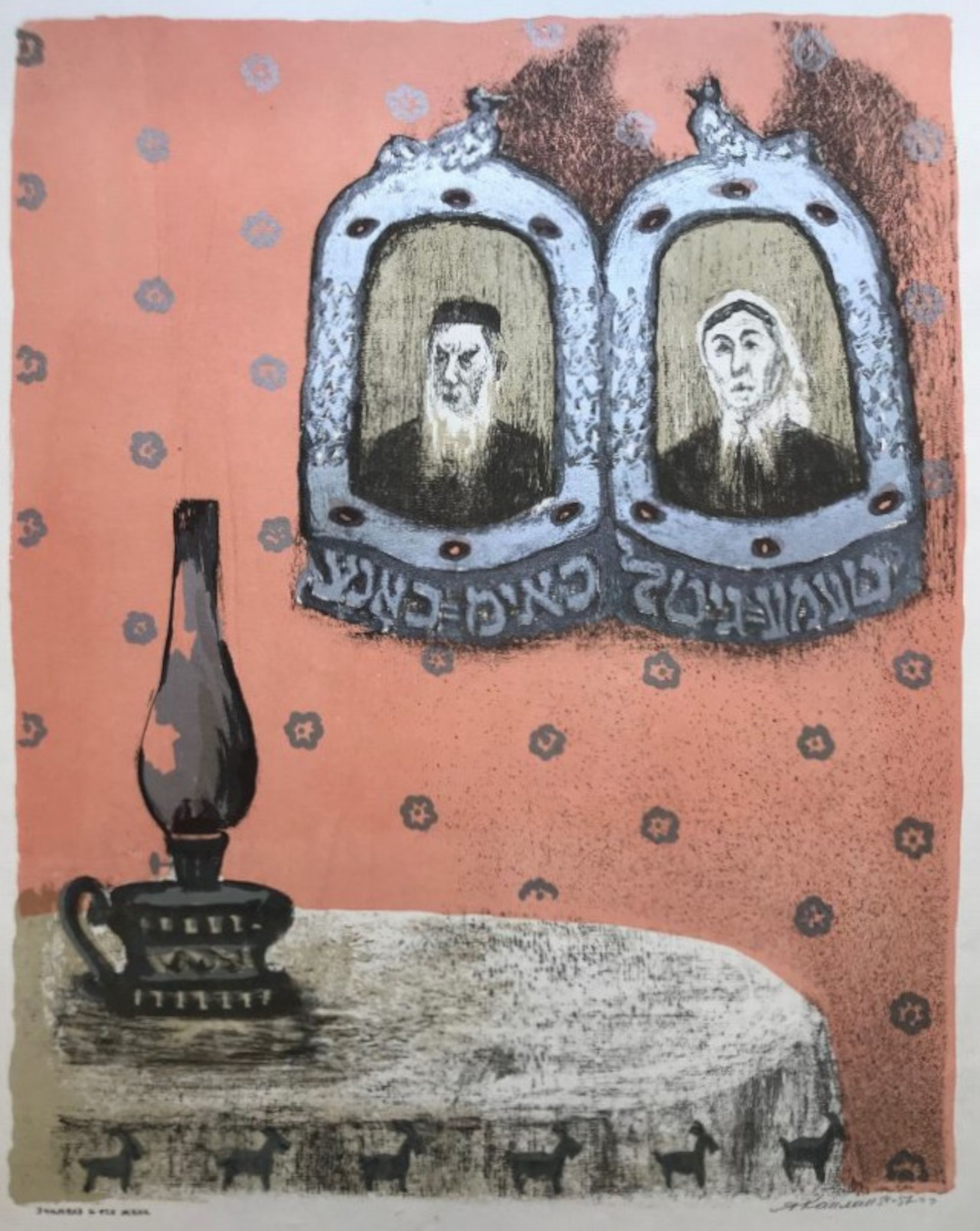
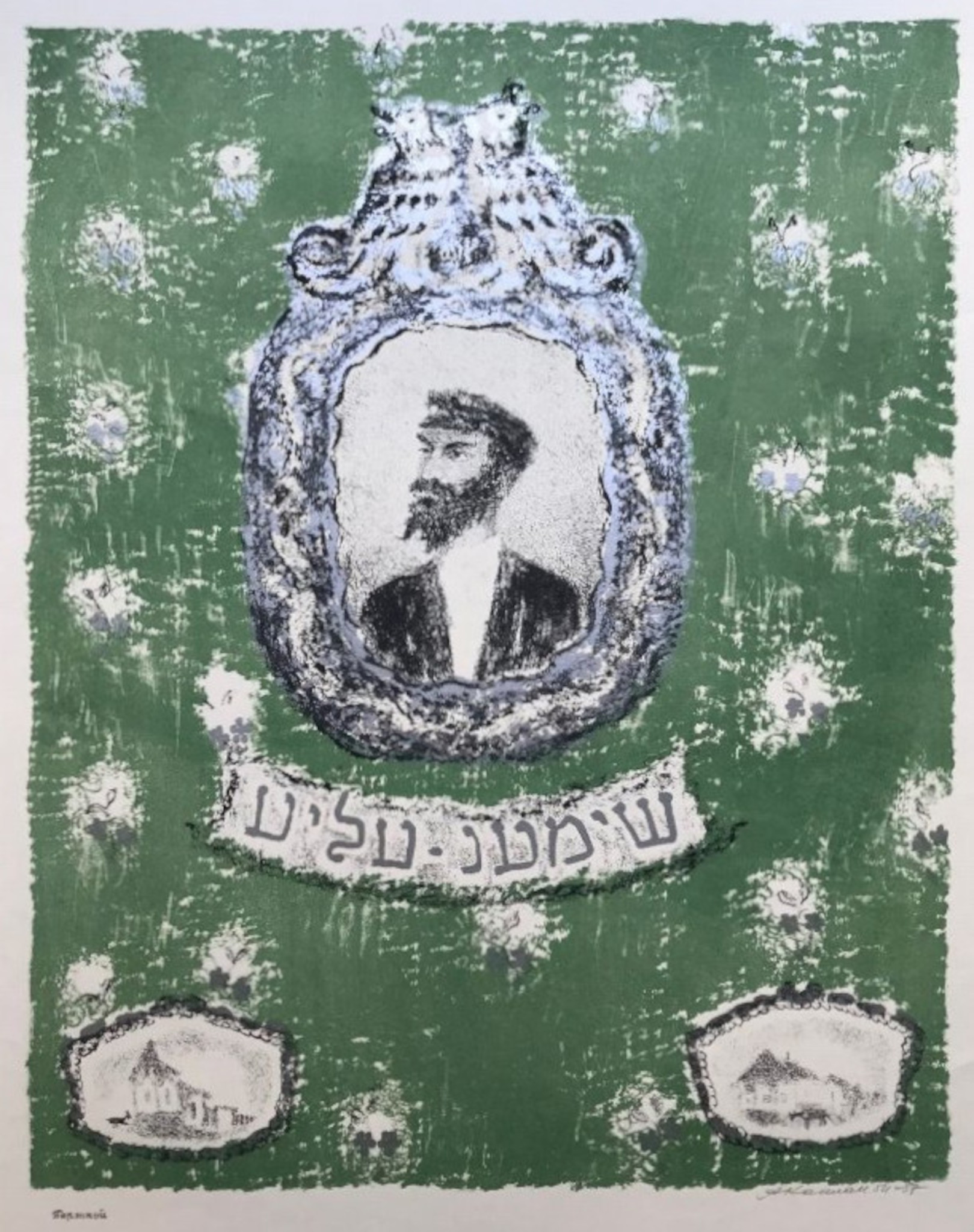
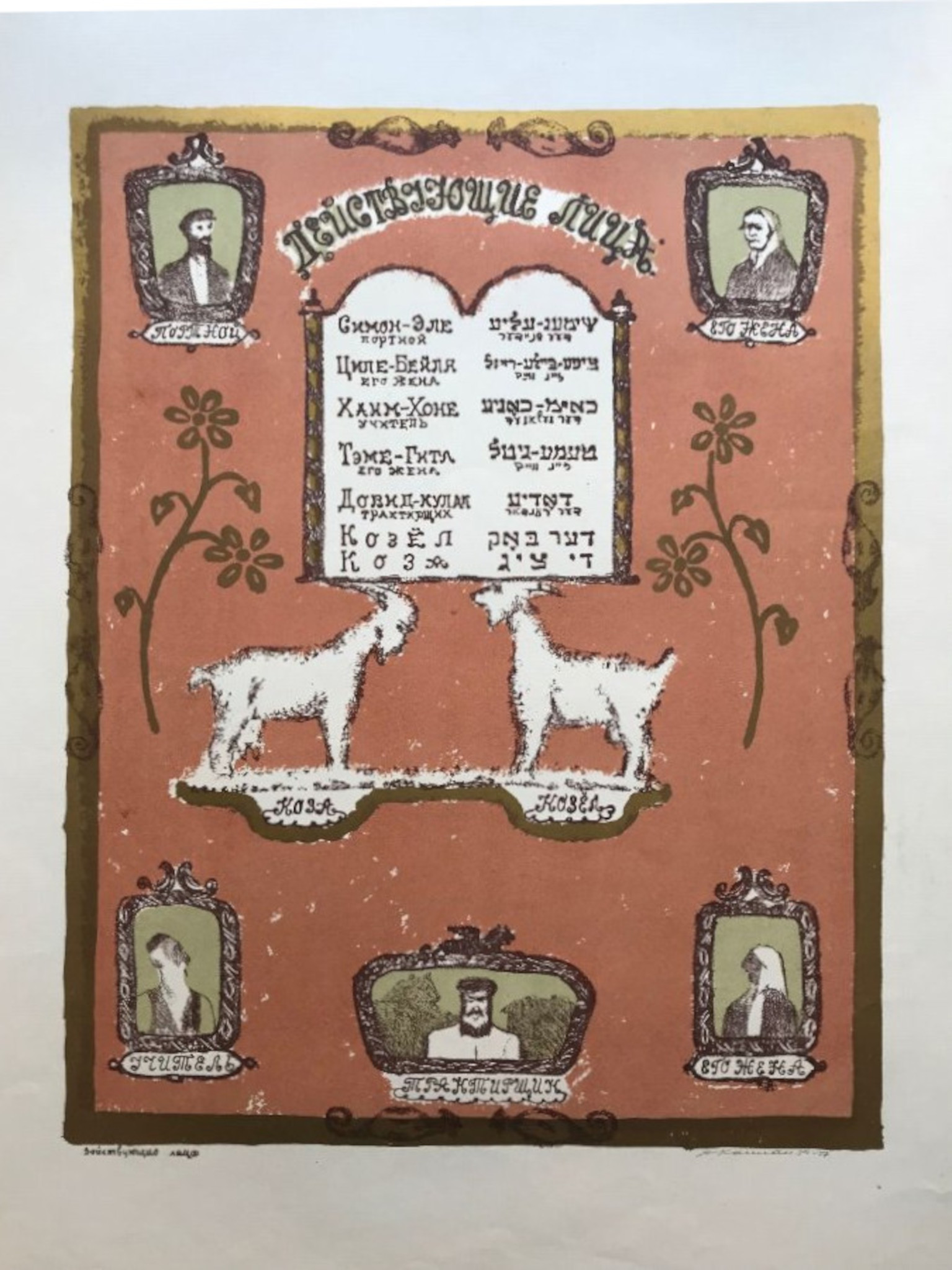
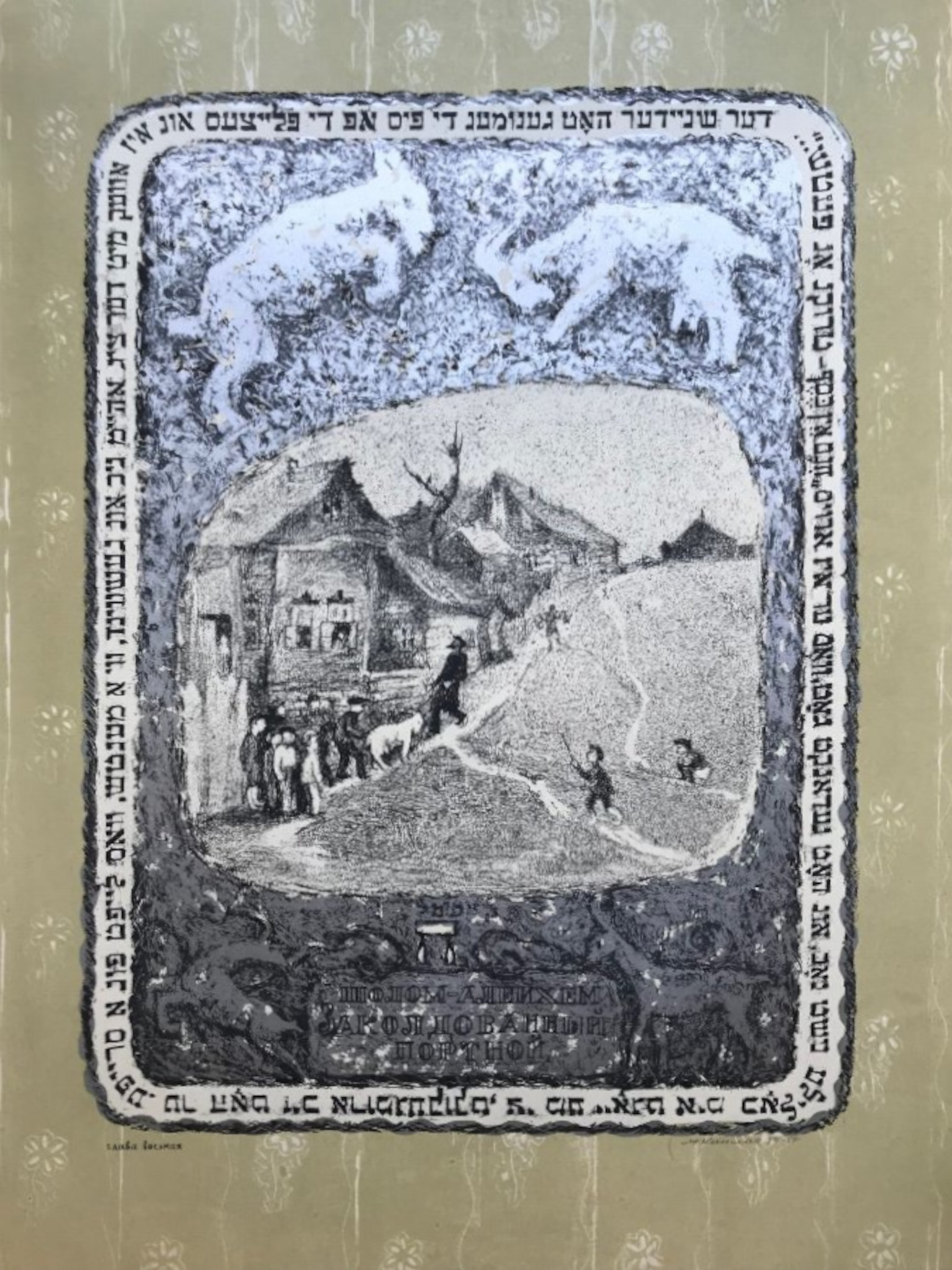
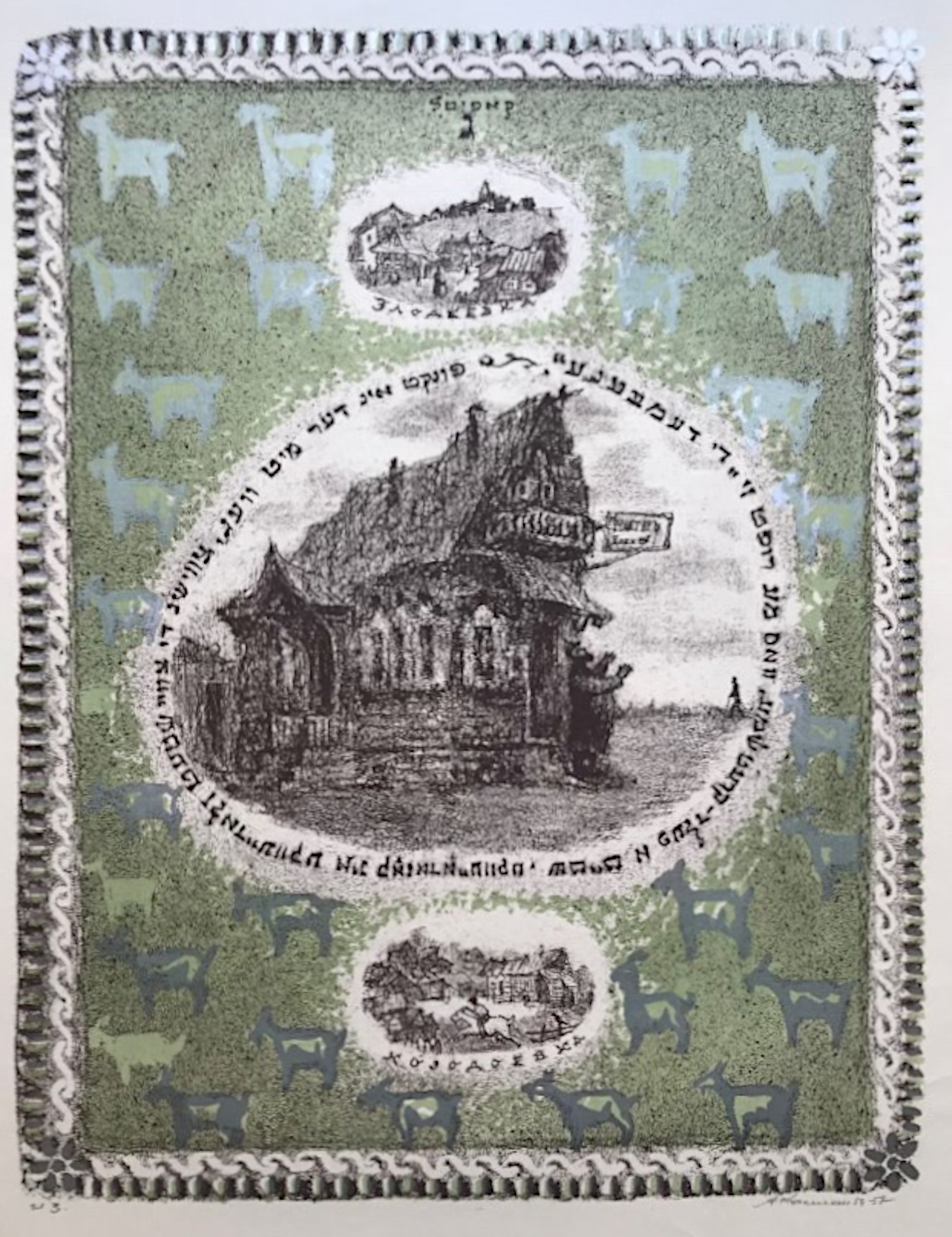
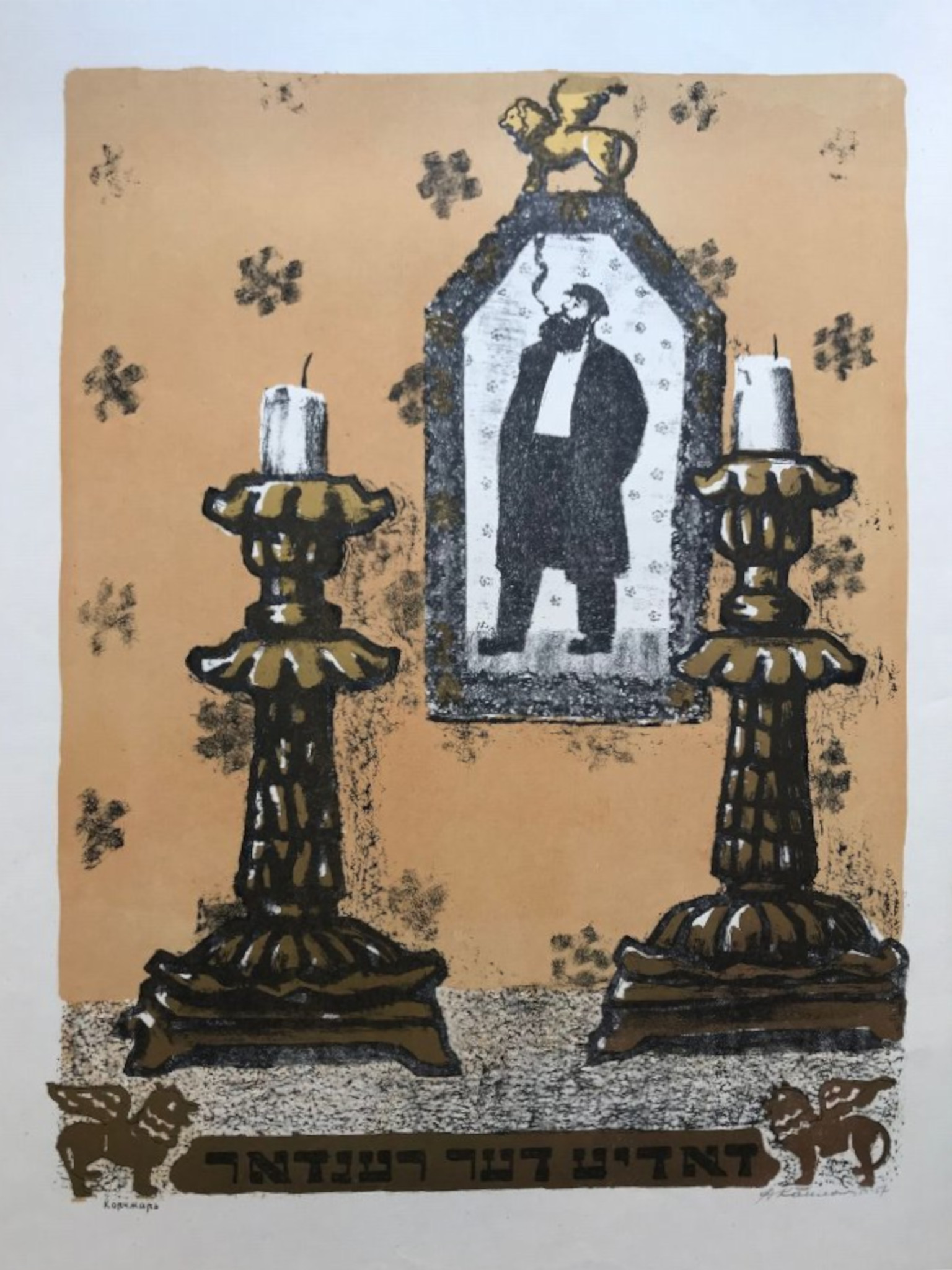
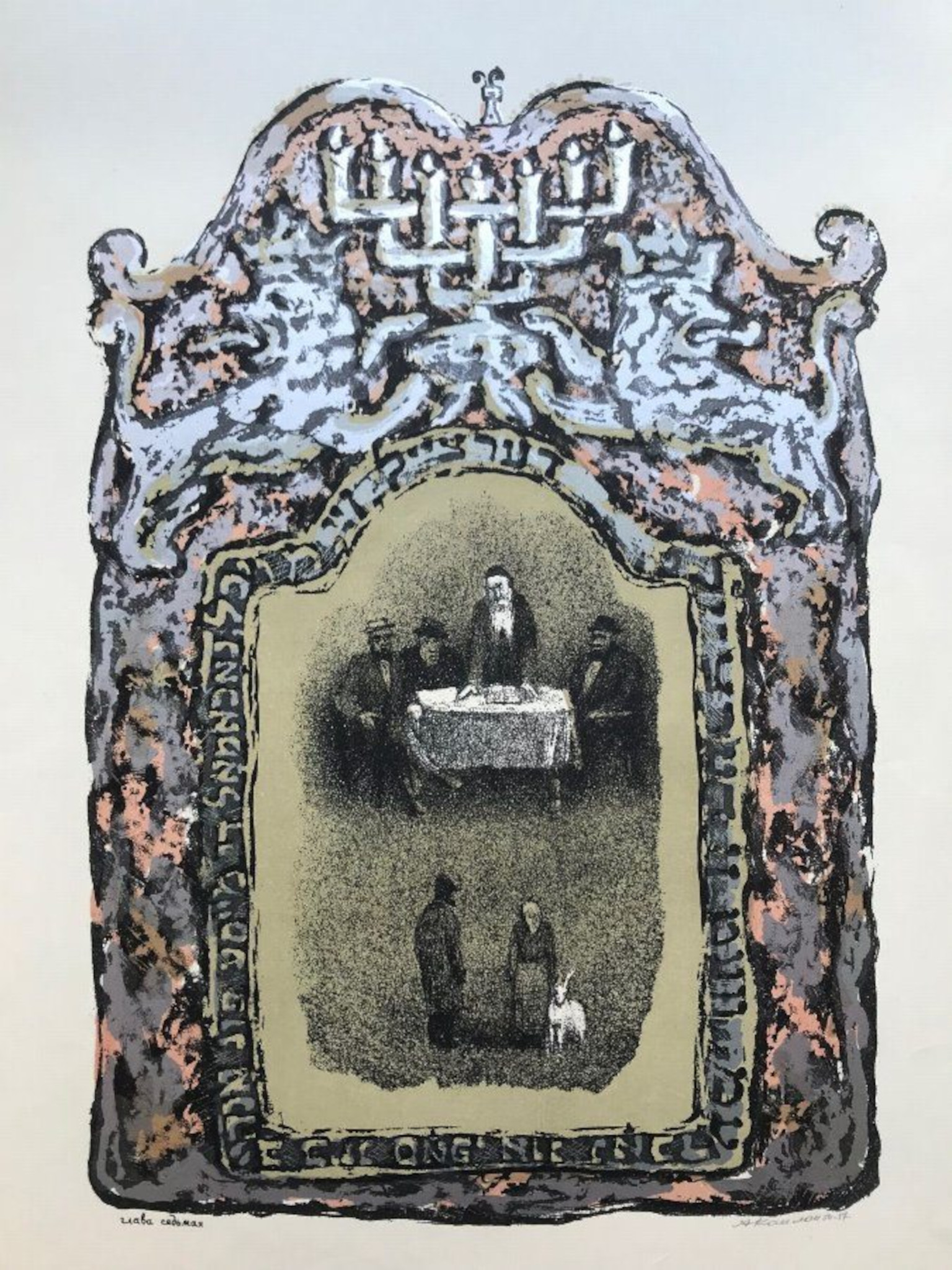
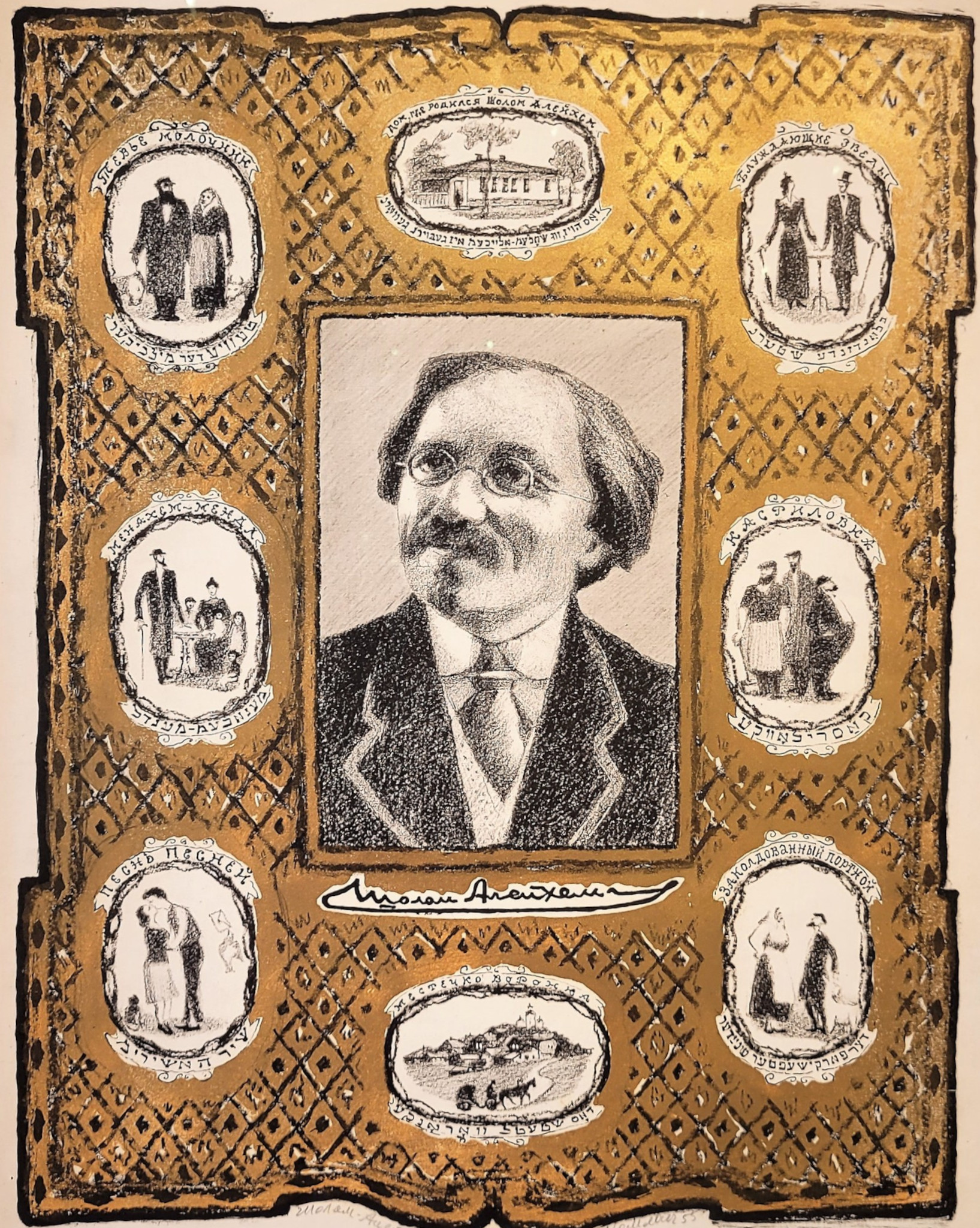
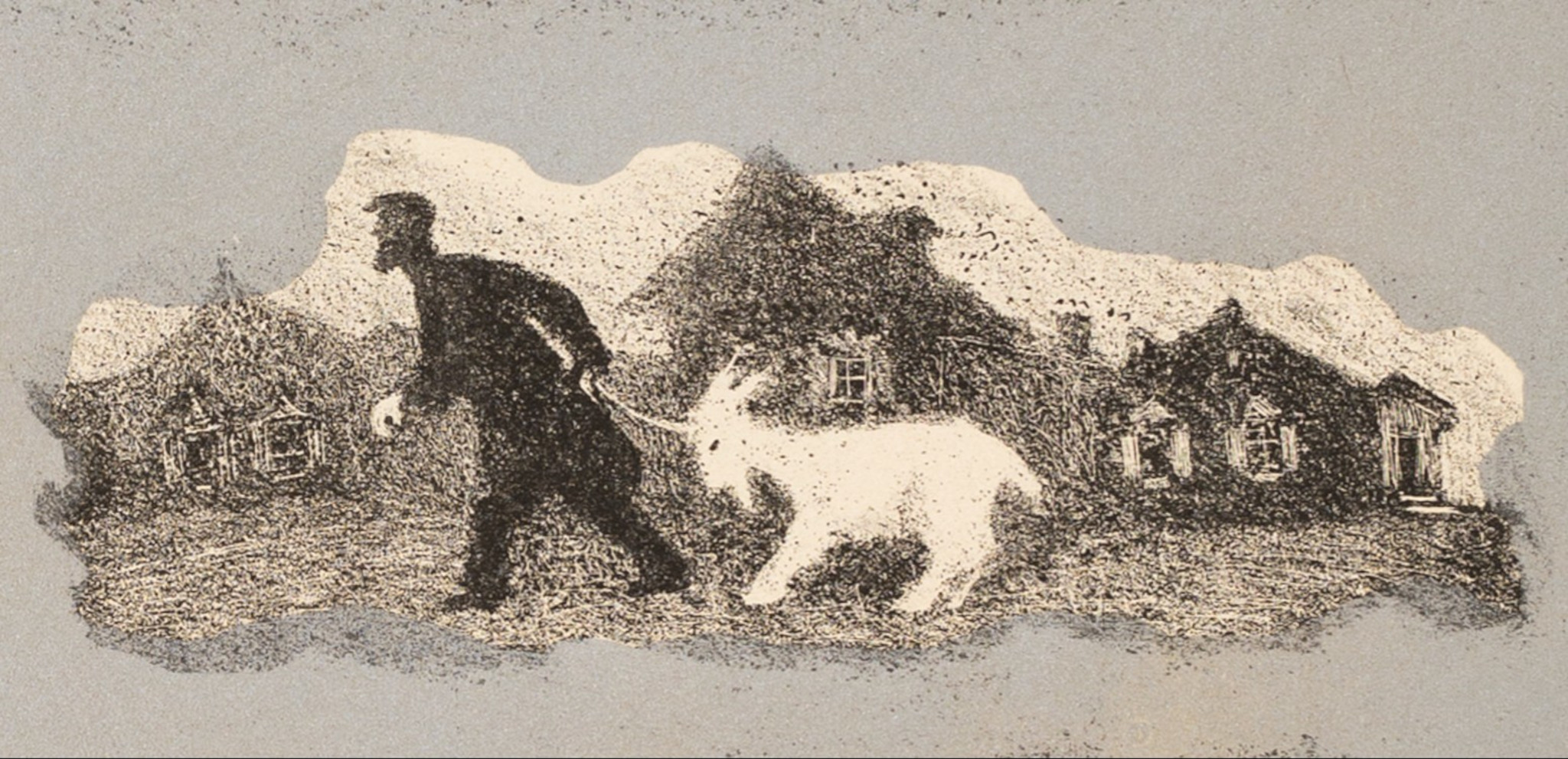
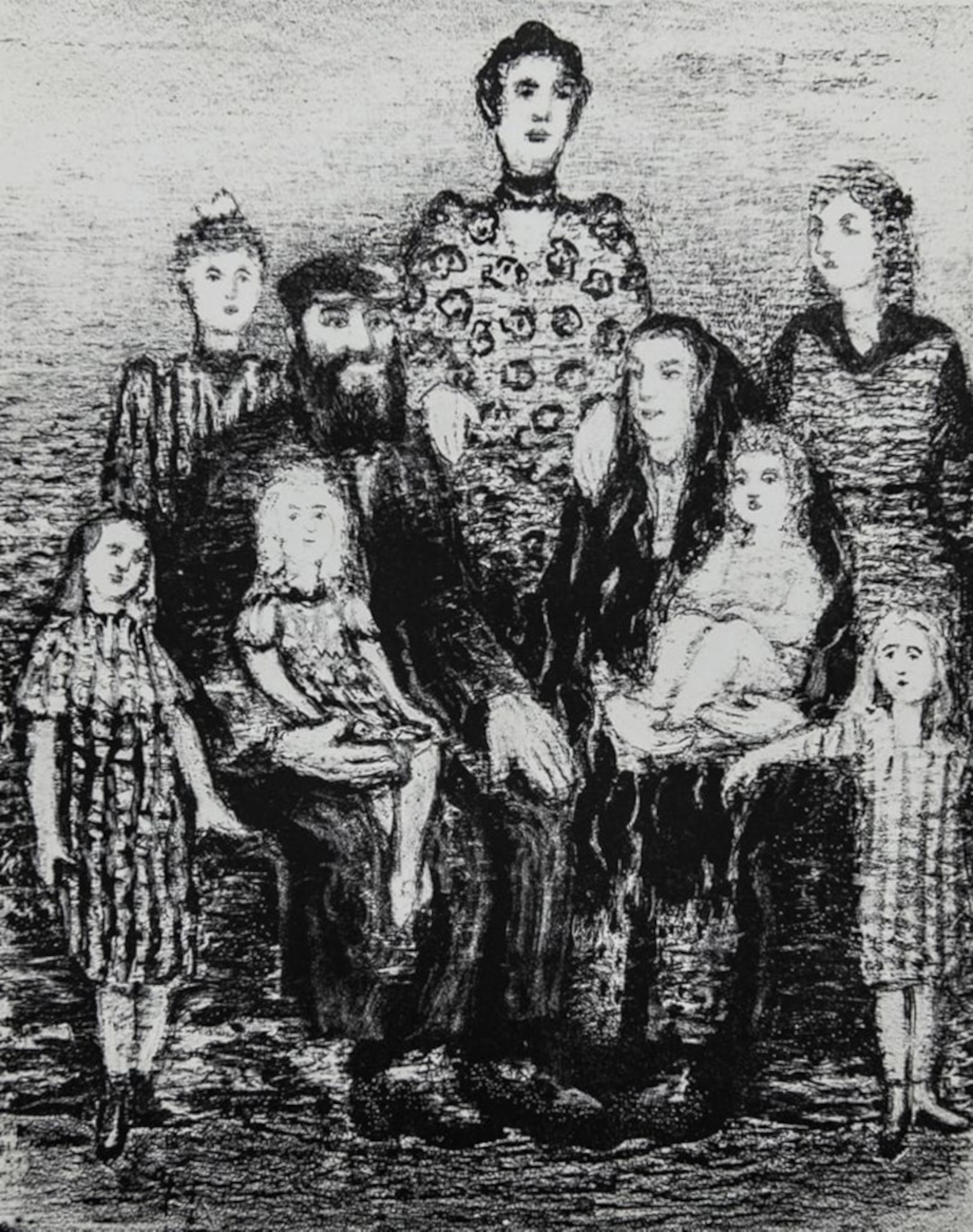
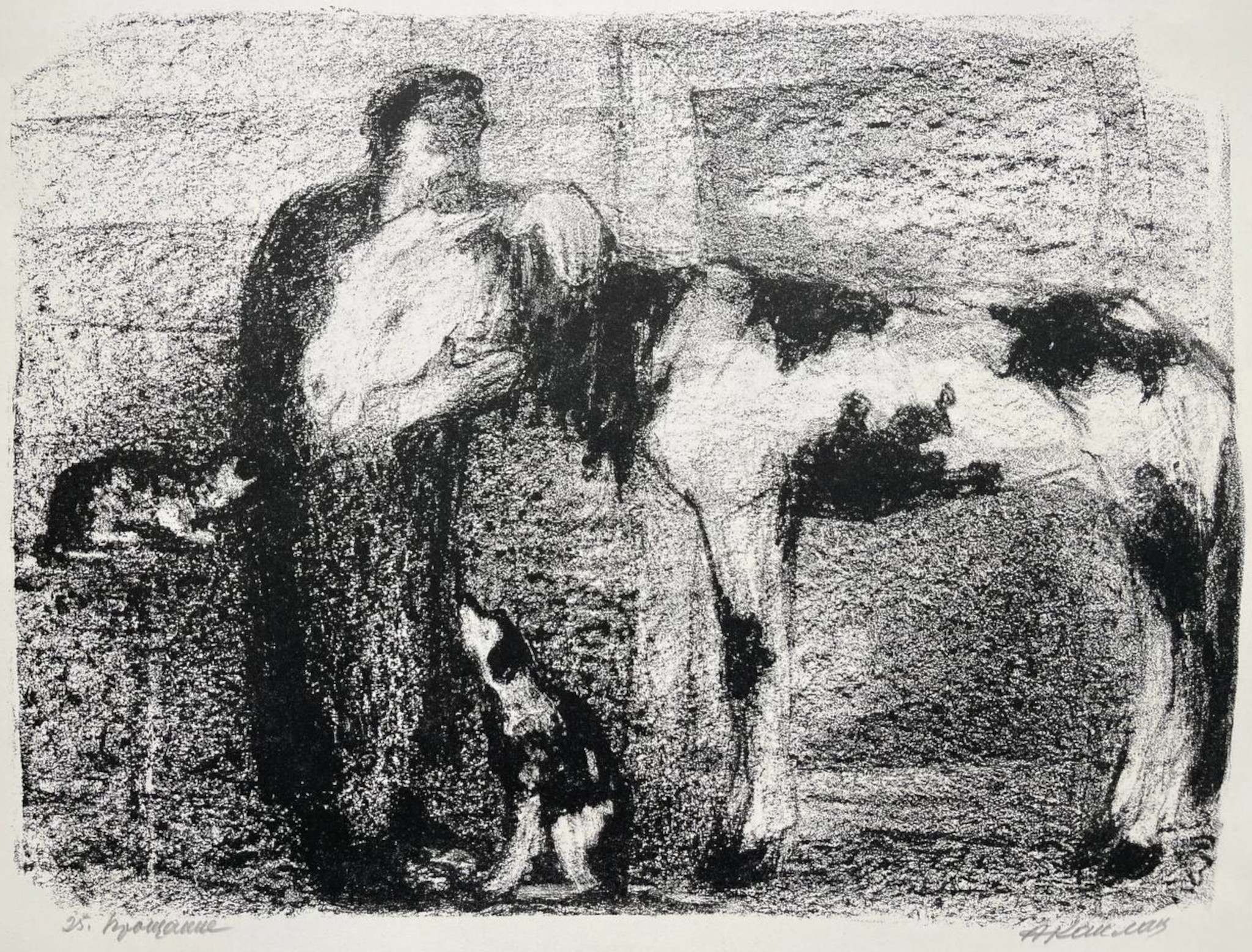
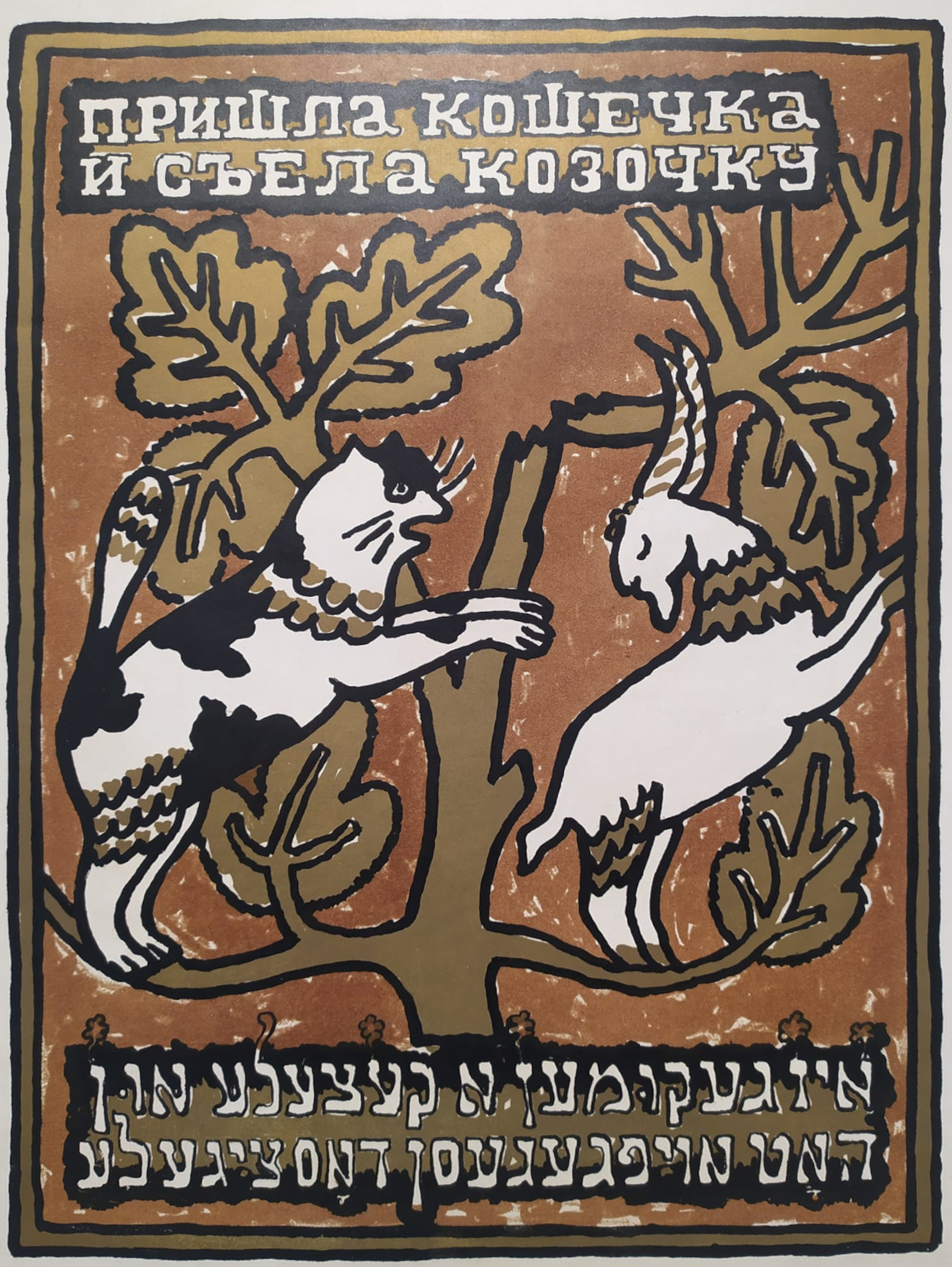
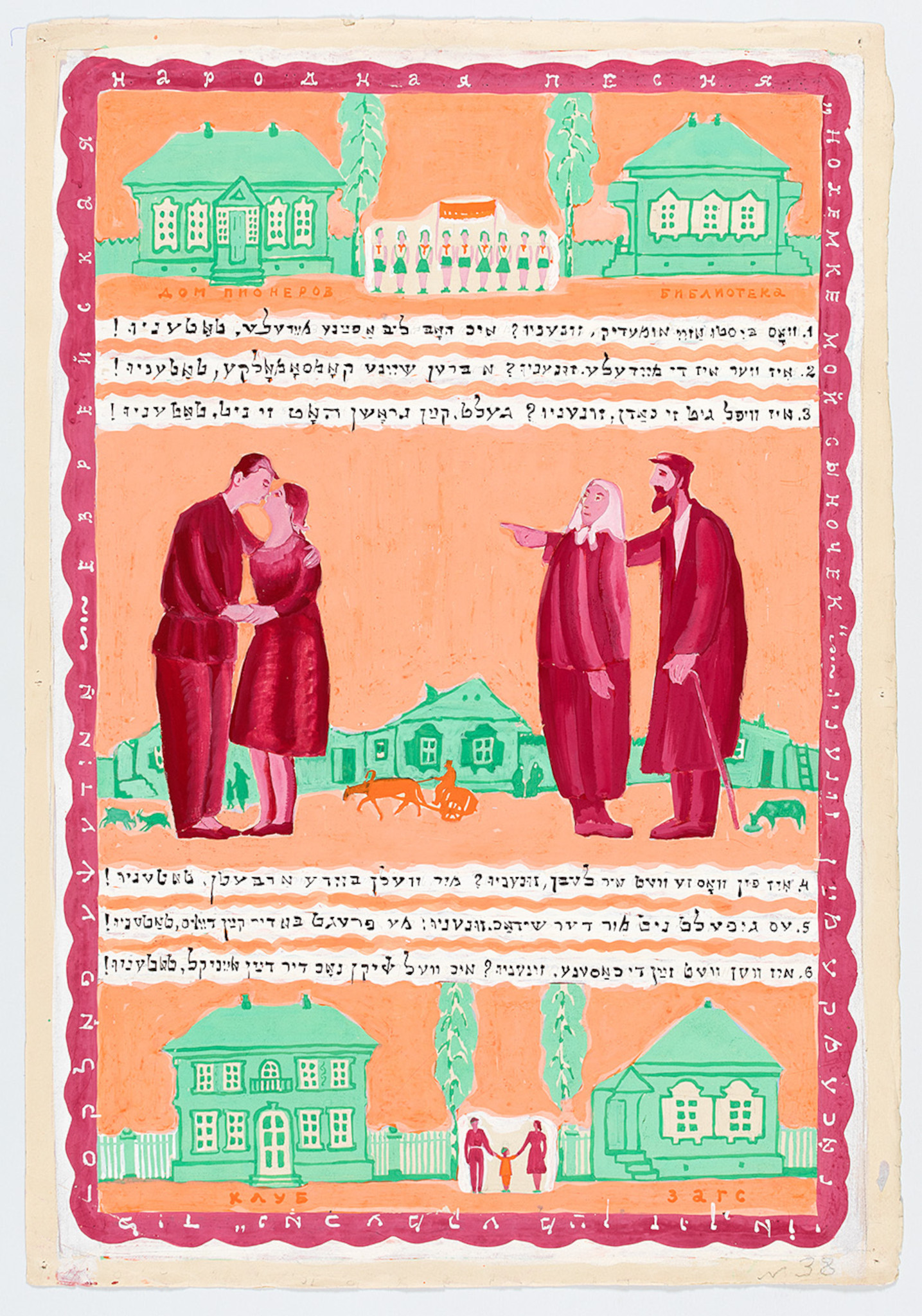
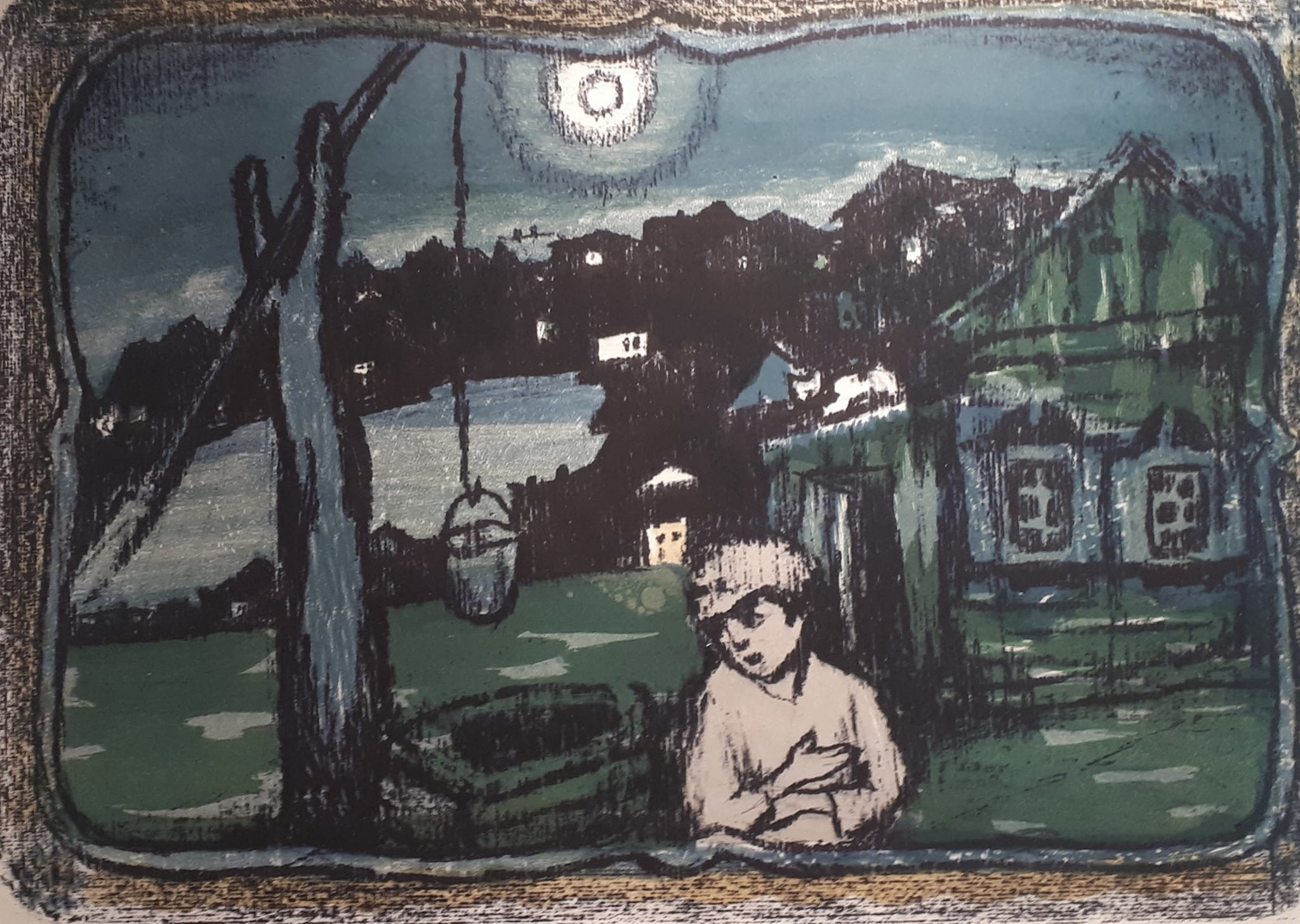
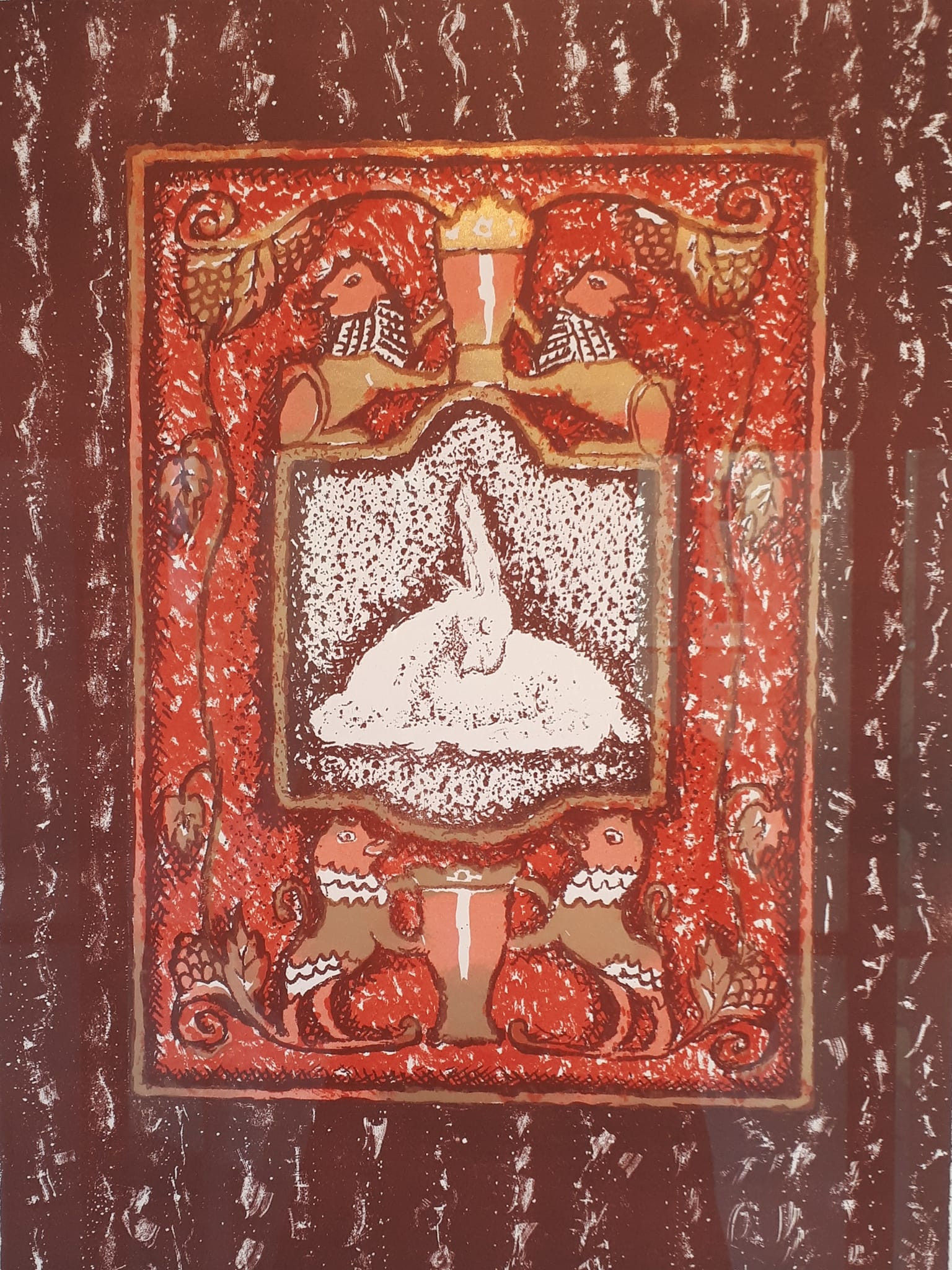
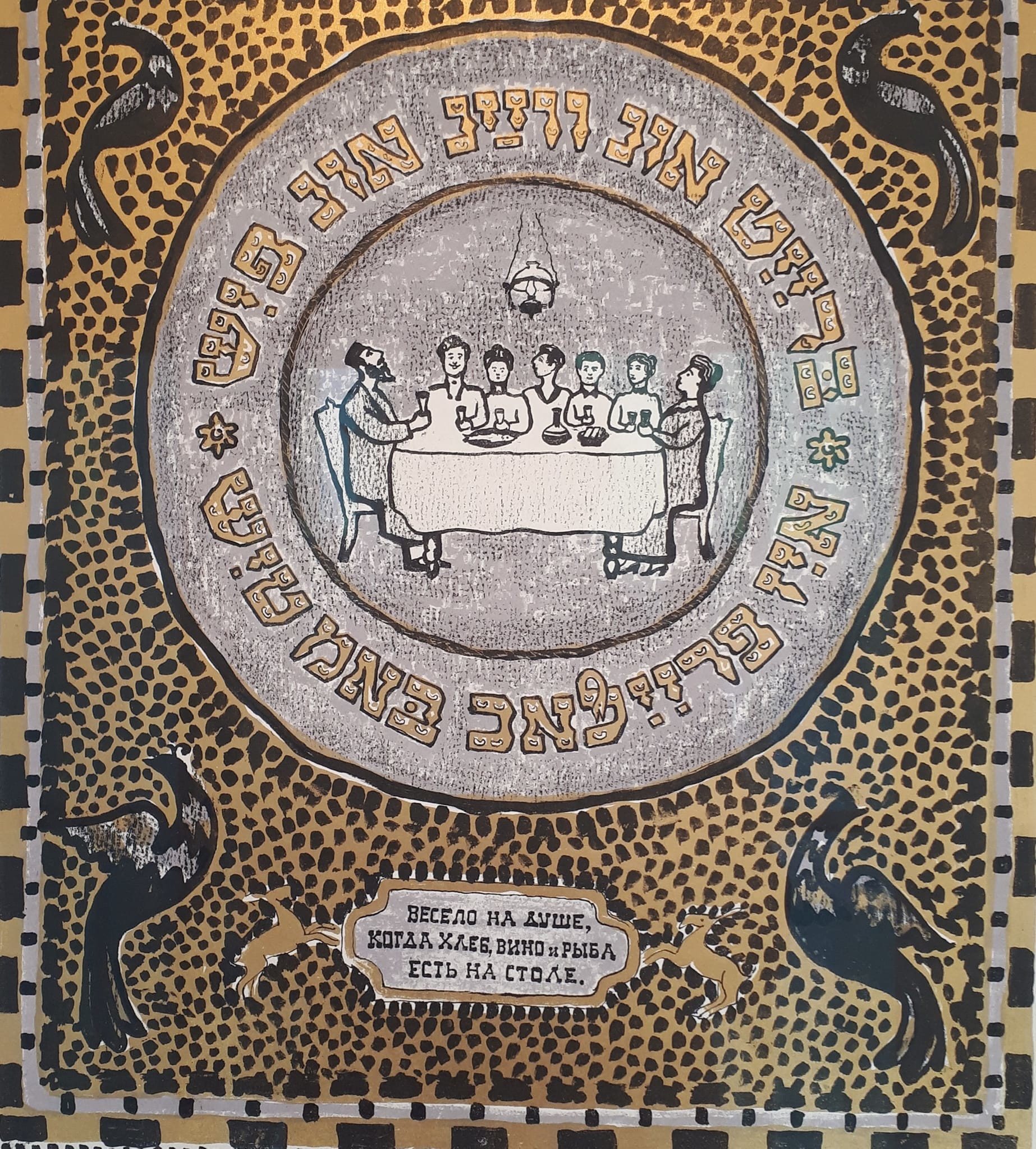
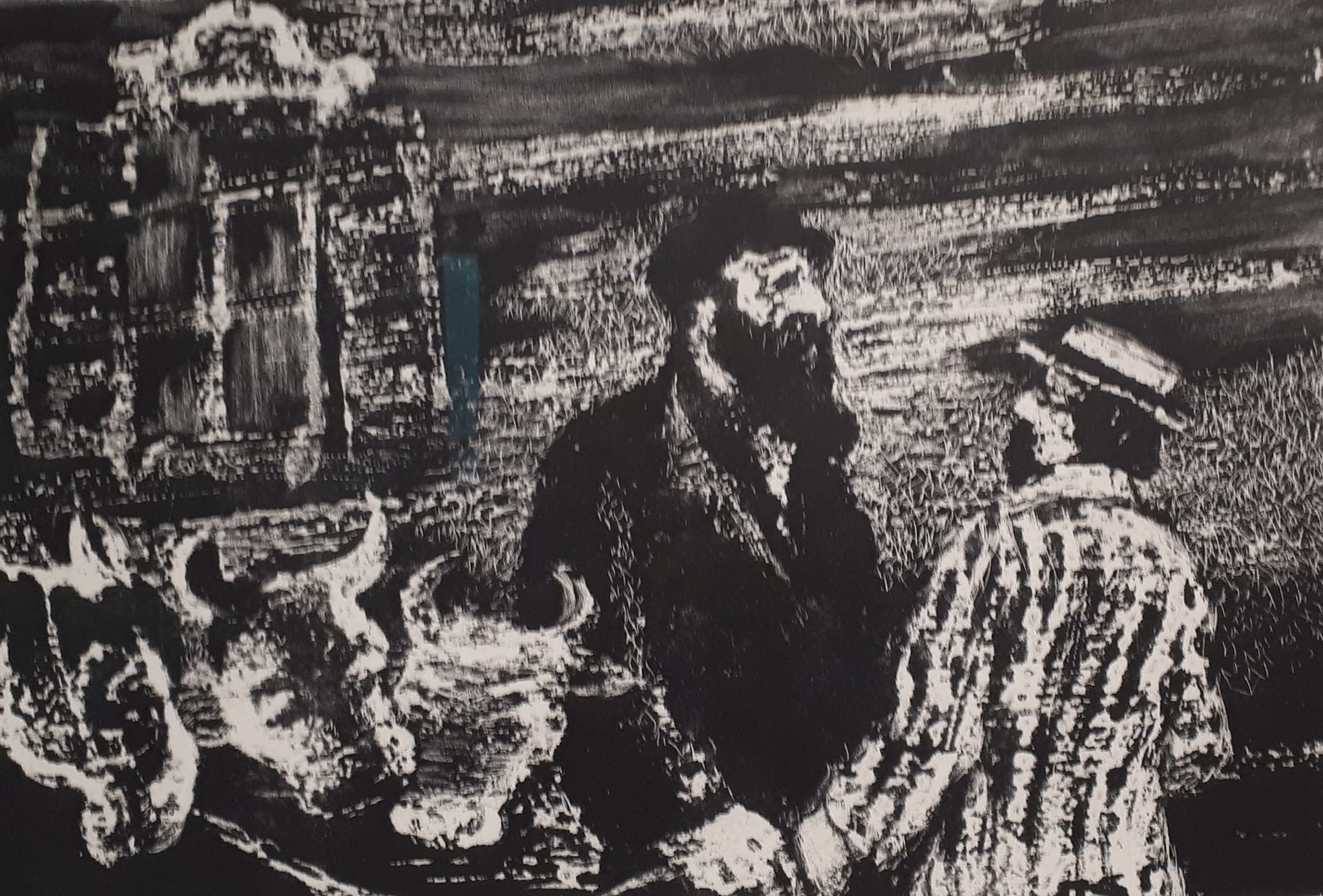
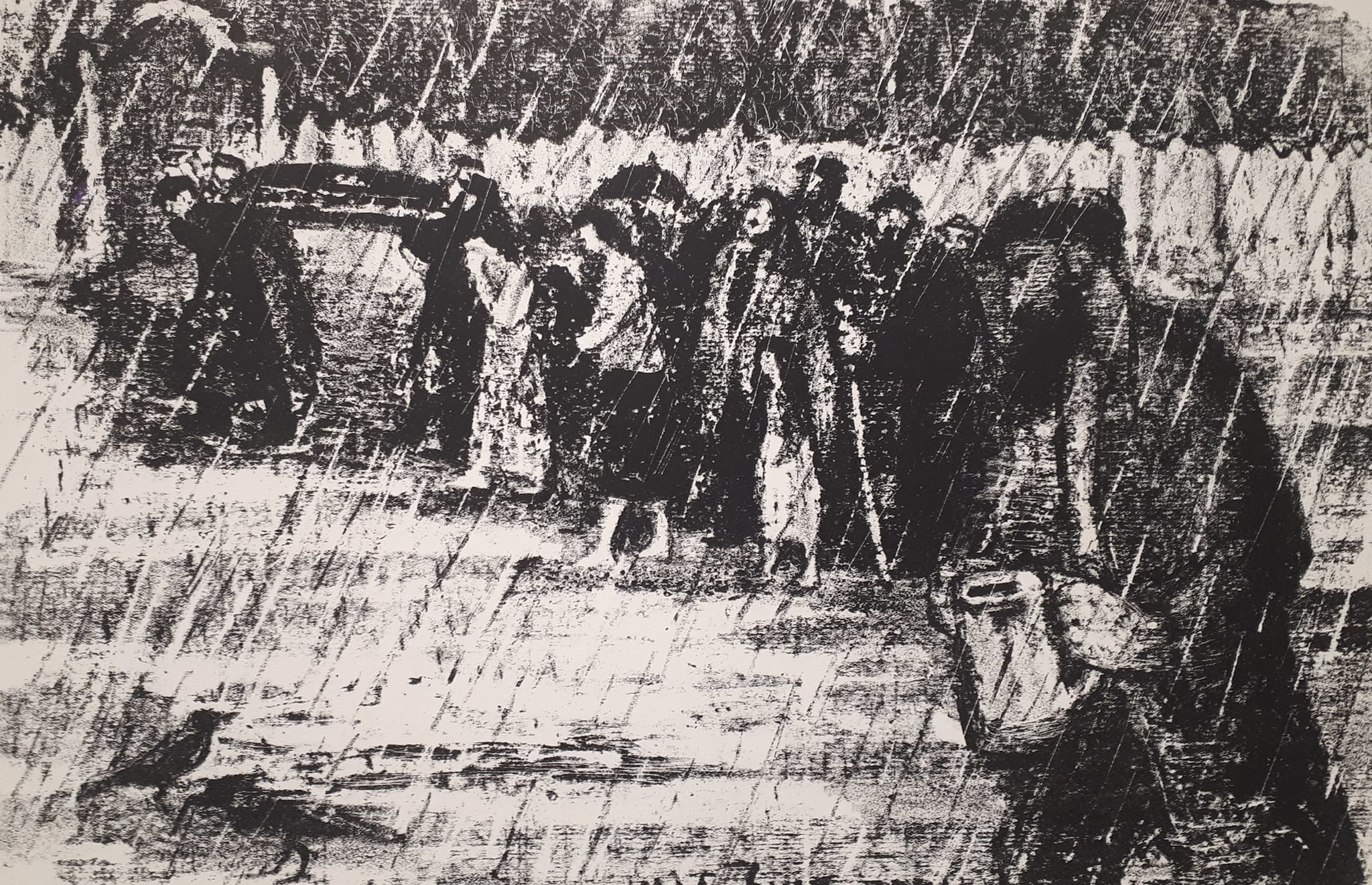
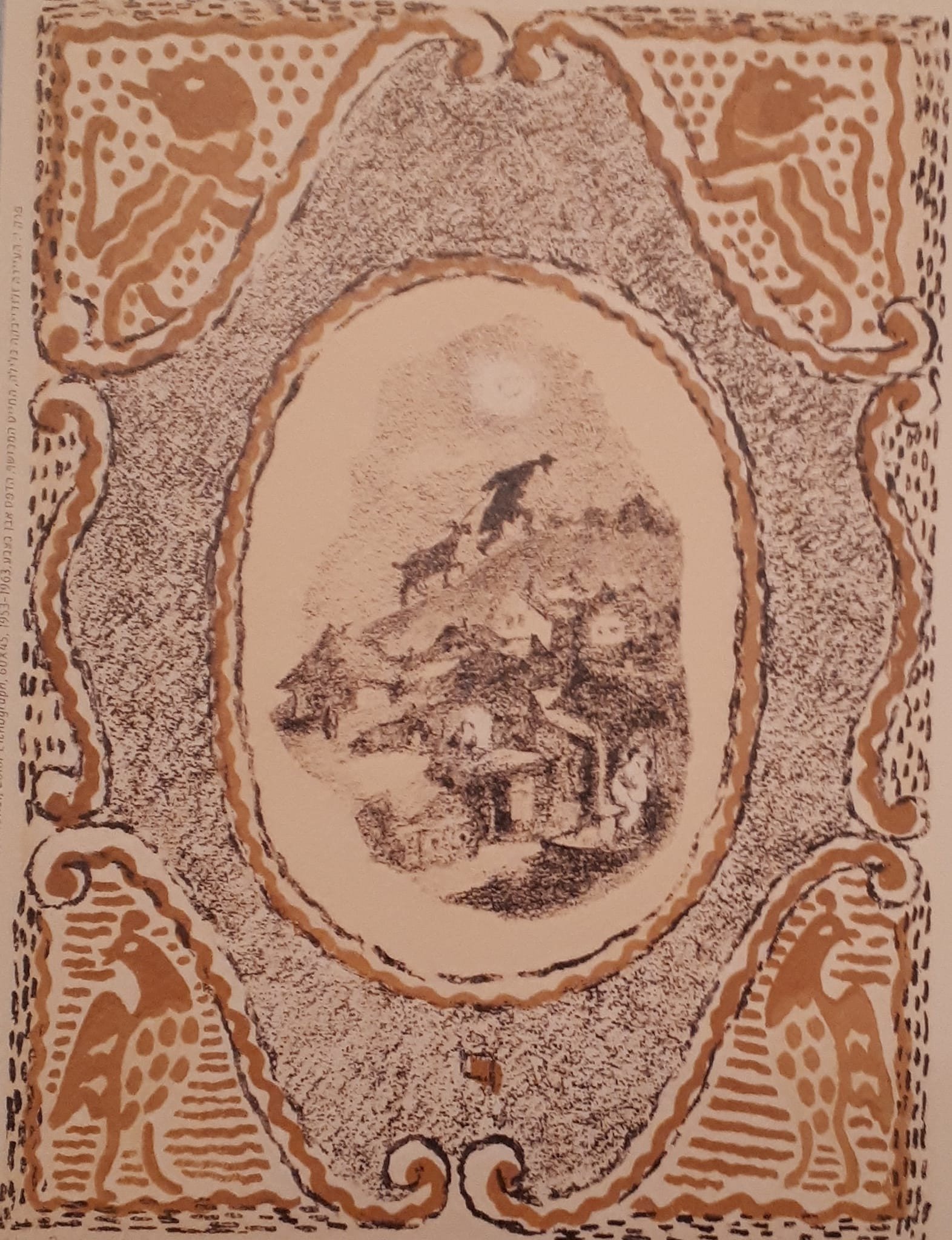
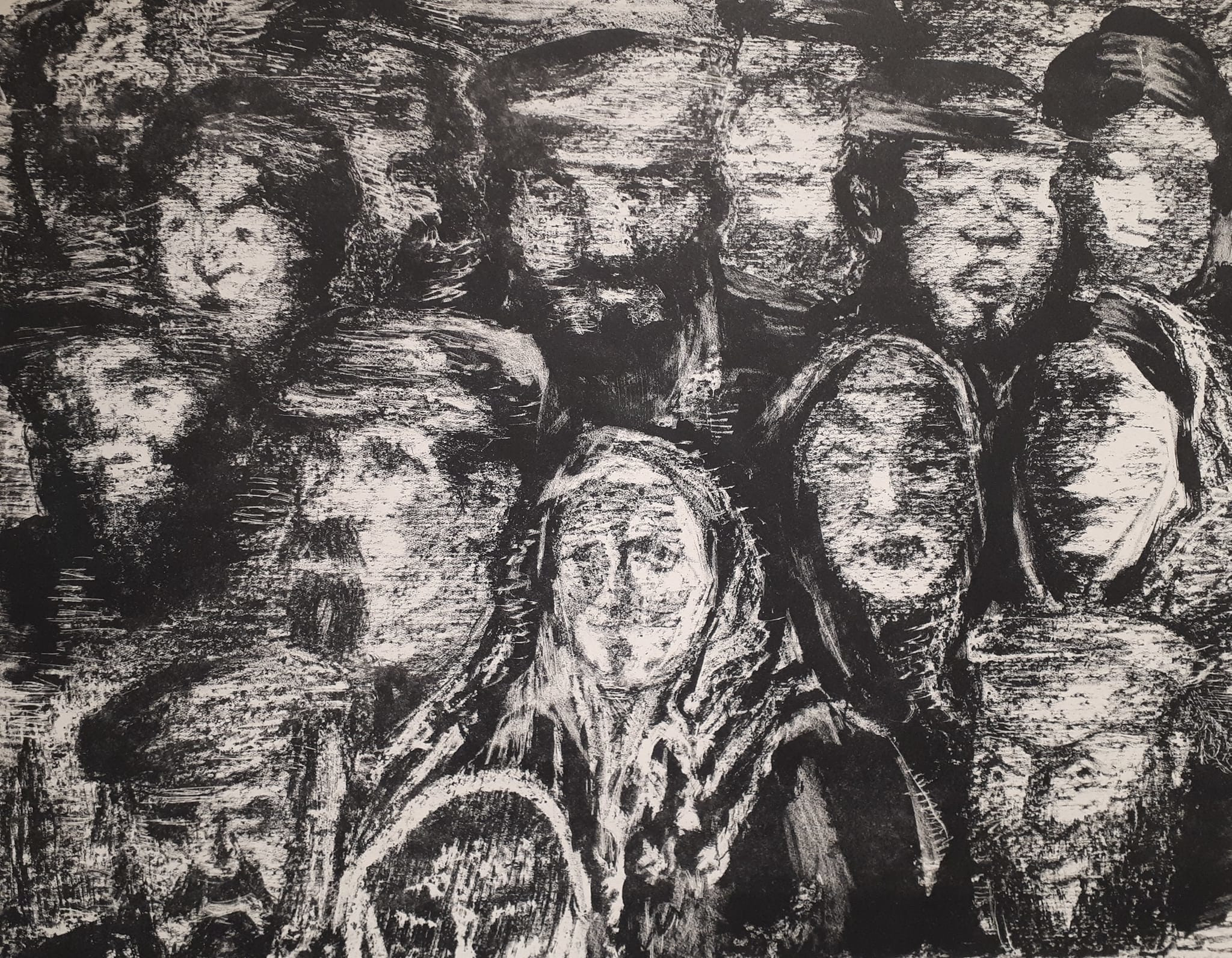
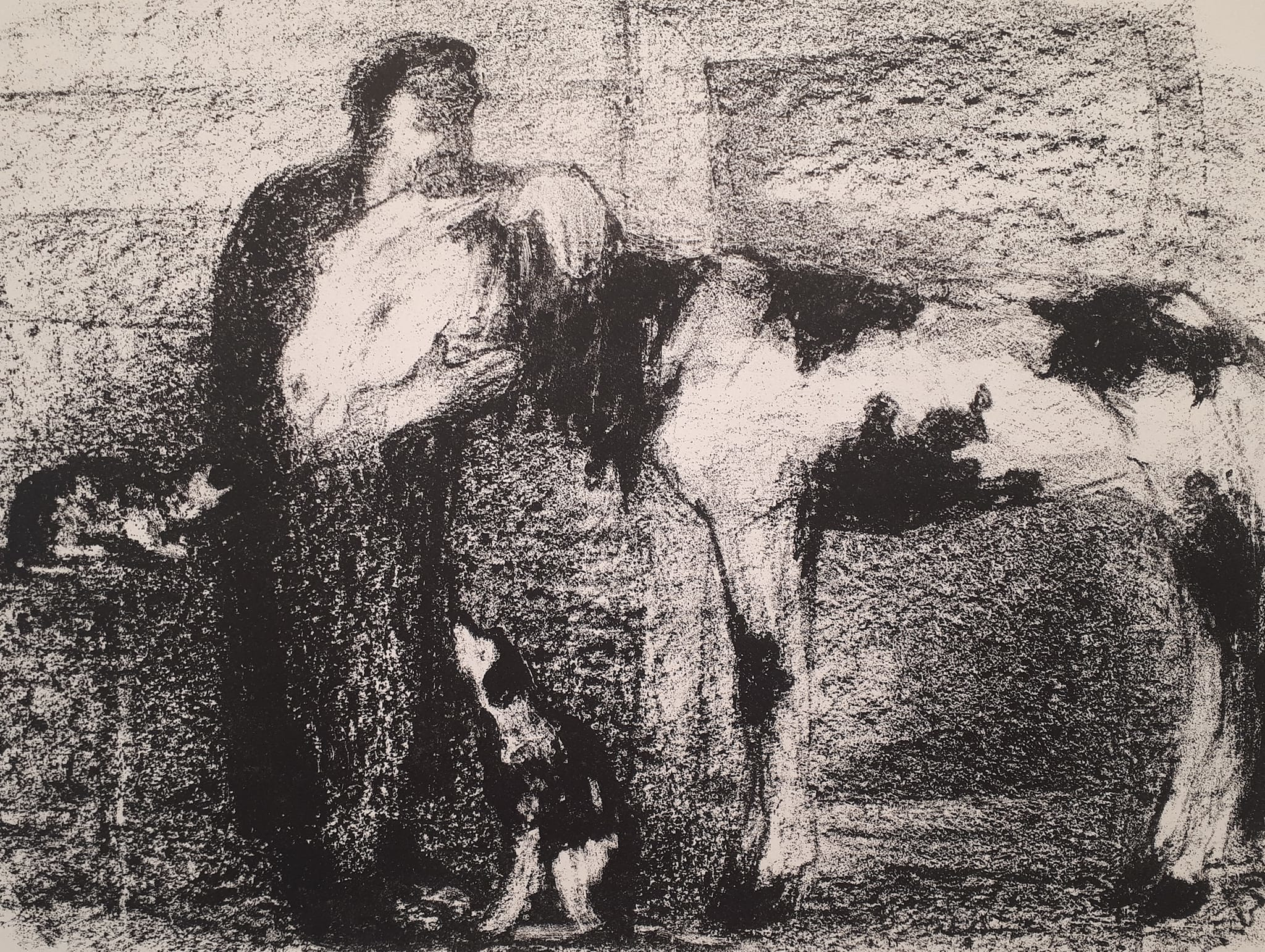
Photos by Tatyana Razumovskaya and Polina Idelson
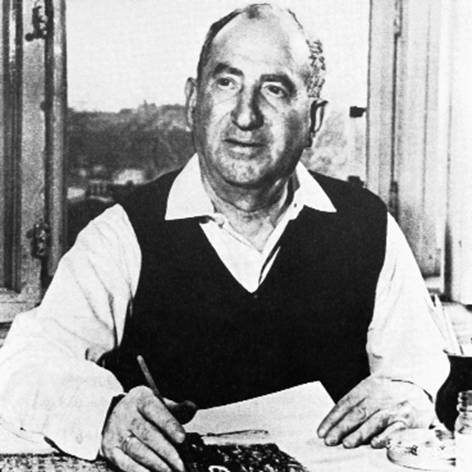
The name of Anatoli Kaplan (1903-1980) became widely known in the late 1960s and in the early 1970s, when his works were constantly displayed at exhibitions in Leningrad and across the entire Soviet Union. By that time he had already won worldwide recognition and his works were enjoying great success in England, Germany, USA, Canada, Austria, and Italy.
Kaplan did not fall into the mainstream of official Soviet art policies in the difficult 1950s, and was not carried away by the 1970s avant-garde innovations. His life and creative path were not particularly affected by dramatic events, and were not marked by active opposition to the ruling dogmas. In his work, he remained quite steady and consistent.
Kaplan was often referred to as an artist whose heyday came late. And, indeed, he first entered a lithographic studio at the age of 40, took up ceramics when he was 65, later got involved with pastels, and started using drypoint after the age of 70. He always demonstrated great skills and added his own individual touch to various techniques and materials, be they graphite, gouache, pastel, lithographic stone, etching, or ceramic layers and sculpture, which he took up in the last years of his life.
The artist was born in Belorussia, in the small town of Rogachov. His childhood reminiscences served as the basis for his creative activity and became an inherent part of his spiritual world. Aspects of folk life together with ancient national traditions shaped the images that predetermined the development of Kaplan’s art.
From 1922 to 1927, he studied at the Petrograd Academy of Arts. He lived in this city – later called Leningrad, now Saint Petersburg – for the rest of his days. Among his teachers were such well-known artists as A. Rylov, N. Adlov, and K. Petrov-Vodkin. He tried different kinds of art, such as industrial drawing and book illustrations. At that time, Kaplan was particularly fond of charcoal, which allowed him to produce a mild velvety coloring; pencil was actively employed to create a thick stroke.
The main landmark in Kaplan’s creative biography was his admission to the experimental lithographic workshop of the Leningrad Branch of Artistic Union (LBAU). There, not only his professional experience was enriched, but the very friendly atmosphere gave him a constant creative stimulus. It was in the lithographic workshop that Kaplan’s first cycle of work, entitled “Kasrilovka”, came into being (1937-1940). The name was taken from Sholem Aleichem, but his actual inspiration was the town of Rogachov. The everyday life of Jewish shtetl at the end of the 19th and the beginning of the 20th century, with its specific appearance and peculiarity of Jewish life, predetermined the composition and topics of Kaplan’s first cycles.
One would have expected that the simple and sometimes wretched existence of these old shtetl’s inhabitants would evoke in Kaplan’s works a feeling of sorrow. But even in those prewar years, the artist’s works displayed a pure lyrical feeling poeticizing the past; the coziness and the world of memories became the tuning fork of his creativity. In his later works, everyday motifs, eternal human attachments and affection, would be filled with deeper meaning to become metaphoric milestones of human life as construed by the artist.
During WWII, Kaplan was evacuated to the Ural Mountains. There he taught and displayed his works at exhibitions. He portrayed the mass-scale shooting of women and children, the killing of old people. The sketches came one after another. And many of them show the unfamiliar rigorous Ural countryside, small settlements and huge factory complexes. In 1944 the artist returned to Leningrad. The first works belonging to a series of lithographs “Leningrad Townscapes” deal with Leningrad during the war: the blacked-out city, demolished buildings, dredges on the Fontanka river.
The years from 1953 to 1963 became the key decade for the artist. This period was notable for his tireless attempts to find his own model of the world and man, to reveal and consummate the most typical traits of the graphic form. For many years Kaplan linked his artistic life with Sholem Aleichem – one of the writers who was spiritually closest to him and whose world vision was akin of his. “The Enchanted Tailor,” “Tevye the Dairyman,” “The Song of Songs,” “Stempenu,” and even “Stories for Children” found a response in his art and were quite distinctively treated by him.
At the same time (in the late 1950s – early 1960s), the so-called “folklore cycles” were carried out by Kaplan. In these subjects, he deliberately simplified the form. Samples of enamel art, carvings and ornamental jewellery took on a new meaning, and his profound penetration into folk art transformed the ethnographic material into aesthetic culture. The marvelous “Little Goat”, in which the artist personified the coziness and poetry of bygone days, became the peak of his folklore stylistics.
In such 1960s series of illustrations as “Tevye the Dairyman”, “Stempenu” and “Lame Fishka”, the “eternal” motifs always present in Kaplan’s art can be seen more and more clearly: birth, love and death form a closed circle that keeps repeating itself, and is embodied in different aspects of the human existence. In the cycle “Tevye the Dairyman”, relations between the painter and the text undergo certain transformation and are transferred to another level. And it is not the unfolding of the plot, but the strenuousness of the spiritual life and the figurative significance of the characters that come to the foreground.
Still more complex are Kaplan’s interrelations with the literary source in the cycle dedicated to Sholem Aleichem’s novel “Stempenu” (1963-67). The plasticity of the cycle is unusual. The forms are generated as if on impulse. A phosphorescent surface emerges and a mysterious depth becomes visible. The multiformity of textures creates this magic, formed by the fluctuations and overflowing of lines of light, piercing the patches of darkness. Interior and objects, their existence in a humanized medium, carry some symbolical meaning.
In the cycle of lithographs dedicated to Moykher-Sforim’s “Fishka the Lame”, Kaplan turned to the old art of carved stele, which consists of ornamental design, illustrative forms and script. The faces of beggars, wanderers and cripples, orphans and paupers are visible on the reliefs carved on tombstones. Their earthly travails are, in Kaplan’s works, illuminated by the light of spirituality and compassion. The artist gives them a certain majesty, a detachment and composure in the realm of dreams and eternity.
The last decade of the artist’s life was remarkable for his search for innovations and solutions predetermining his evolution. Unusual for a man of 60, he displayed daring new techniques and materials, and manifested afresh his unique artistic ego in the way he employed them.
In this period, Kaplan’s art acquired new treats. The vigor of his flexible lines increased, as did the contrasting character of his silhouettes. His pictorial medium, so typical of his previous drawings, was gone. For Kaplan, drawing became all the more a priority in his last decade. His strict, minimalistic drawing style of this time was marked by a certain formality.
In the late 1960s, Kaplan was still actively involved in lithography, such as in his cycles of illustrations for the “Short Stories” (1967-69) by I. L. Peretz, “Stories for Children” by Sholem Aleichem. But as if having exhausted all the resources of this technique, Kaplan came full circle by taking up graphite, black and brown pencils, and charcoal again. In this respect, his two last cycles were like a conclusion or final summing up. His illustrations for “Levin’s Mill” by I. Bobrovsky (1975) and “Nathan the Wise” (1977) by G. Lessing display a somewhat different approach to graphic art. The distinctive “purification” of the image from all that is specific and characteristic took place in the final cycle of illustrations to Lessing’s play. The heroes’ appearances are noble, exalted, and majestic.
In the 1970s, Kaplan returned to his first principles, but he achieved this through a spiral, where each loop had become a new plastic medium, a renewed form that took the viewer to a higher spiritual plane. The artist turned again to “Reminiscences of Rogachov” (1973-79), made a series of sheets to Shostakovich’s vocal cycle “Eleven Songs from Jewish Folk Poetry”. He searched tirelessly for innovations in the field of technique, color and material.
Experts often tend to compare Kaplan with Chagall. This comparison is not entirely well-grounded. Kaplan created his own world, his own system for interpreting reality, which was directed toward the past and based on a continual returning to the sources of folk culture. From one year to the next, his world vision grew more and more complex, as his style took shape and improved. He can hardly be called a realist. Kaplan is rather closer to the realm of “conditionally real” understanding, which he spoke of in the 1930s. That is why his themes taken from everyday life turn into diverse metaphors containing the notion of transcendental human values. Today, Kaplan’s art belongs to the whole world. His works are kept in museums of many European and American cities.
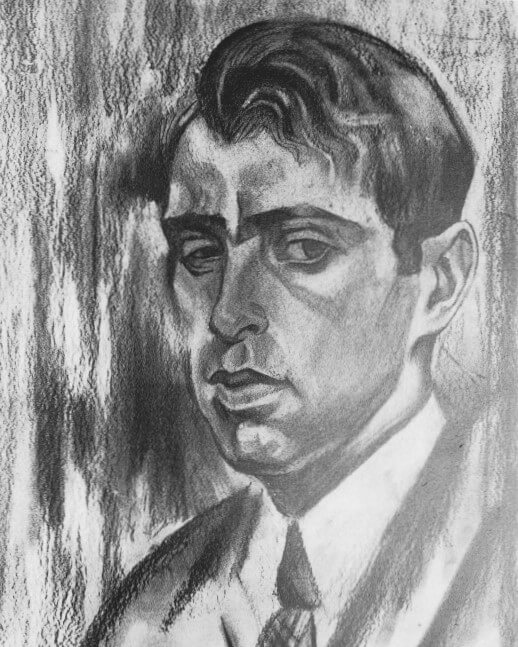
Issokhor-Ber Ryback (1897-1935, Issachar Ber in modern Hebrew) was a Jewish and French painter, graphic artist, decorator and sculptor born in Elisavetgrad (then the Russian Empire; today Kropyvnytskyi, Ukraine). At his teenage, Ryback studied at the Kiev Art School and early developed a unique artistic style, merging the expressiveness of cubism with his own bright color palette. His mentors were two prominent cubo-futurists: Alexandra Ekster and Alexander Bogomazov. As a yoing painter, Ryback worked at the Moscow State Jewish Theater (GOSET), from 1921 to 1924 lived in Berlin, and the rest of his short life, starting from 1926, spent in France. He died prematurely in Paris from tuberculosis.
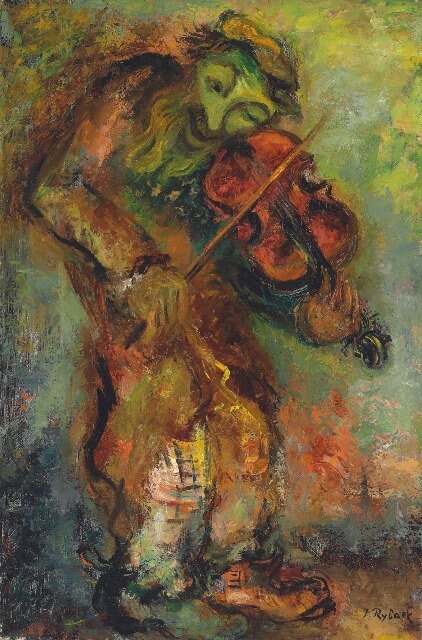
Jewish themes occupy the central place in Ryback’s works, often directly related to the Yiddish language. In 1918, he became one of the founders and main participants of the Kiev Kultur-Lige. This organization’s goal was the development of Yiddish literature, theater and culture. Ryback had illustrated a number of Yiddish books for children and adults, including Leib Kvitko’s poems and the book Kinder-Velt (Children’s World) by the educationist Boris Smolin. Originally published in 1922, Smolin’s book with Ryback’s beautiful illustrations has been republished in 2007 with a parallel Russian translation.
Like Marc Chagall, Ryback was an outstanding artistic exponent of Yiddish culture. However, quite different from Chagall’s fantasy motifs, Ryback’s works focus on everyday mundane life of the Jewish shtetl. Shortly before his death, in 1934, Ryback turned to ceramic sculpture and created a series of painted terracotta figurines, which became renowned as masterpieces of Jewish art (“Hasidic Dance”, “Simkhas-Toyre”, “Folk Dance”). The artist is also known for his unique graphic albums, where he depicted the life of Ukrainian Hasidic Jews: “Shtetl” (lithographs, 1923); “The Jewish Types of Ukraine” (1924); “Shadows of the Past” (1932).
Ryback’s album “Shtetl”, as well as a reproduction of his lithograph “The Grinder” signed by the author, are presented in the Gallery section of our website with the kind permission of Julia Zilberquit. The original lithograph is located at the Ryback’s Museum in Bat Yam, Israel.