Yiddish New York 2024
Yiddish New York 2024
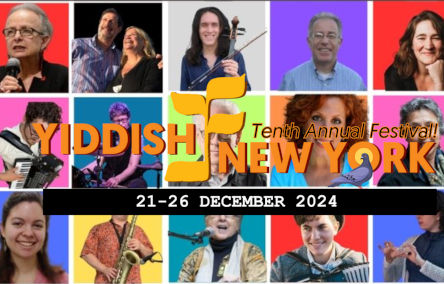
From December 21 to 26, 2024, the 10th annual festival Yiddish New York will be held at the city’s Hebrew Union College. This year’s program will include dozens of events, including concerts featuring the world’s leading Yiddish music artists, lectures by leading scholars of Yiddish history, literature and culture, music lessons, singing and folk dance workshops, Yiddish film screenings, etc. The programs will be presented online as well.
According to its organizers, Yiddish New York is the largest festival of Yiddish music, culture and language in the US. Detailed information and tickets are available online.
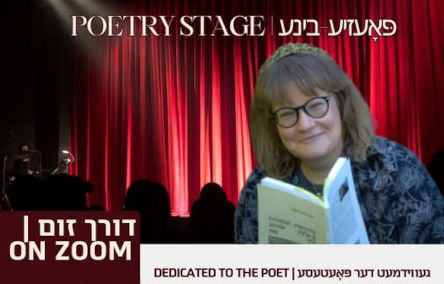
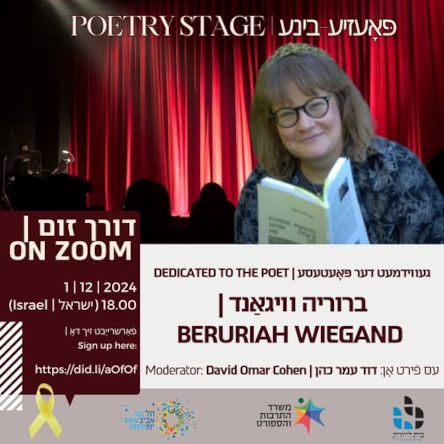 On December 1, 2024, the London-based Yiddish poet Beruriah Wiegand will read and discuss her poetry at the special online event hosted by the Leyvik House in Tel Aviv at 6 PM Israel time. The event, moderated by the Amsterdam-based Yiddish poet David Omar Cohen, will be entirely in Yiddish.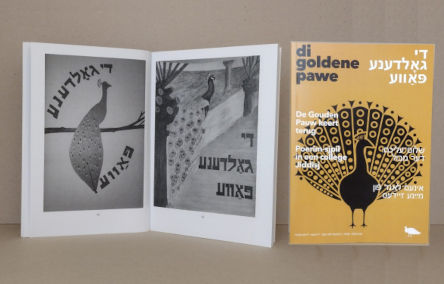
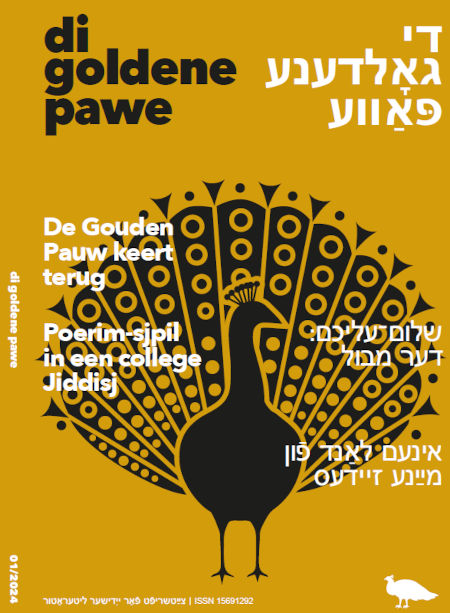 On November 24, 2024, the official presentation of the new Yiddish magazine “Di Goldene Pave” (“The Golden Peacock”) was held in Amsterdam, although its first pilot issue had already been published in June. The publication is the continuation of the previous Amsterdam-based Yiddish magazine “Di grine medine” (“The Green Country”), published since 2000.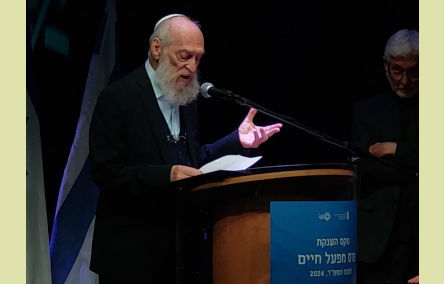
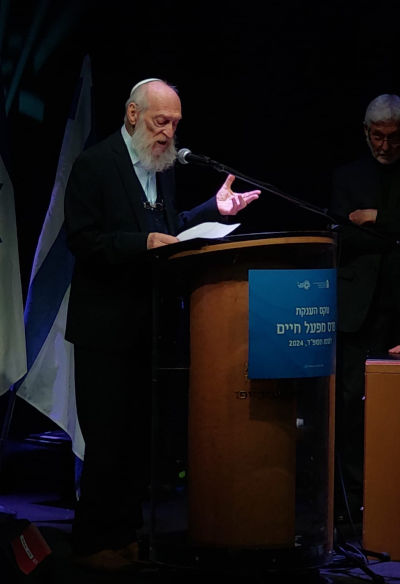 Mikhoel Felsenbaum, a prominent Yiddish novelist, poet and playwright, has received a lifetime achievement award for 2024 in the field of literature from the Israeli National Authority for Yiddish Culture. Dr. Shoshana Dominski, who compiled a Yiddish-Hebrew online dictionary, was awarded a certificate of appreciation.
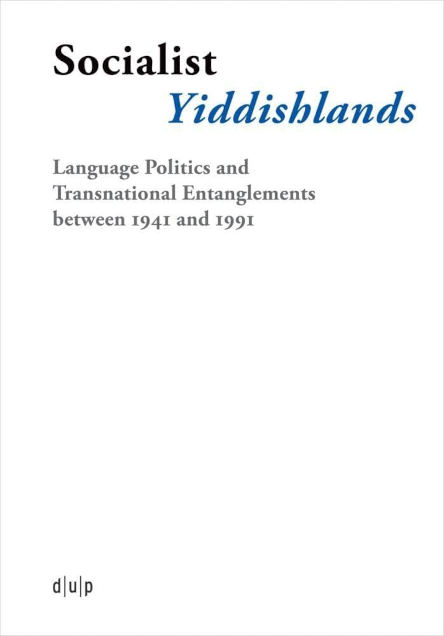 De Gruyter, a major German publishing house specializing in academic literature, published a book entitled Socialist Yiddishlands dedicated to the role of Yiddish in post-WWII socialist states, including Poland, the USSR, the German Democratic Republic and Romania. The volume, edited by Miriam Chorley-Schulz and Alexander Walther, also uncovers diverse cultural Yiddish-related initiatives during the Cold War era between the Eastern Bloc and such Western countries as the US, Great Britain and Israel.