Yiddish Glory in China and Korea
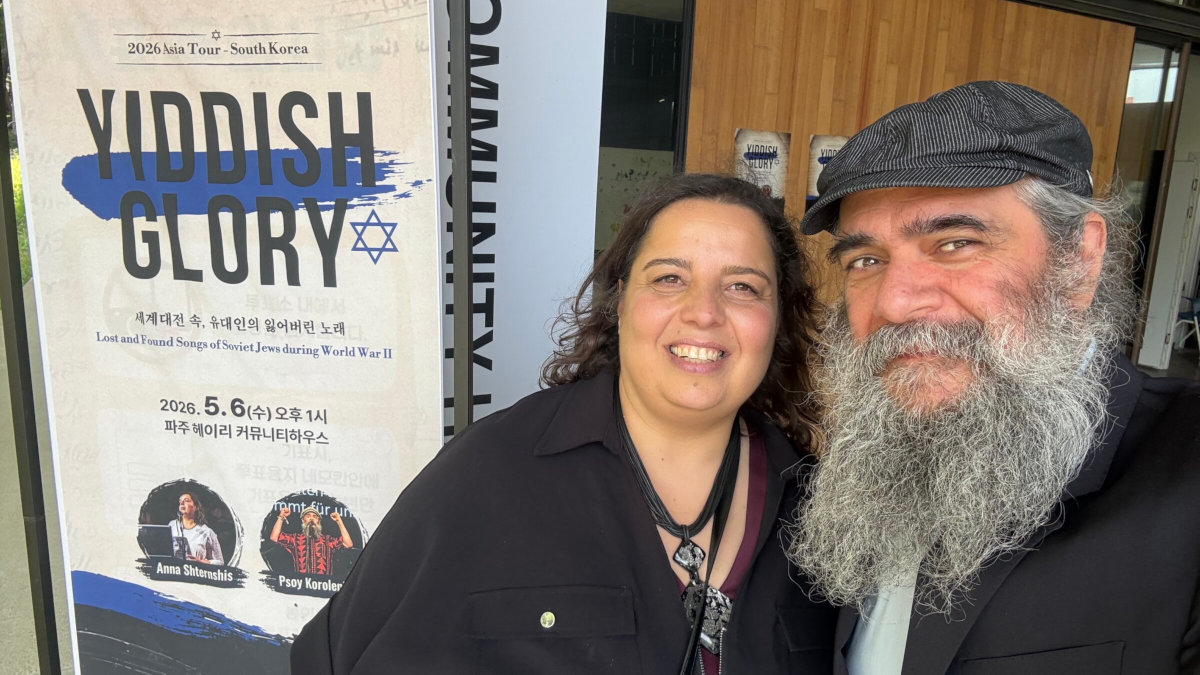
Korolenko and Shternshis jointly performed at six lecture concerts: for each song that the musician sang, playing himself the piano, the historian explained the song’s background and lyrics. Additionally, Shternshis gave two lectures on her own. The events took place in Shanghai, Hong Kong and Beijing, as well as in the city of Paju near Seoul.
The project Yiddish Glory aims to revive WWII songs from the giant archive collected by Moisei Beregovsky, the famous Jewish Soviet folklorist and musicologist. This resulted in the Grammy-nominated 2018 album The Lost Songs of World War II and the 2026 second album The Silenced Songs of World War II. Altogether, the project’s collection contains hundreds of songs.
Yang Meng, one of the events’ organizers in Beijing, is a Yiddish specialist and an assistant professor at Peking University. The events in Shanghai were organized by Professor Anruo Bao who teaches Yiddish literature at the Shanghai International University.
There are several historical connections between Yiddish and China. In early 20th century China had a large Yiddish-speaking community living in Harbin. About 20 thousand Yiddish speakers escaped the Nazis and came to Shanghai. Nowadays, a significant number of Yiddish-speaking Jews live in Beijing.